
What Is US Company Domestication?
US Company Domestication allows an eligible business to change its state of formation under applicable state law. Instead of closing the existing company and forming a new one, the business may continue as the same legal entity under the laws of another state.
For international entrepreneurs, this option can be useful when a company's original state no longer suits its business needs. For example, a business may want to move to a state with a different regulatory framework, a more suitable corporate law system, or a stronger connection to its target market.
However, domestication is not available in every state or for every entity type. Both the original state and the destination state must permit the relevant procedure. In addition, the company must meet the applicable filing and approval requirements.
When the law permits continuity, the company may retain its existing legal identity, assets, contracts, and liabilities. Nevertheless, tax treatment, identification numbers, banking records, licenses, and contracts should all be reviewed before the move.
Why Do Companies Choose Domestication?
There are several reasons why businesses consider US Company Domestication.
- Maintain legal continuity. Where the relevant laws permit, the company can continue as the same legal entity instead of dissolving and forming a new one.
- Reduce restructuring work. Compared with closing one entity and creating another, domestication may reduce the need to transfer assets and update contracts individually. However, some third-party updates may still be necessary.
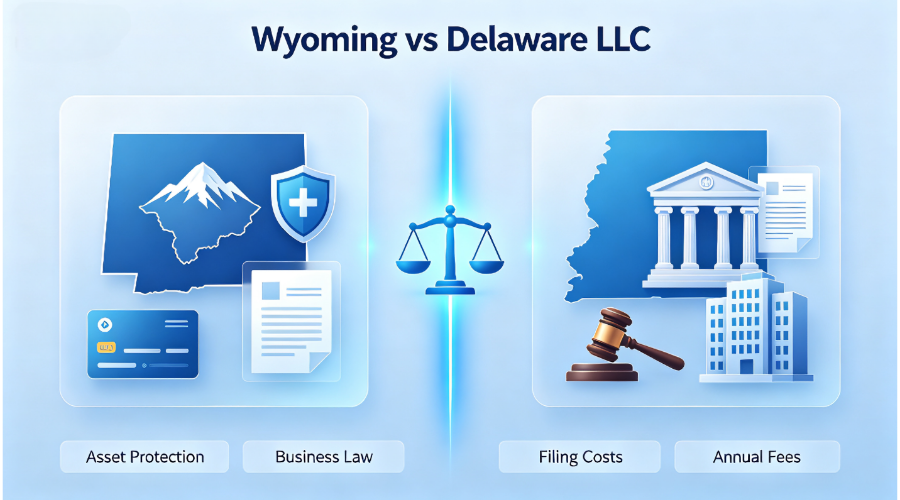
- Choose a more suitable legal framework. A company may prefer Delaware for its established corporate law system or consider Wyoming, Nevada, Texas, or Florida for other business reasons.
- Support future growth. A change of state may better match the company's plans for investment, expansion, operations, or corporate governance.
Importantly, domestication does not automatically reduce taxes or remove existing liabilities. Businesses should compare the legal, tax, and administrative effects before choosing a destination.

Which States Allow US Company Domestication?
The rules for US Company Domestication depend on the laws of both states and the company's legal structure. An LLC and a corporation may face different requirements, even within the same state.
Therefore, companies should confirm that the original state permits the entity to leave and that the destination state accepts the incoming entity through domestication or an equivalent statutory procedure.
Common Destination States
The following states are often considered by businesses reviewing their registration options. However, their suitability depends on the company's goals, entity type, and current legal requirements.
| State | Common reasons businesses consider it | Important considerations |
|---|---|---|
| Delaware | Established corporate law, investment structures, and fundraising | State fees, franchise tax, and ongoing compliance |
| Wyoming | LLC structures and businesses seeking a relatively simple administrative framework | Annual fees, business activities, and applicable state obligations |
| Nevada | Businesses reviewing corporate governance and liability rules | Registration costs, reporting requirements, and actual tax position |
| Texas | Companies with employees, facilities, warehouses, or customers in Texas | Franchise tax rules, state filings, and local operating requirements |
| Florida | Service businesses, international trade, and companies targeting the Florida market | Annual reports, registration fees, and licensing requirements |
Delaware, for example, has statutory provisions covering domestication and the continuation of certain entities. You can review the official Delaware LLC domestication law for details.
Nevertheless, a state's general business appeal does not prove that a particular company can move there through domestication. Always check the current statute and filing instructions for your entity type.
What If a State Does Not Allow Domestication?
Some states do not provide a general domestication route for every type of entity. New York and Oklahoma, for example, should be checked carefully before planning a direct move.
If direct domestication is unavailable, a company may need to consider another method, such as a statutory merger, conversion where permitted, or registration as a foreign entity in the destination state. Each option has different legal and tax consequences. For that reason, businesses should not assume that a merger or new registration will preserve every aspect of the original structure.
The US Company Domestication Process
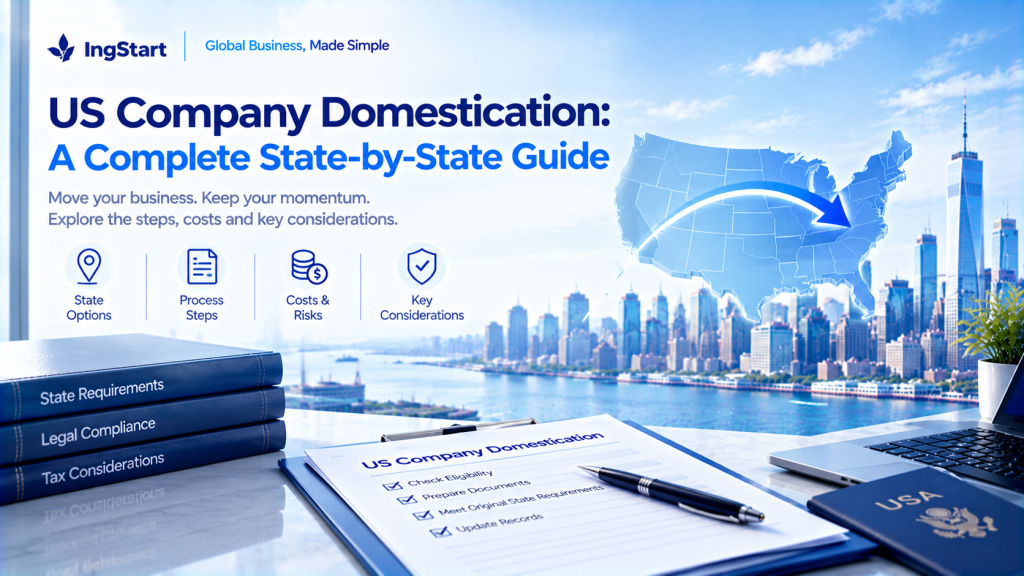
Although the exact requirements vary, US Company Domestication generally involves four stages: checking eligibility, preparing destination-state filings, completing the original state's requirements, and updating business records after approval.
Step 1: Check Whether the Move Is Legally Possible
Before starting, confirm that both states allow the proposed transaction for your specific entity type.
Next, review the company's formation documents, operating agreement or bylaws, and any shareholder or member agreements. These documents may require approval from members, shareholders, or directors before the company can move.
The business should also check its standing with the original state. For example, overdue annual reports, unpaid state fees, or unresolved tax matters may delay or prevent approval. Depending on the destination state, the company may need a certificate of good standing or a similar document. Check its validity period and filing requirements in advance.
Step 2: Prepare the Destination-State Documents
Once eligibility is confirmed, prepare the documents required by the destination state.
These may include:
- A plan of domestication or equivalent approval document
- A certificate of domestication or conversion, where required
- New or amended formation documents
- Member, shareholder, or director approvals
- A certificate of good standing from the original state
- The required filing fee
The exact list depends on the destination state's law and the type of company involved. Therefore, review the official filing instructions before submitting the application.
Step 3: Complete the Original State's Requirements
The company must also follow the original state's procedures for leaving or changing its registration. Depending on the applicable law, this may involve filing a domestication, conversion, or other termination-related document. The order of filings matters because the company needs to avoid an unintended gap in legal status.
Do not dissolve the original company unless the approved legal process specifically requires it. An ordinary dissolution followed by a new registration is not the same as domestication and may affect legal continuity. For this reason, confirm the filing sequence with the relevant state authorities or a qualified professional before submitting documents.
Step 4: Update Records After Domestication
After the move takes effect, review the company's records and update them where necessary.
Common tasks include:
- Updating bank and payment provider records
- Reviewing tax registrations and state filing obligations
- Updating business licenses and permits
- Notifying insurers, suppliers, and other business partners where required
- Updating registered agent arrangements
- Reviewing foreign entity registration in states where the company still operates
In addition, companies should retain copies of the approved filings and confirmation documents. These records may be needed for banking, tax reporting, or future due diligence.
US Company Domestication Costs and Risks
US Company Domestication can simplify a restructuring, but it still involves costs and compliance risks. The total expense depends on the states involved, the company's status, and the complexity of its operations.
Common Costs
The main costs may include:
- Government filing fees in the destination state
- Fees for required filings in the original state
- Certificates of good standing or similar documents
- Registered agent and annual compliance fees
- Legal, tax, or professional service fees
- Costs for updating licenses, contracts, and business records
There is no single fee that applies to every move. Therefore, obtain the current fee schedules from both states and include ongoing costs in the comparison.
Legal and Compliance Risks
A company may face delays or rejection if its records are not in good standing. For example, missing annual reports, unpaid fees, or incomplete approvals can affect the application. Regulated businesses also need extra care. Companies in healthcare, construction, financial services, payments, or import and export activities may need to update licenses or obtain new approvals after the move.
Furthermore, domestication does not automatically remove existing debts, liabilities, or contractual obligations. The company should review its agreements to see whether a change of governing law, registration details, or other circumstances requires notice or consent.
Tax Risks After the Move
Changing a company's state of formation does not automatically transfer all tax obligations to the destination state.
If the company continues to employ staff, maintain an office, hold inventory, or conduct business in the original state, it may still need to file returns and pay applicable taxes there. The business may also create tax obligations in other states through its operations.
Therefore, review state income or franchise taxes, sales tax, payroll tax, and other relevant requirements before proceeding. A state with no individual income tax, for example, does not necessarily eliminate a company's tax obligations.
What International Entrepreneurs Should Know
For non-US business owners, US Company Domestication requires attention to both state law and the company's wider business arrangements. First, confirm that the procedure is available for the company's current legal structure. Next, compare the destination state's fees, reporting requirements, and tax rules. Finally, check whether the move affects banking, licensing, contracts, or operations in other states.
A move may be worthwhile when it supports a clear business goal. However, it should not be treated as a guaranteed way to reduce taxes or avoid compliance requirements.
IngStart provides US company registration and ongoing compliance support for international entrepreneurs. Its services can help business owners organize company documents and manage recurring administrative tasks when reviewing a change to their company structure.
Conclusion: Planning US Company Domestication
US Company Domestication can help eligible businesses change their state of formation while maintaining legal continuity. It may reduce the work involved in restructuring, but the process depends on the laws of both states and the company's entity type.
Before moving, confirm eligibility, prepare the required documents, settle outstanding state obligations, and follow the correct filing sequence. In addition, review the company's tax position, contracts, licenses, and banking records after the move.
Most importantly, do not assume that every state permits direct domestication or that the move will automatically preserve every tax benefit, identification number, or contract arrangement. By checking the legal requirements and planning ahead, international business owners can make a more informed decision about whether domestication suits their business.
Article Recommendations
- Corporate Estimated Tax: Rules and Deadlines
- US Worker Classification: Employee Tax Guide
- US LLC States for Non-US Residents: A Practical Guide
If you still have questions, please contact our team on WhatsApp at +1 213 751 2111. We'll help you find the right solution for your business and keep your company compliant as it grows.