
US Company Dissolution Guide: Process, Documents & Risks
Introduction
For overseas business owners, US Company Dissolution is an important step when they decide to close a US company. It is not only about ending business activities. It also helps owners clear company responsibilities, complete tax filings, and avoid future problems.
During the US Company Dissolution process, companies need to handle assets, debts, taxes, employee matters, and communication with shareholders or business partners. Business owners should also review the tax steps required when closing a company according to IRS business closing guidance.
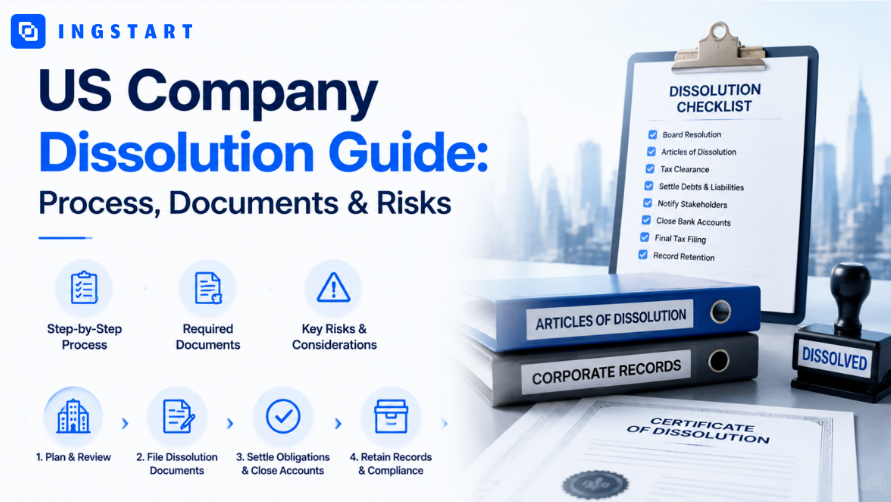
This guide explains the main steps of US Company Dissolution, including common reasons, required documents, closing procedures, and the risks of leaving a US company inactive.
Reasons for US Company Dissolution
Companies choose US Company Dissolution for different business reasons. In many cases, owners decide to close a company when it no longer fits their business plans or cannot continue operating.
Common Reasons for US Company Dissolution
Company Acquisition
When another company buys the business, the original company may no longer need to operate. The shareholders can choose to complete the dissolution process and officially close the company.
Merger or Business Restructuring
A company may close after a merger, business restructuring, or internal changes. In these situations, dissolution helps the company finish old responsibilities before moving forward.
Business Failure or Bankruptcy
If a company cannot continue its daily operations because of financial problems, the owners may need to close the company through a formal process.
End of Business Term or Other Dissolution Events
Some companies include a specific operating period or dissolution conditions in their formation documents. When these conditions happen, the company can start the dissolution process.
Legal Closure Required by Authorities
In some cases, government agencies may require a company to close because of legal or regulatory problems. The company can then complete the required closure steps.
US Company Dissolution Process
The US Company Dissolution Process includes several steps. Although each state has different rules, most companies need to complete similar procedures.
Step 1: Cancel Business Licenses and Permits
Before closing the company, owners should cancel unused business licenses, permits, and local registrations.
This step helps prevent extra renewal costs and future filing problems.
Step 2: Complete IRS Tax Filings
Companies need to inform the IRS about the business closure and complete the required tax filings.
The exact forms depend on the company structure, such as an LLC or corporation. And owners should make sure all tax responsibilities are handled before completing the dissolution.
Step 3: Publish a Dissolution Notice
Some states require companies to publish a dissolution notice in local newspapers or approved publications.
The notice informs related parties that the company plans to close.
US Company Dissolution Documents You Need
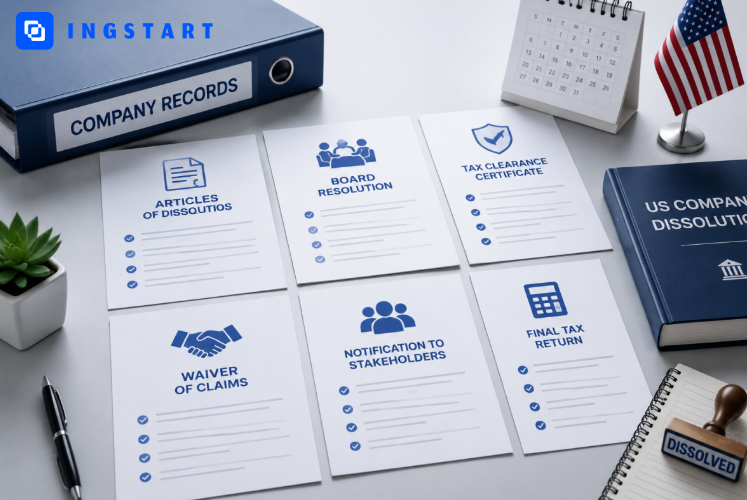
Preparing the correct documents is an important part of US Company Dissolution. Missing documents may delay the closing process.
Company Registration Documents
Companies usually need to provide:
- A copy of the company formation certificate;
- Company registration information;
- Other formation documents issued by the state.
Shareholder and Director Identification Documents
Owners may need to provide:
- Passport copies;
- Identification documents of shareholders;
- Identification documents of directors.
Company Amendment Documents
If the company changed its name, ownership, address, or other information before, owners should also prepare related amendment documents.
US Company Dissolution Tax Requirements Before Closing
Before completing US Company Dissolution, companies need to review their tax status.
Important steps include:
- Checking unpaid federal taxes;
- Checking state taxes and franchise taxes;
- Paying outstanding government fees;
- Completing final tax reports when required.
A company should solve all tax issues before closure. Otherwise, the state or tax authorities may not approve the dissolution.