
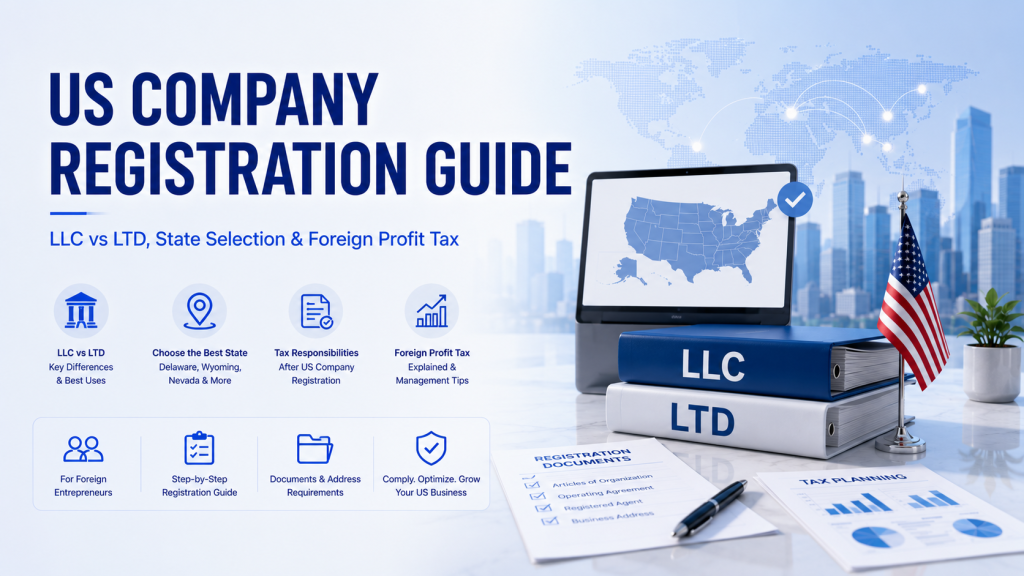
US Company Registration Guide: LLC vs LTD, State Selection & Foreign Profit Tax
US Company Registration is a common choice for international entrepreneurs who want to enter the US market, operate a cross-border business, or build a US business structure. However, the right structure depends on the business model, ownership, tax position, and planned activities.
For foreign founders, it is also important to understand the difference between an LLC and an LTD, choose a suitable state, and review the company's US and foreign tax obligations. Therefore, this guide explains the main points of US Company Registration in a simple and practical way.
Common Ways to Set Up a US Branch and Who They Suit
When an overseas business wants to enter the US market, it can use different structures depending on its goals. In practice, many international entrepreneurs choose to establish a separate US entity rather than operate directly through the foreign company.
A common option is an LLC. It is flexible and can work well for small businesses, online businesses, consulting services, and cross-border operations. Another option is a corporation, which may be more suitable for businesses that plan to raise investment or build a more formal corporate structure.
For international entrepreneurs, the choice usually depends on:
- Business activities in the US
- Number and type of owners
- Tax planning needs
- Investment plans
- Expected transaction volume
- Long-term business goals
Therefore, before starting US Company Registration, it is better to determine the actual business purpose first.
Where Is the Best State for US Company Registration?
The United States does not have one single company registration system. Instead, each state has its own rules and filing procedures. As a result, state selection can affect registration, annual compliance, taxes, and operating costs.
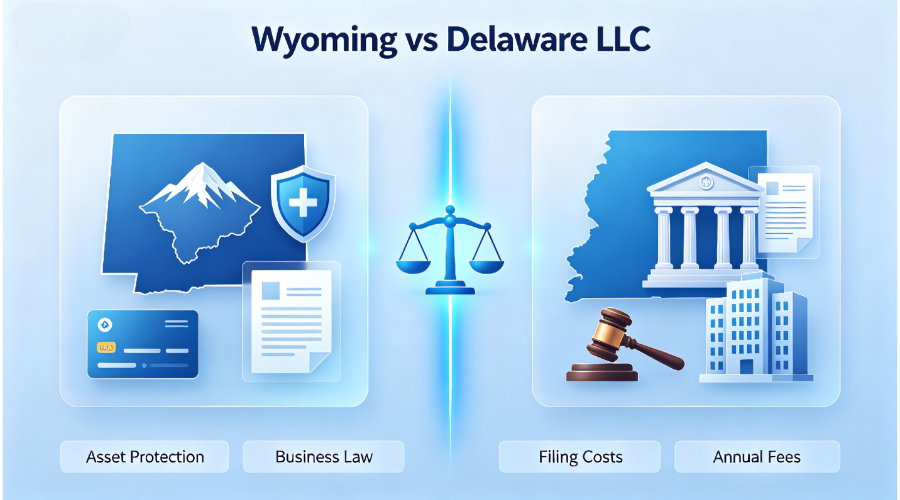
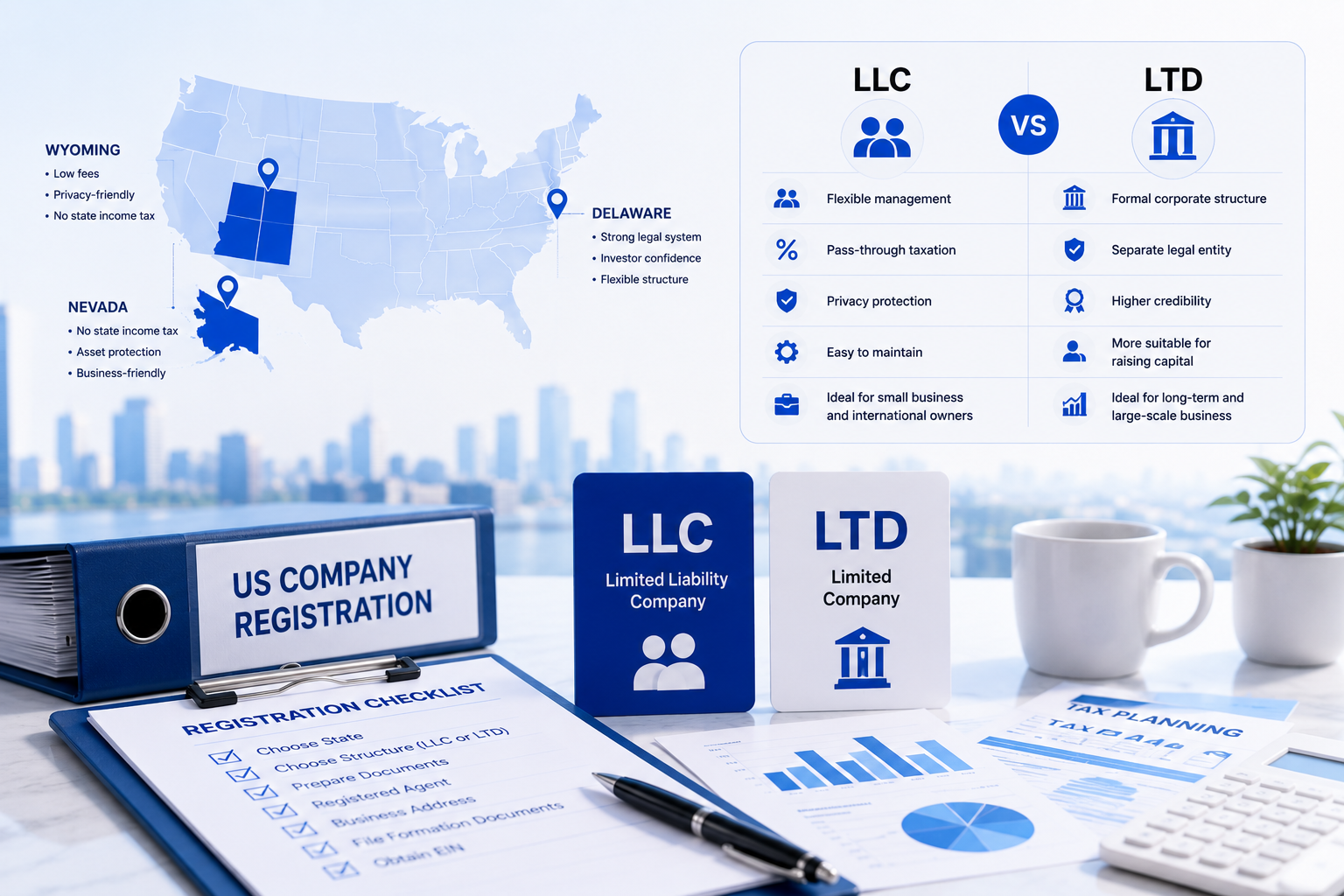
Delaware
Delaware is well known for its business-friendly legal environment. It is especially popular with corporations, startups, and businesses that may seek outside investment.
The state also has an established corporate legal system. Therefore, Delaware can be a strong choice for companies that expect more complex ownership or investment structures.
Wyoming
Wyoming is often considered by small businesses and international entrepreneurs because of its relatively simple business environment and generally lower ongoing state-level costs.
For businesses that mainly need a US legal entity without a large physical operation, Wyoming can be worth considering.
Nevada
Nevada is another state that international entrepreneurs may consider when planning US Company Registration. It can be attractive for businesses that value a business-friendly environment and want an alternative to more traditional incorporation states.
However, there is no universally "best" state. The right choice should depend on where the company operates and what it needs.
LLC and LTD: Definitions, Structures and Uses
One important point for foreign founders is that LLC and LTD are not equivalent US company types.
What Is an LLC?
An LLC, or Limited Liability Company, is a popular US business structure. It combines limited liability protection with flexible management and tax treatment. An LLC can have one or more owners, known as members. Depending on the circumstances, an LLC may receive different federal tax classifications.
For example, a single-member LLC may generally receive pass-through treatment by default, while an LLC can also elect corporate taxation when eligible. This flexibility makes the LLC popular among international entrepreneurs and small businesses.
What Is an LTD?
"LTD" usually means "Limited" and is commonly used as a company designation in countries such as the United Kingdom and some other jurisdictions. It is not normally a separate standard US entity type equivalent to an LLC. Therefore, when a foreign entrepreneur asks about registering an "LTD" in the United States, the actual structure may need to be a corporation or another available entity type, depending on the state. This distinction is important because choosing the wrong structure can create unnecessary tax and compliance issues.
Key Differences Between LLC and LTD
Because an LLC and an LTD do not represent the same legal concept in the US, they should not be compared as if they were two standard US entity types.
| Feature | LLC | LTD |
|---|---|---|
| Common use | US business structure | Company designation in many non-US jurisdictions |
| US legal status | Recognized business entity | Not a standard separate US entity type |
| Ownership | Members | Depends on the foreign legal system |
| Management | Flexible | Depends on the applicable jurisdiction |
| Tax treatment | Can vary | Depends on the country and entity type |
| Best suited for | US and cross-border businesses | Businesses using LTD structures outside the US |
Therefore, for US Company Registration, an international founder should first determine whether an LLC or corporation better fits the intended business.
Can Foreigners Register an LLC or LTD?
Yes. Foreign individuals can generally form a US LLC or corporation. In many cases, they do not need to become US citizens or permanent residents simply to own a US company. Likewise, a foreign founder does not generally need a US partner just because the owner is not a US resident.
However, the exact requirements depend on the state, company structure, business activities, and banking needs. In addition, foreign owners may have additional US tax reporting obligations.
For this reason, foreign entrepreneurs should consider three separate questions:
- Is foreign ownership legally permitted?
- Can the business be registered in the selected state?
- Will the company qualify for a suitable US business bank account?
These questions are related, but they are not the same. Therefore, foreign founders should review company registration, ownership requirements, and banking eligibility separately.
Tax Responsibilities After US Company Registration
After US Company Registration, the company may have federal, state, and local tax responsibilities. These responsibilities depend on the entity type, tax classification, activities, and location. For example, a US corporation is generally subject to US federal corporate income tax. A foreign corporation may instead have different rules when it conducts a US trade or business. An LLC can also have different federal tax treatment. Therefore, simply forming an LLC does not mean that the company will automatically have the same tax treatment as every other US company.
In addition, some states impose franchise taxes, annual fees, business taxes, or other state-level obligations. For international entrepreneurs, handling company registration, banking, and tax compliance at the same time can be challenging. Ingstart provides support for US company formation, business banking, and tax compliance, helping foreign founders manage these steps more efficiently and keep their US business structure properly maintained.

As a result, company owners should review both federal and state requirements after registration rather than focusing only on the formation filing.
What Is Foreign Profit Tax? Does a US Company Need to Pay It?
The term "foreign profit tax" is not a standard US federal tax name. In cross-border discussions, however, it often refers to taxes that may apply when a business earns income from activities outside the United States.
Whether foreign-source income creates US tax depends on the company's structure and the nature and source of the income.
For a US domestic corporation, foreign-source income can generally fall within the US tax system. At the same time, the company may be able to claim a foreign tax credit for certain qualifying foreign income taxes, subject to specific limitations and requirements. The IRS provides separate rules and Form 1118 for corporate foreign tax credits. Therefore, it would be incorrect to assume that income earned outside the US is automatically free from US tax. Foreign-source income also needs to be analyzed under the applicable sourcing and tax rules. The exact result can vary significantly depending on the business structure and transaction.
How Can a US Company Reduce or Manage Foreign Tax?
The goal should be legal tax planning, rather than avoiding tax through improper methods.
For example, a company may review whether it qualifies for foreign tax credits when the same income is subject to qualifying foreign income taxes. The IRS allows qualifying corporations to use the foreign tax credit subject to applicable limitations.
Other considerations may include:
- Choosing an appropriate company structure
- Reviewing where business activities actually take place
- Understanding US and foreign tax residency rules
- Checking applicable tax treaties
- Keeping clear accounting records
- Separating US-source and foreign-source income when required
- Filing the correct tax forms on time
However, tax planning should always reflect the company's actual business activities. A structure that looks efficient on paper may create problems if it does not match the company's real operations.
Practical Example: How an LLC Can Legally Reduce Tax Exposure
Consider a foreign entrepreneur who forms a US LLC to operate an online business. The entrepreneur lives outside the US and most customers are also located outside the US.
The first step is not to assume that the company has no US tax obligations. Instead, the owner should determine the LLC's federal tax classification, where the business is actually conducted, and how the income is sourced. Next, the owner should review whether the LLC has US trade or business activities and whether any US information returns or tax filings apply.
If foreign taxes are also paid on qualifying income, the owner or company may need to consider applicable foreign tax credit rules. For corporations, the IRS uses Form 1118 for the corporate foreign tax credit. Therefore, the legal way to reduce tax exposure is to choose an appropriate structure, understand the source of income, use available tax rules, and complete the required filings. It is not simply a matter of moving profits outside the United States.
Documents and Address Requirements for US Company Registration
The documents required for US Company Registration vary by state and entity type. However, foreign founders commonly need basic information such as:
- Proposed company name
- Business address
- Registered agent information
- Owner or member information
- Director information, when applicable
- Formation documents
- Identification documents
- Business activity information
A registered agent is generally required for a US entity. The registered agent receives official legal and government documents on behalf of the company.
A physical US office is not always required to form a US company. However, the requirements can differ between company registration, banking, licensing, and tax matters. For example, a company may be legally formed in one state without maintaining a traditional office there, but its actual business activities in another state could create additional registration or tax obligations. Therefore, founders should not treat a registered agent address, mailing address, business address, and physical operating location as the same thing.
For international entrepreneurs, US Company Registration is only the starting point. The company should also maintain proper records and complete its required annual and tax filings after formation.
Conclusion: Planning US Company Registration Properly
US Company Registration can provide international entrepreneurs with a practical structure for entering the US market and managing cross-border business activities. However, the best structure depends on the company's real business model, ownership, tax position, and long-term plans. An LLC is a flexible US entity that works well for many small and international businesses, while "LTD" is generally a company designation used in other jurisdictions rather than a separate standard US entity type.
At the same time, choosing Delaware, Wyoming, Nevada, or another state should depend on the company's actual needs. Most importantly, foreign founders should review federal and state tax obligations before starting operations.
By choosing the right structure and maintaining proper compliance, international entrepreneurs can build a more stable US business structure and reduce unnecessary tax and administrative risks.
Article Recommendations
- US Tax Refund 2026 Guide: Federal and State Refund Times & Tracking
- US Tax Forms Guide: Complete List of Common IRS Tax Forms
- What Is an ITIN Number? A Complete Guide for Non-US Residents
If you still have questions, please contact our team on WhatsApp at +1 213 751 2111. We'll help you find the right solution for your business and keep your company compliant as it grows.