

US Tax Refund 2026 Guide: Federal and State Refund Times & Tracking
For taxpayers, knowing when a US Tax Refund will arrive is an important part of the tax filing process. This is especially true for non-US residents and international taxpayers who may be less familiar with the US tax system. In general, federal refunds are processed by the Internal Revenue Service (IRS), while state refunds are handled separately by each state tax authority. Therefore, processing times can vary.
In this guide, we explain how to check your federal and state refund, how long refunds may take in 2026, and what can cause delays. The information below is for general reference because actual processing times may change depending on the tax return and the tax authority.
Federal Refund Processing in 2026
How Long Does a US Tax Refund Take?
For most eligible federal tax returns, the IRS generally issues refunds within 21 days after receiving an electronically filed return. However, this is only a general timeframe and does not guarantee a specific payment date.
Electronic filing together with direct deposit is generally the fastest way to receive a federal US Tax Refund. In comparison, paper returns usually take longer to process. Therefore, taxpayers who want to receive their refund as soon as possible should consider electronic filing and direct deposit when available.
How to Check Your Refund Status
You can check your federal refund through the official IRS tools below.
1. IRS Where's My Refund?
The IRS provides the official IRS Where's My Refund? tool for checking your federal refund status.
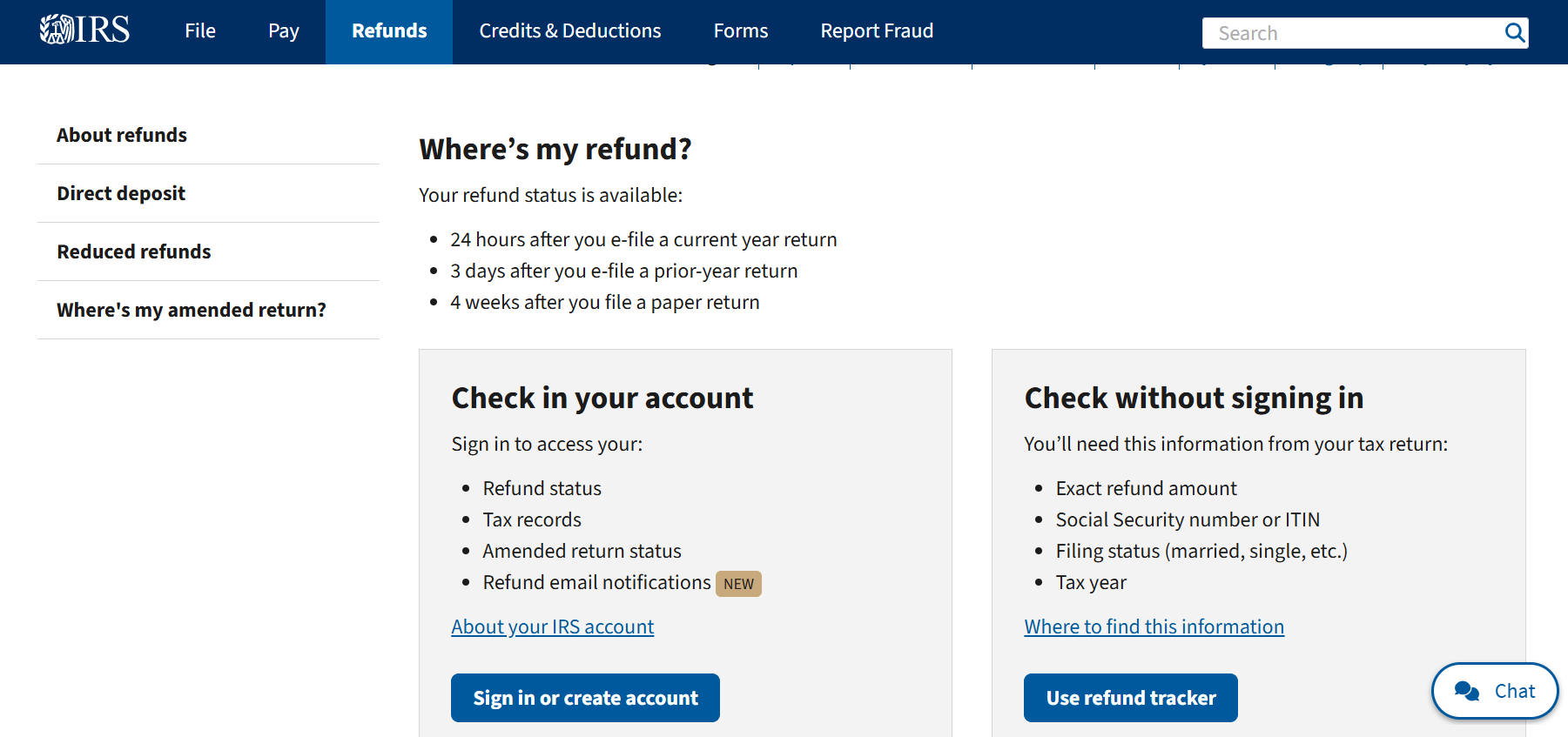
You generally need to provide:
- Social Security number (SSN) or Individual Taxpayer Identification Number (ITIN)
- Filing status
- Exact whole-dollar amount of your expected refund
- Tax year
For an electronically filed return, refund information is generally available about 24 hours after the IRS receives it. For a paper return, you may need to wait about four weeks before checking.
2. IRS2Go App
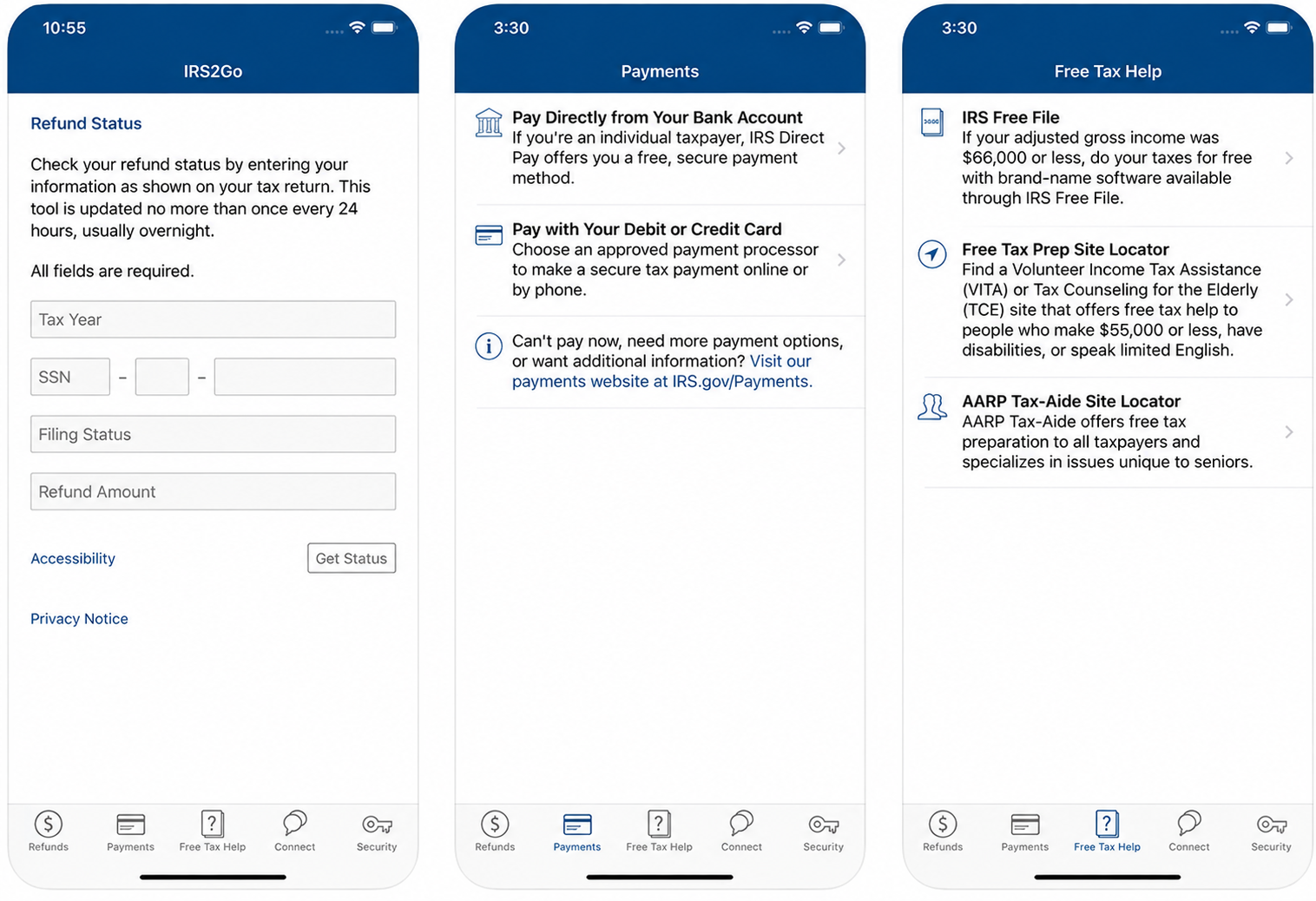
You can also use the official IRS2Go mobile app to check your refund status. The app is available for iOS and Android devices, so it is convenient for taxpayers who want to check their refund progress from a mobile phone. Therefore, if you are away from your computer, IRS2Go can be a simple way to check your US Tax Refund status.
US Tax Refund Status Explained
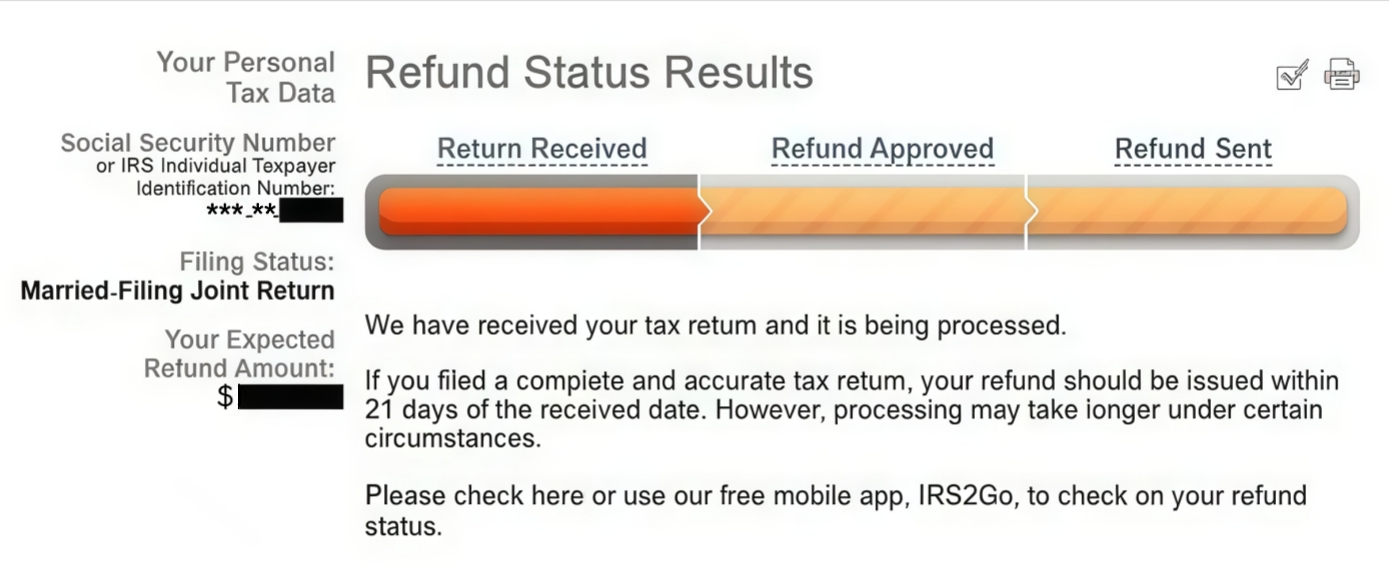
The IRS refund tracker generally shows several important stages:
- Return Received — The IRS has received your tax return.
- Refund Approved — The IRS has approved your refund.
- Refund Sent — The IRS has sent the refund.
If your return is still being processed, this does not always mean there is a problem. In some cases, the IRS simply needs more time to review the information.
Common Reasons for Refund Delays
Although many refunds are processed quickly, some returns require additional review. Common reasons for delays include:
- Incorrect or incomplete information
- Differences between reported income and IRS records
- Identity verification or suspected fraud
- Additional IRS review
- Missing documents or supporting information
- Claims involving the Earned Income Tax Credit (EITC) or Additional Child Tax Credit (ACTC)
- Bank processing time after the IRS sends the refund
In addition, federal law requires the IRS to hold refunds involving EITC or ACTC claims until at least February 15. As a result, taxpayers claiming these credits may need to wait longer than the standard processing period.
State Refund Times and Tracking
Federal and state tax refunds are processed separately. Therefore, receiving your federal US Tax Refund does not necessarily mean that your state refund will arrive at the same time. Each state has its own tax authority and processing system. As a result, processing times can range from several days to several weeks or longer.
The table below provides general reference information for 2026. Processing times can change during the tax season, so taxpayers should always check the relevant state's official website for the latest information.
| State | Refund Tracking / Tax Website | E-file | Paper Filing |
|---|---|---|---|
| Alabama (AL) | Alabama Department of Revenue | 8–10 weeks | 8–12 weeks |
| Alaska (AK) | — | — | — |
| Arizona (AZ) | Arizona Department of Revenue | About 10 days | Up to 12 weeks |
| Arkansas (AR) | Arkansas Department of Finance and Administration | About 21 business days | Up to 10 weeks |
| California (CA) | California Franchise Tax Board | About 2 weeks | About 4 weeks |
| Colorado (CO) | Colorado Department of Revenue | Varies | Varies |
| Connecticut (CT) | Connecticut Department of Revenue Services | About 3 weeks | 10–12 weeks |
| Delaware (DE) | Delaware Division of Revenue | 10–12 weeks | 10–12 weeks |
| Florida (FL) | — | — | — |
| Georgia (GA) | Georgia Department of Revenue | Varies | Varies |
| Hawaii (HI) | Hawaii Department of Taxation | 9–10 weeks | About 12 weeks |
| Idaho (ID) | Idaho State Tax Commission | 7–8 weeks | 10–11 weeks |
| Illinois (IL) | Illinois Department of Revenue | About 4 weeks | Up to 15 weeks |
| Indiana (IN) | Indiana Department of Revenue | About 3 weeks | Up to 12 weeks |
| Iowa (IA) | Iowa Department of Revenue | 30–45 days | 30–45 days |
| Kansas (KS) | Kansas Department of Revenue | 10–14 days | 16–20 weeks |
| Kentucky (KY) | Kentucky Department of Revenue | 2–3 weeks | 8–12 weeks |
| Louisiana (LA) | Louisiana Department of Revenue | About 45 days | Up to 14 weeks |
| Maine (ME) | Maine Revenue Services | 4–6 weeks | Longer |
| Maryland (MD) | Maryland Comptroller | Varies | About 30 days |
| Massachusetts (MA) | Massachusetts Department of Revenue | About 6 weeks | About 10 weeks |
| Michigan (MI) | Michigan Department of Treasury | About 2 weeks | 6–8 weeks |
| Minnesota (MN) | Minnesota Department of Revenue | Varies | About 6 weeks |
| Mississippi (MS) | Mississippi Department of Revenue | 8–10 weeks | 8–10 weeks |
| Missouri (MO) | Missouri Department of Revenue | About 5 days | About 4 weeks |
| Montana (MT) | Montana Department of Revenue | About 1 week | About 6 weeks |
| Nebraska (NE) | Nebraska Department of Revenue | About 30 days | About 3 months |
| Nevada (NV) | — | — | — |
| New Hampshire (NH) | New Hampshire Department of Revenue Administration | — | — |
| New Jersey (NJ) | New Jersey Division of Taxation | About 4 weeks | Up to 12 weeks |
| New Mexico (NM) | New Mexico Taxation and Revenue Department | 6–8 weeks | 8–12 weeks |
| New York (NY) | New York State Department of Taxation and Finance | About 14 days | 6–8 weeks |
| North Carolina (NC) | North Carolina Department of Revenue | About 6 weeks | Up to 12 weeks |
| North Dakota (ND) | North Dakota Office of State Tax Commissioner | Varies | Varies |
| Ohio (OH) | Ohio Department of Taxation | About 15 business days | 8–10 weeks |
| Oklahoma (OK) | Oklahoma Tax Commission | 14–21 days | 4–6 weeks |
| Oregon (OR) | Oregon Department of Revenue | 4+ weeks | 4+ weeks |
| Pennsylvania (PA) | Pennsylvania Department of Revenue | 8–10 weeks | 8–10 weeks |
| Rhode Island (RI) | Rhode Island Division of Taxation | 10–15 days | 4–6 weeks |
| South Carolina (SC) | South Carolina Department of Revenue | 6–8 weeks | 6–8 weeks |
| South Dakota (SD) | — | — | — |
| Tennessee (TN) | Tennessee Department of Revenue | — | — |
| Texas (TX) | — | — | — |
| Utah (UT) | Utah State Tax Commission | Varies | Varies |
| Vermont (VT) | Vermont Department of Taxes | About 30 days | 8–12 weeks |
| Virginia (VA) | Virginia Department of Taxation | About 4 weeks | About 8 weeks |
| Washington (WA) | — | — | — |
| West Virginia (WV) | West Virginia State Tax Department | About 3 weeks | About 10 weeks |
| Wisconsin (WI) | Wisconsin Department of Revenue | About 12 weeks | Longer |
| Wyoming (WY) | — | — | — |
| Washington, D.C. (DC) | DC Office of Tax and Revenue | About 6 weeks | About 6 weeks |
Note: A dash means there is generally no individual state income tax refund to track. However, state tax rules can be more complex than simply whether a state has an individual income tax. Some states have separate taxes or special rules that may apply to certain types of income.
How to Check Your US Tax Refund
State refunds are processed separately from federal refunds. Therefore, you should use the official tax website of the relevant state to check your refund status.
For example, taxpayers can use the state's online refund tracker, where available, to check whether their return has been received, reviewed or approved. Because processing times change throughout the tax season, the official state website should be treated as the most reliable source for current information.
State Refund Processing Times
State refund processing times depend on several factors, including the filing method, the state, the information provided and the current volume of tax returns.
Generally, electronic filing is faster than paper filing. However, some state returns may still require additional review. As a result, you should not assume that your state refund will arrive at the same time as your federal US Tax Refund.
Tips for Getting Your Refund Faster
Although no method can guarantee a specific refund date, several steps can help reduce avoidable delays.
First, check your tax return carefully before submitting it. Make sure your taxpayer identification number, income information, filing status and bank details are correct. Next, use electronic filing when available. Direct deposit is also generally faster than receiving a paper check. In addition, respond quickly if the IRS or a state tax authority asks for additional information. Delays in providing documents can extend the processing time.
How to Avoid US Tax Refund Delays
To reduce the chance of delays, make sure the information on your return matches your supporting tax documents. Also, use the correct SSN or ITIN and provide complete information when required. For international taxpayers, this step is particularly important. Differences in taxpayer information or missing documents may result in additional review.
Other Ways to Track Your Refund
Besides online refund trackers, taxpayers can use official mobile tools when available. For federal refunds, IRS2Go provides a convenient way to check refund information from a mobile device. If you are unsure about your US tax filing or refund process, professional US tax and company service providers such as Ingstart can also help you organize relevant documents and understand the next steps.

Conclusion: Tracking Your US Tax Refund in 2026
Whether you are waiting for a federal or state US Tax Refund, electronic filing and direct deposit are generally convenient options for receiving a refund. For federal returns, the IRS generally issues most eligible electronic refunds within 21 days. However, some returns require additional review and may take longer.
At the same time, state refunds follow separate processing schedules. Therefore, taxpayers should check the official website of the relevant state tax authority for the latest information. For non-US taxpayers, accurate tax information and the correct taxpayer identification number are especially important. By checking your return carefully and using official refund tracking tools such as Where's My Refund? and IRS2Go, you can follow your US Tax Refund more easily and respond quickly if additional information is required.
Article Recommendations
- How to Open a US Company Bank Account: Requirements, Steps & Tips
- US Company Annual Report Filing Guide: Requirements, Deadlines & Compliance Tips (2026)
- US Tax Refund 2026 Guide: Federal and State Refund Times & Tracking
If you still have questions, please contact our team on WhatsApp at +1 213 751 2111. We'll help you find the right solution for your business and keep your company compliant as it grows.