
SSN EIN ITIN Difference: Do You Need an SSN, EIN, or ITIN?
If you’ve ever looked into US taxes, opening an LLC, or filing paperwork with the IRS, you’ve probably run into a confusing question: what’s the SSN EIN ITIN difference, and which one do you actually need?
These tax numbers sound similar, but they serve very different purposes. Some are for individuals, some are for businesses, and some are designed specifically for non-US residents who need to deal with the US tax system. If you use the wrong one—or assume they’re interchangeable—you can easily run into problems when opening a bank account, filing taxes, hiring employees, or setting up a business.
In this guide, we’ll break down the SSN EIN ITIN difference in plain English: what each number means, who needs it, when to apply, and how to choose the right one for your situation.
Understanding Tax Identification Numbers (TINs)
Before getting into the SSN EIN ITIN difference, it helps to start with the broader category they all belong to: the Tax Identification Number, or TIN.
A TIN is a unique number used to identify an individual, business, or nonprofit organization for tax purposes. In the US, anyone who files tax returns or has tax reporting obligations with the IRS generally needs some form of TIN. The IRS uses these numbers to track taxpayers and process tax filings.
In the US system, a TIN can refer to several different numbers, including:
- SSN — Social Security Number
- EIN — Employer Identification Number
- ITIN — Individual Taxpayer Identification Number
- ATIN — Adoption Taxpayer Identification Number
- PTIN — Preparer Tax Identification Number
Among these, the most commonly used are SSN, EIN, and ITIN. That’s why most people searching for the SSN EIN ITIN difference are really trying to figure out which of these three applies to them.
SSN EIN ITIN Difference at a Glance
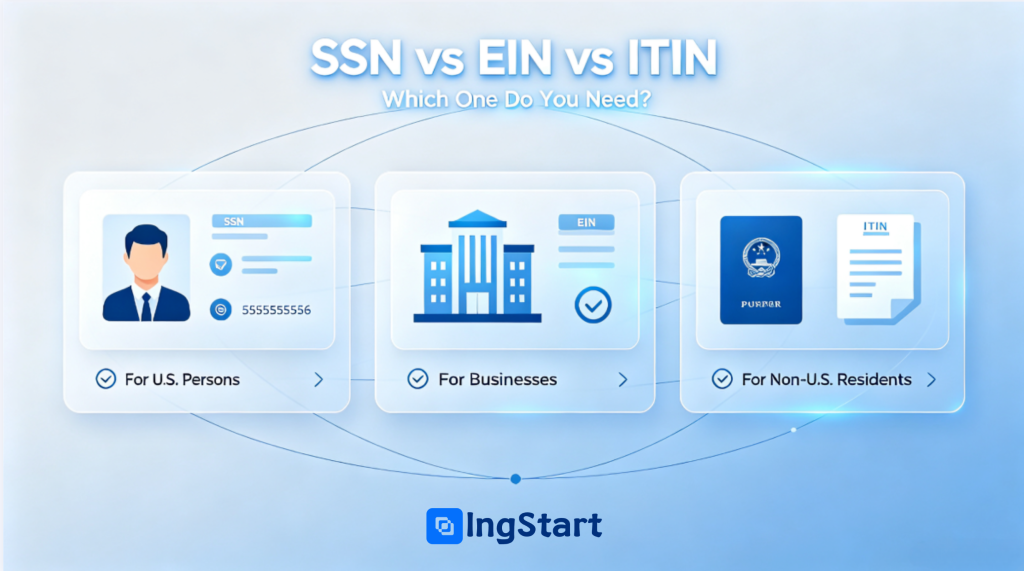
If you want the short version of the SSN EIN ITIN difference, here it is:
- SSN is for individuals, mainly US citizens, permanent residents, and certain eligible temporary residents or workers.
- EIN is for business entities such as LLCs, corporations, trusts, and estates.
- ITIN is for individuals who need a US tax number but are not eligible for an SSN.
In other words, SSN and ITIN are both individual tax identifiers, while EIN is a business tax identifier.
What Is a Social Security Number (SSN)?
A Social Security Number (SSN) is a tax and identification number issued to individuals. It’s the standard personal tax number used by US citizens, permanent residents, and some temporary residents or workers.
Unlike an EIN or ITIN, an SSN is not issued by the IRS. It’s issued by the Social Security Administration (SSA). An SSN has nine digits and is usually formatted like this:
XXX-XX-XXXX
When people compare the SSN EIN ITIN difference, the SSN is usually the easiest one to understand: it’s the primary personal identification number used for employment, taxes, and many government-related purposes in the US.
Do You Need an SSN?
You generally need an SSN if you are legally working in the US or using government services tied to your identity and tax record.
In practice, people who commonly need an SSN include:
- US citizens
- Permanent residents
- Certain temporary nonimmigrant workers
- Children claimed as dependents by parents for tax purposes
Children often need either an SSN or an ITIN so parents can claim them as dependents and access certain tax benefits. In most cases, parents will apply for an SSN for their child if the child is eligible.
According to the Social Security Administration, people who may be able to apply for an SSN include:
- Noncitizens
- International students
- Foreign workers
- Citizen children
- Deferred Action for Childhood Arrivals (DACA) applicants
- Domestic violence survivors
So if your question is about the SSN EIN ITIN difference from an employment perspective, the answer is straightforward: you need an SSN if you are authorized to work in the US as an individual.
How to Apply for an SSN
To apply for an SSN, you need to complete Form SS-5, which is the Application for a Social Security Card. You’ll also need to provide documents proving your:
- Identity
- Age
- Immigration or residency status in the US
You can apply through a local Social Security office, and in some cases by contacting the Social Security Administration directly. Once your documents are accepted and any immigration verification is complete, you can generally expect your Social Security card within about two weeks.
What Is an Employer Identification Number (EIN)?
An Employer Identification Number (EIN) is a tax identification number for business entities, not individuals. If you’re trying to understand the SSN EIN ITIN difference, this is the key point: an EIN belongs to a business, while an SSN or ITIN belongs to a person.
An EIN is issued by the IRS and is used by businesses to report taxes, file returns, open bank accounts, and handle payroll or other tax-related obligations. Like an SSN, it has nine digits, but the format is different:
XX-XXXXXXX
Businesses that commonly need an EIN include:
- LLCs
- C corporations
- S corporations
- Trusts
- Estates
- Nonprofit organizations
- Certain partnerships and other business entities
If you plan to operate a US business, the EIN is usually one of the first tax numbers you’ll need.
Do You Need an EIN?
In general, most business entities need an EIN.
You’ll typically need an EIN if your business will:
- Hire employees
- Open a US business bank account
- File business tax returns
- Withhold taxes from payments
- Operate as an LLC, corporation, partnership, trust, or estate
This is especially relevant for founders setting up a US company. For example, if you form a US LLC as a non-resident, you will usually need an EIN even if you don’t have an SSN.
That’s one of the most important parts of the SSN EIN ITIN difference for entrepreneurs: you may not qualify for an SSN, but your company can still get an EIN.
How to Apply for an EIN
To get an EIN, you need to file Form SS-4 with the IRS. The application asks for basic information about the business, including the name of the responsible party—such as the owner, principal officer, partner, or trustor—and that person’s taxpayer identification number.
You can apply for an EIN through several methods, including:
- Online
- Phone
- Fax
Processing times vary depending on how you apply. If you apply online and are eligible for the online process, you may receive your EIN immediately. Phone, fax, or mail applications can take anywhere from two to five weeks.
What Is an ITIN?
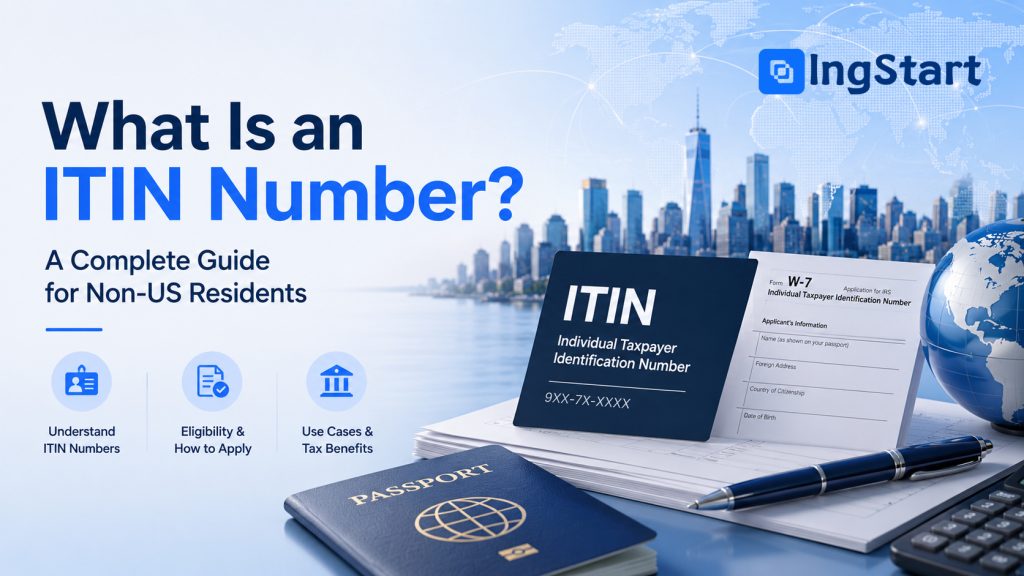
An Individual Taxpayer Identification Number (ITIN) is for people who need a US tax number but are not eligible for an SSN.
This is where the SSN EIN ITIN difference matters a lot for non-US residents. An ITIN is not a work authorization number, and it does not replace an EIN for business use. It exists mainly so individuals can meet US tax filing or reporting requirements when they can’t get a Social Security Number.
An ITIN is also a nine-digit number and looks similar to an SSN:
XXX-XX-XXXX
The IRS may issue an ITIN to:
- Nonresident aliens
- Resident aliens who are not eligible for an SSN
- Spouses of qualifying individuals
- Dependents of qualifying individuals
Do You Need an ITIN?
You may need an ITIN if all of the following are true:
- You do not have an SSN
- You are not eligible for an SSN
- You still need a US tax identification number
For example, a foreign person may need an ITIN to:
- File a US tax return
- Be included on a tax filing as a spouse or dependent
- Meet certain banking or tax-reporting requirements in the US
According to IRS rules, if a foreign individual has a US tax filing obligation but cannot obtain an SSN, they must use an ITIN instead.
This is one of the clearest examples of the SSN EIN ITIN difference:
SSN is for eligible individuals, ITIN is for ineligible individuals who still need a tax number, and EIN is for businesses.
How to Apply for an ITIN
To apply for an ITIN, you need to submit Form W-7 to the IRS, along with documentation supporting your identity and foreign status.
Some applicants get help through:
- Banks
- Colleges and universities
- Accounting firms
- Authorized acceptance agents
If your application is complete and you qualify, the IRS generally issues the ITIN within about seven weeks. If you apply during peak tax season or from outside the US, it can take up to 11 weeks.
SSN vs EIN vs ITIN: What’s the Real Difference?
When people search for the SSN EIN ITIN difference, what they usually want to know is not just the definition of each number, but when each one should actually be used.
Here’s the simplest way to think about it:
SSN vs EIN
- SSN = personal tax and identity number for eligible individuals
- EIN = tax number for a business entity
SSN vs ITIN
- SSN = for individuals eligible to receive a Social Security Number
- ITIN = for individuals who are not eligible for an SSN but still need a US tax number
EIN vs ITIN
- EIN = for a company or business structure
- ITIN = for an individual taxpayer without SSN eligibility
So the SSN EIN ITIN difference really comes down to who the number belongs to and why it’s needed.
When Do You Need an SSN, EIN, or ITIN?
If you’re still unsure about the SSN EIN ITIN difference, here’s a practical breakdown.
You likely need an SSN if:
- You are a US citizen
- You are a permanent resident
- You are legally authorized to work in the US
- You need a personal tax number tied to employment or government benefits
You likely need an EIN if:
- You own or are forming a US business
- You operate an LLC or corporation
- You need to open a business bank account
- You need to file business taxes or hire employees
You likely need an ITIN if:
- You are not eligible for an SSN
- You still need to file US taxes
- You need a US tax number as a foreign individual, spouse, or dependent
Can You Use SSN, EIN, and ITIN Interchangeably?
In most cases, no. One of the biggest misunderstandings around the SSN EIN ITIN difference is the idea that these numbers can be swapped freely. They usually cannot.
An SSN is tied to an eligible individual. An ITIN is tied to an individual who cannot get an SSN. An EIN is tied to a business. They are different tax identifiers for different legal and tax situations.
That said, there are some situations where a form may allow either an SSN or EIN depending on whether you are being paid as an individual or through a business entity. But that doesn’t mean they are interchangeable in general—it just means the form accepts different taxpayer types.
SSN EIN ITIN Difference for LLC Owners
For LLC owners, the SSN EIN ITIN difference matters a lot because the correct tax number depends on the structure of the business.
Single-member LLCs
A single-member LLC may, depending on its tax treatment and circumstances, use the owner’s SSN for certain tax purposes. In other cases, the LLC may still obtain and use an EIN, especially for banking, payroll, or vendor paperwork.
Multi-member LLCs
A multi-member LLC generally needs an EIN. That’s because it is treated as a separate business entity for tax filing purposes.
Non-resident LLC owners
If you are a non-US resident forming a US LLC, you may not have an SSN. In that case, your company can still apply for an EIN, and depending on your tax situation, you may also need an ITIN as an individual.
Do You Still Need an SSN If You Have an EIN?
Yes, possibly. Having an EIN does not automatically replace your need for an individual tax number.
An EIN is for your business. If you personally need to file taxes, work in the US, or identify yourself as an individual taxpayer, you may still need an SSN or ITIN depending on your eligibility.
This is another important part of the SSN EIN ITIN difference:
a business EIN does not replace a personal tax identification number.
Can an ITIN Replace an SSN or EIN?
Generally, no.
An ITIN cannot be used for employment authorization, and it also cannot replace an EIN for a business entity. It is simply an individual tax number for people who need to deal with the IRS but cannot get an SSN.
In some situations, an ITIN may help with tax filings or opening certain interest-bearing accounts, but it is not a substitute for a Social Security Number in employment contexts and not a substitute for an Employer Identification Number for a business.
Can You Apply for an ITIN and SSN at the Same Time?
Technically, you may try to apply for both if your situation is changing, but in practice it usually doesn’t make much sense. The IRS will not issue an ITIN to someone who is eligible for an SSN.
If you previously used an ITIN and later become eligible for an SSN, you should stop using the ITIN and use your SSN going forward.
Need Help Choosing Between an SSN, EIN, or ITIN?
Understanding the SSN EIN ITIN difference is one thing—actually figuring out which tax number you need for your immigration status, tax filing, or business setup is another.
This is especially true for founders and non-US residents who are trying to launch a US business while also dealing with IRS paperwork, banking requirements, and compliance rules. In many cases, the right answer depends on both your personal tax status and your business structure.
If you’re setting up a US LLC, applying for an EIN, or trying to understand what tax ID you may need as a non-resident founder, IngStart can help simplify the process. As a global company registration platform, IngStart supports entrepreneurs with company formation, cross-border compliance, and the setup steps that often come before banking and tax registration.
Final Thoughts on the SSN EIN ITIN Difference
The easiest way to understand the SSN EIN ITIN difference is to remember this:
- SSN = for eligible individuals
- EIN = for businesses
- ITIN = for individuals who need a US tax number but cannot get an SSN
If you’re a US worker or citizen, you’ll likely need an SSN. If you’re forming a company, you’ll likely need an EIN. If you’re a foreign individual with US tax obligations but no SSN eligibility, you may need an ITIN.
Once you understand that basic framework, it becomes much easier to know which number applies to you—and when you may need more than one.
FAQs About the SSN EIN ITIN Difference
Should I use an EIN or SSN for an LLC?
That depends on the LLC’s structure. Multi-member LLCs generally need an EIN. A sole proprietor or single-member LLC may in some cases use the owner’s SSN, but an EIN is still often needed for banking, payroll, or tax administration.
Can I use my EIN instead of an SSN for tax purposes?
In some situations—such as working through an LLC and completing a W-9—you may be able to provide the LLC’s EIN instead of your personal SSN. But this depends on the business structure and how you’re being paid.
Is an EIN only for businesses?
Yes. An EIN is a business tax ID. Individuals do not receive EINs unless they are applying on behalf of a business entity such as an LLC or corporation.
Do I still need an SSN if I have an EIN?
Possibly, yes. An EIN is for the business. You may still need an SSN or ITIN as an individual depending on your employment, tax, or residency situation.
Can an ITIN be used instead of an SSN or EIN?
Not generally. An ITIN cannot be used for employment authorization, and it cannot replace an EIN for a business entity.
Can I use my ITIN for employment?
No. An ITIN is not valid for employment authorization. It is only for tax purposes.
Can I apply for both an ITIN and an SSN?
You can, but if you are eligible for an SSN, the IRS generally will not issue an ITIN. If you later get an SSN after previously using an ITIN, you should stop using the ITIN.