
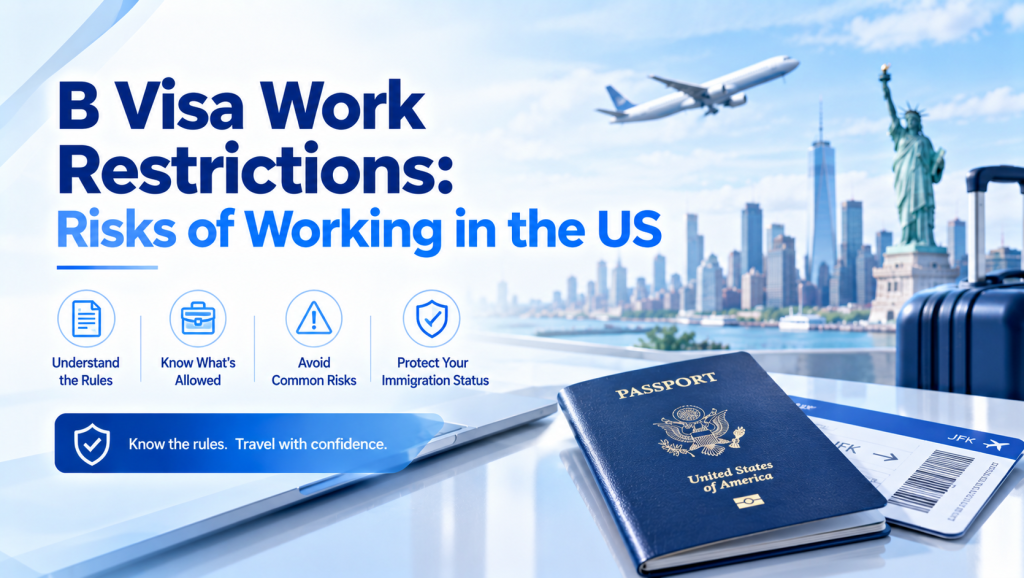
B visa work restrictions matter to anyone planning to visit the United States for business or tourism. The B-1 visa covers temporary business visits, while the B-2 visa covers tourism, visiting family or friends, and medical treatment. Some travelers receive a combined B-1/B-2 visa for both purposes. However, neither visa gives visitors general permission to work in the United States. Understanding the rules can help international travelers avoid immigration problems.
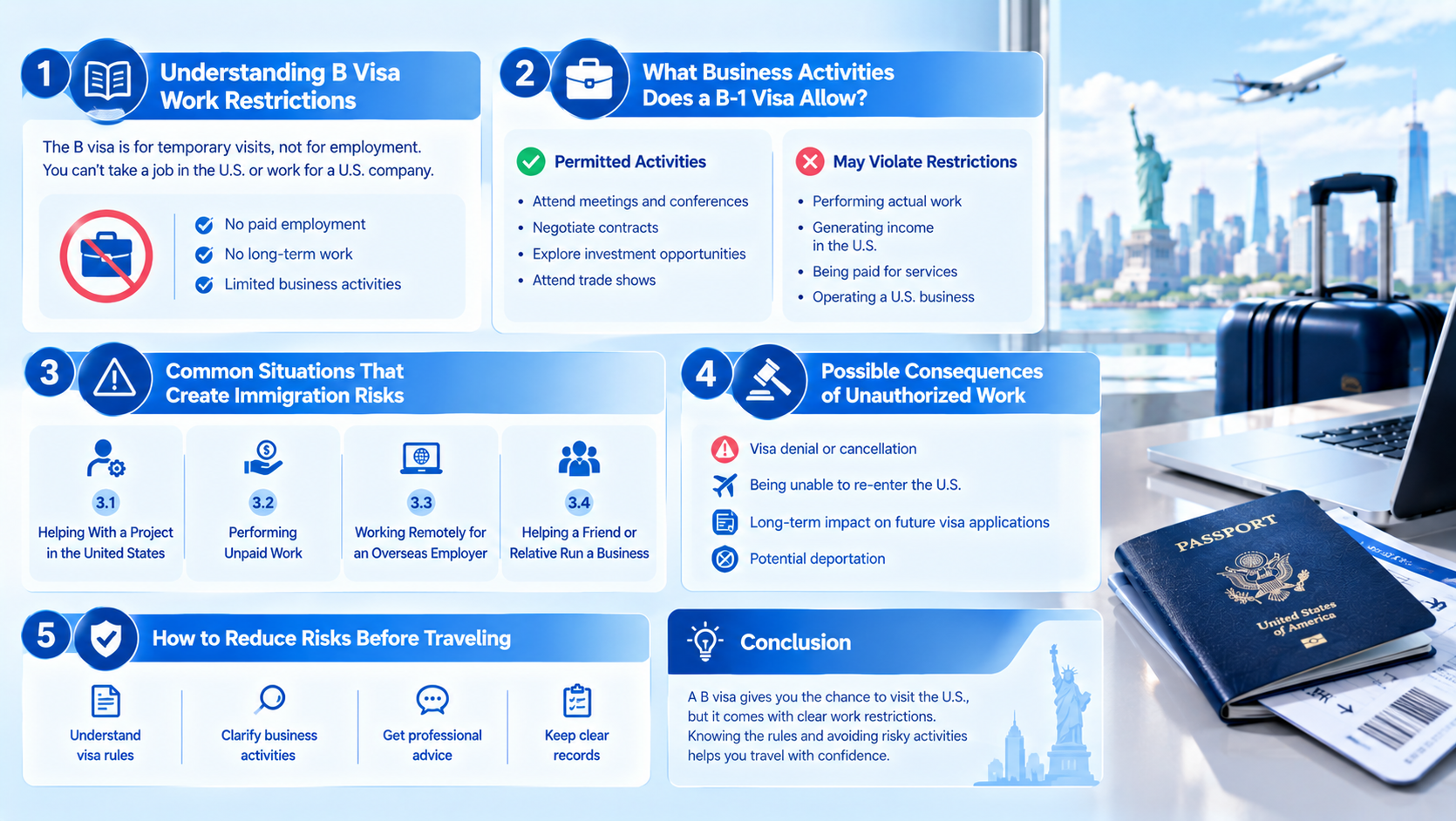
1. Understanding B Visa Work Restrictions
B visas allow temporary visits, not ordinary employment. Applicants must show that their travel plans fit the visa's purpose and that they intend to leave the United States after their visit. Under Section 214(b) of the Immigration and Nationality Act (INA), applicants generally must overcome the presumption of immigrant intent to qualify for a visitor visa.
The permitted length of stay also matters. US Customs and Border Protection (CBP) decides how long each visitor may stay. Although many visitors receive permission to stay for up to six months, travelers should check their Form I-94 for their actual departure deadline. A visa's expiration date does not determine how long a visitor may remain in the country.
Most importantly, a B visa does not authorize ordinary employment in the United States. Visitors must follow the rules that apply to their specific activities, even when they hold a valid visa.

2. B Visa Work Restrictions: Which Business Activities Are Allowed?
B-1 visitors may take part in certain temporary business activities. However, they cannot use the visa to perform ordinary employment or skilled or unskilled labor in the United States. The US Department of State explains which business activities may qualify.
2.1 Business Activities a B-1 Visa May Allow
Depending on the circumstances, B-1 visitors may generally:
- Attend business meetings, conferences, seminars, or professional events.
- Negotiate contracts or consult with business associates.
- Explore investment opportunities or research options for opening a business.
- Take orders for goods produced outside the United States, when the activity meets the applicable rules.
- Handle certain estate matters or take part in other specifically permitted business activities.
Some activities, such as specialized training or servicing certain equipment, qualify only under specific conditions. Therefore, visitors should not assume that every activity related to business falls within the permitted scope of a B-1 visa.
2.2 Activities That Violate B Visa Work Restrictions
In general, B-1 visitors cannot use their visa to take a job or perform ordinary work in the United States. Activities that may raise concerns include:
- Performing technical or non-technical work for a US employer.
- Managing the daily operations of a US business.
- Providing services or completing work for US clients when the activity amounts to unauthorized employment.
- Receiving a US salary for services performed during the visit, outside arrangements that the rules specifically permit.
The key distinction is between permitted business activities and work that requires employment authorization. The source of payment matters, but it does not settle the question by itself. Visitors cannot assume an activity is allowed simply because a US company does not pay them directly.
3. B Visa Work Restrictions: Common Situations That Create Risks
Some visitors may cross the line without fully understanding the rules. Before traveling, they should review their plans carefully and consider how immigration officials may view their activities.
3.1 Helping With a Project in the United States
Attending a meeting or discussing project plans may qualify as a permitted business activity. However, carrying out daily project tasks, producing work deliverables, or filling a role that a US worker would normally perform may raise concerns. Officials may look at the actual duties rather than the job title.
3.2 Performing Unpaid Work
Not receiving a salary does not automatically make an activity lawful. If a visitor performs productive work for a business, the activity may still fall outside the scope of a B visa. For example, helping a company complete routine tasks without pay can create immigration risks if those tasks amount to unauthorized employment.
3.3 Remote Work and B Visa Work Restrictions
Remote work requires particular care. Some visitors assume they can work online because their employer and salary come from outside the United States. However, US visitor visa rules do not provide a blanket exemption for remote work during a visit.
Occasional communication about an overseas job may differ from spending most of a US visit carrying out regular work duties. Still, no universal rule says that a few emails are always permitted or that overseas employment is automatically acceptable. The purpose of the visit, the nature of the work, and the surrounding circumstances all matter. If remote work will form a significant part of the stay, travelers should seek qualified immigration advice before entering the country.
3.4 Helping a Friend or Relative Run a Business
Informal help can also create problems. For example, assisting with daily operations, serving customers, or completing business orders may differ from attending a business meeting. A personal relationship with the owner does not remove the need to follow US immigration rules.
4. Consequences of Violating B Visa Work Restrictions
Unauthorized work can affect both the current trip and future immigration plans. Depending on the circumstances, visitors may face several consequences:
- At the border: CBP may refuse admission if a traveler does not qualify for entry or officials have concerns about the true purpose of the visit.
- Visa status: The US government may revoke or cancel a visa, depending on the circumstances. Travelers may also face difficulties when applying for another visa.
- Future immigration applications: Unauthorized employment or other status violations may affect later applications for a change of status, work authorization, or permanent residence. The impact depends on the facts and the rules that apply.
These outcomes do not happen automatically in every case. However, visitors should not assume that a short stay, unpaid work, or payment from abroad will protect them from immigration consequences.
5. How to Follow B Visa Work Restrictions Before Traveling
The safest approach is to make sure that planned activities match the purpose of the visa. Before departure, travelers should take the following steps:
- Define the purpose of the trip. Separate meetings and contract negotiations from hands-on work or ongoing business operations.
- Prepare supporting documents. Keep meeting invitations, travel plans, and business correspondence available to explain the purpose of the visit.
- Review remote work plans. If regular work will take place during the stay, check whether the activity qualifies under the applicable rules. Do not rely only on the location of the employer or the source of payment.
- Seek professional advice. A qualified US immigration lawyer can assess activities that do not clearly fit the visitor visa rules.
For entrepreneurs and companies planning international expansion, immigration planning is only one part of entering a new market. IngStart provides company registration and compliance support across multiple jurisdictions, helping businesses manage administrative tasks as they establish and grow their operations. However, company formation services do not replace immigration advice or provide work authorization.
Conclusion
B visa work restrictions draw a clear line between temporary visits and employment in the United States. Meetings, contract negotiations, and certain other business activities may qualify, but ordinary work generally requires the appropriate authorization. Unpaid tasks and remote work for an overseas employer do not automatically fall within the permitted scope.
Therefore, travelers should review their plans carefully and seek professional advice if their activities fall into an uncertain area. Choosing the correct immigration category before traveling can help protect future entry and immigration options.
Article Recommendations
- Multi-State HR Compliance: A US Guide for Employers
- US Labor Laws: 2026 Minimum Wage and Paid Leave Guide
- Employee Performance Reviews: How HR Drives Employee Growth
If you still have questions, please contact our team on WhatsApp at +1 213 751 2111. We'll help you find the right solution for your business and keep your company compliant as it grows.