

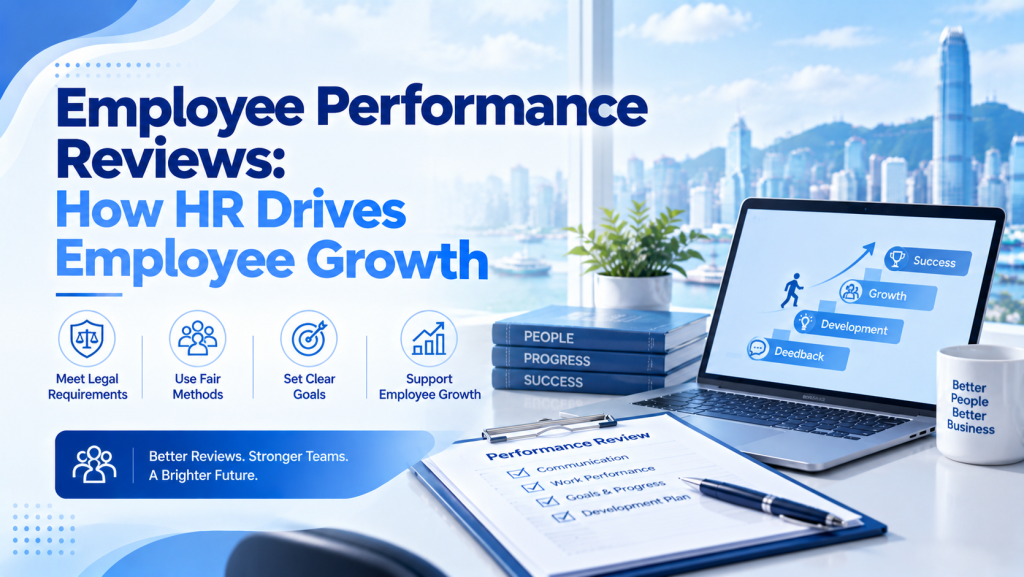
Employee performance reviews help US companies connect individual growth with business goals. However, a review should do more than measure past results. It should also help employees understand their strengths, improve their skills, and plan their careers.
Many organizations are moving away from reviews that focus only on annual ratings. Instead, they combine clear goals, regular feedback, and development plans. As a result, HR teams can make performance management more useful for both employees and the business.
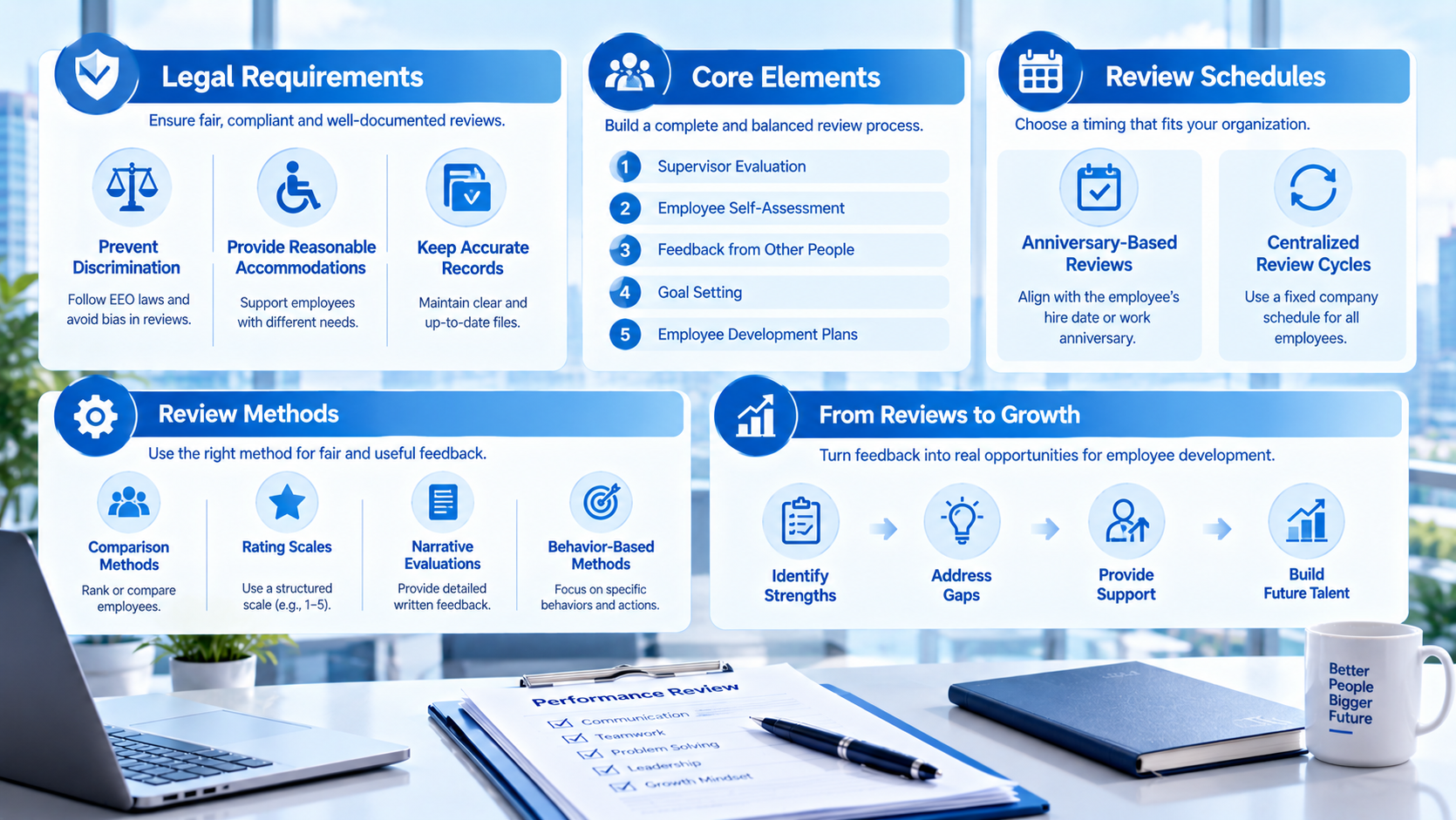
This article explores five core elements of employee performance reviews, two review schedules, and four common evaluation methods. It also explains how HR professionals can support employee growth while following relevant US employment laws.
1. Employee Performance Reviews and US Legal Requirements
US employers must follow employment laws when they assess employee performance. A fair review process should use clear standards, consistent methods, and factual evidence. These practices help reduce bias and support better employment decisions.
1.1 Prevent Discrimination in Performance Reviews
Title VII of the Civil Rights Act of 1964 prohibits covered employers from discriminating against employees based on protected characteristics, including race, color, religion, sex, and national origin. Other federal laws protect employees based on factors such as age and disability.
To support fair employee performance reviews, HR teams should:
- Set clear performance standards before the review period begins.
- Apply the same job-related standards consistently to employees in comparable roles.
- Base ratings on work results and observable behavior rather than personal opinions.
- Check for unexplained differences in ratings across teams or employee groups.
For example, a Behaviorally Anchored Rating Scale (BARS) links ratings to specific workplace behaviors. This approach can help managers explain their decisions and reduce reliance on vague impressions.

1.2 Provide Reasonable Accommodations
The Americans with Disabilities Act (ADA) may require employers to provide reasonable accommodations for qualified employees with disabilities. These accommodations can affect how employees perform their work and participate in performance discussions.
Depending on the situation, an accommodation might include an accessible review document, a modified meeting format, or an adjusted schedule. However, employers do not automatically need to lower job-related performance standards. Instead, they should consider effective accommodations that allow employees to meet essential job requirements.
1.3 Keep Accurate Performance Records
Clear records help managers explain ratings and support decisions about promotions, pay, training, or termination. They also help HR teams identify inconsistent treatment and address concerns.
Employers should keep records of goals, feedback, evaluation results, and agreed development actions. Federal and state laws may impose specific record-retention requirements, so HR teams should follow the rules that apply to their organization. Digital HR platforms can also help maintain consistent records and track changes.
2. Five Core Elements of Employee Performance Reviews
A useful review process should involve both managers and employees. It should assess past performance, gather different perspectives, and set clear next steps. The following five elements help HR teams build a more complete picture.
2.1 Supervisor Evaluation
Managers begin by comparing an employee's results with the goals set at the start of the review period. They should also consider whether business priorities changed or other factors affected the employee's work.
If performance falls short, managers should identify the reasons and agree on practical steps for improvement. This approach makes feedback more specific and helps employees understand what they need to do next.
2.2 Employee Self-Assessment
Employees should have a chance to reflect on their own performance before the review meeting. HR teams can share the meeting date and review questions in advance so employees have time to prepare.
During a self-assessment, employees can describe their achievements, challenges, future goals, and training needs. This process also encourages an open conversation rather than a one-way judgment from the manager.
2.3 Feedback from Other People
Managers may not see every part of an employee's daily work. Feedback from colleagues, direct reports, customers, or other relevant people can therefore provide a broader view.
One common approach is 360-degree feedback, also known as multi-rater feedback. It gathers perspectives from several sources to highlight strengths and areas for improvement. HR teams should explain how they will use this feedback and protect sensitive information where appropriate.
2.4 Goal Setting
Performance reviews should connect an employee's next goals with the organization's current priorities. Managers and employees can work together to set goals that are specific, realistic, and measurable.
For example, a customer service employee might aim to improve response times while maintaining customer satisfaction. When employees help shape their goals, they may feel more ownership of the results.
2.5 Employee Development Plans
A review should lead to action. Managers can recommend training, mentoring, new assignments, or leadership opportunities based on the employee's needs and career plans.
HR teams should record these actions and check progress during later meetings. This step turns employee performance reviews into an ongoing development process rather than a once-a-year task.
3. Two Common Schedules for Employee Performance Reviews
Companies can schedule reviews in different ways. The right choice depends on the organization's size, business cycle, management capacity, and compensation process.
3.1 Anniversary-Based Reviews
With an anniversary-based system, each employee receives a review around the date they joined the company. This approach spreads the workload across the year and gives managers more time to prepare for individual meetings.
However, managers may need to handle reviews throughout the year. The company may also find it harder to compare performance and coordinate pay decisions across teams.
3.2 Centralized Review Cycles
A centralized system evaluates most employees during the same period, often near the end of the year. This approach can help HR teams compare results, coordinate talent planning, and align reviews with annual compensation decisions.
On the other hand, managers may face a heavy workload during the review period. If they rush through meetings, feedback may become less detailed. HR teams can reduce this risk by setting clear deadlines, providing manager training, and encouraging regular feedback throughout the year.
4. Four Employee Performance Review Methods
Companies can assess performance through quantitative measures, qualitative feedback, or a combination of both. Each method offers different benefits, so HR teams should choose one that fits the role and review goals.
4.1 Comparison Methods
Comparison methods assess employees in relation to one another. Common examples include ranking, paired comparison, and forced ranking.
These methods can help managers distinguish performance levels across a team. However, they may encourage unhealthy competition if managers focus too much on relative rankings instead of individual progress.
4.2 Rating Scales
Rating scales ask managers to score employees against set criteria. These criteria may include work quality, communication, teamwork, reliability, or goal completion.
A simple numerical scale makes results easier to summarize and compare. Still, HR teams should define each rating clearly so different managers apply the scale consistently.
4.3 Narrative Evaluations
Narrative methods ask managers to describe an employee's performance in writing. Common approaches include written comments, critical incident reports, and reviews conducted with support from HR specialists.
These methods provide context that a numerical score may miss. For example, a manager can describe how an employee handled a difficult customer or helped a team complete an urgent project. However, HR teams should guide managers to use specific examples rather than general statements.
4.4 Behavior-Based Methods
The Behaviorally Anchored Rating Scale (BARS) combines numerical ratings with examples of observable behavior. It uses job-related dimensions and describes what different levels of performance look like.
For example, a receptionist's evaluation might include the dimension "welcoming customers." A high rating could reflect greeting visitors promptly, communicating clearly, and directing them to the right person. A lower rating might reflect repeated delays or unclear instructions.
By linking ratings to real workplace actions, BARS can make feedback more specific and easier to discuss. It also helps managers explain why an employee received a particular score.
5. How HR Can Turn Employee Performance Reviews into Growth Opportunities
A well-designed review system should support both business results and employee development. HR teams can improve the process by setting clear expectations, encouraging regular conversations, and following up on agreed actions.
Useful steps include:
- Set clear standards: Explain goals and evaluation criteria before the review period starts.
- Train managers: Help them give specific feedback and recognize potential bias.
- Encourage ongoing conversations: Do not wait until the annual review to address challenges or recognize achievements.
- Track development actions: Record training needs, career goals, and follow-up dates.
- Review the process: Gather employee feedback and check whether the system supports fair and consistent decisions.
For companies expanding into the US or managing teams across several countries, HR processes often need to work alongside company registration and ongoing compliance tasks. IngStart provides company registration and compliance support in multiple jurisdictions, helping businesses organize key documents and track administrative processes as they grow.
Conclusion
Employee performance reviews can do more than measure past results. When companies combine clear standards, employee input, useful feedback, and practical development plans, reviews can help people improve and support business growth.
The most effective approach depends on the company's needs. However, fair evaluation criteria, accurate records, and regular follow-up remain important across different review systems. By treating performance management as an ongoing conversation, HR teams can help employees understand their progress and prepare for future opportunities.
Article Recommendations
- Multi-State HR Compliance: A US Guide for Employers
- US Labor Laws: 2026 Minimum Wage and Paid Leave Guide
- US Securities Tax: Rules and Refund Guide for Foreign Investors
If you still have questions, please contact our team on WhatsApp at +1 213 751 2111. We'll help you find the right solution for your business and keep your company compliant as it grows.