
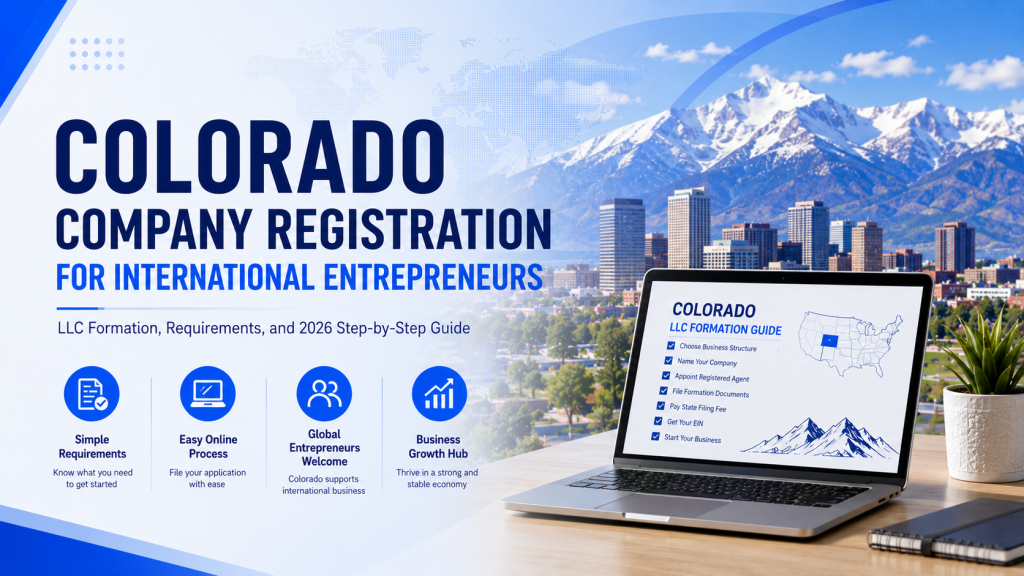
Colorado Company Registration is an attractive option for international entrepreneurs who want to establish a business in the United States. Colorado has a diverse economy covering technology, manufacturing, tourism, professional services, transportation, and other industries. At the same time, the state provides an online business filing system, making the company formation process relatively straightforward.
For non-U.S. entrepreneurs, however, registering a company involves more than simply filing a form. You need to choose the right business structure, prepare the required information, arrange a registered agent, and understand your ongoing tax and compliance responsibilities. This guide explains the key requirements and process for Colorado Company Registration in 2026.
Colorado Company Registration Requirements
Before starting Colorado Company Registration, it is important to understand the basic requirements. Although the exact requirements depend on the business structure you choose, most international entrepreneurs should pay attention to the following areas.
Colorado Company Registration: Business Name
The first step is choosing a suitable business name. Your name should be distinguishable from existing business names registered with the Colorado Secretary of State. You can search the state's business records before filing to check whether your preferred name is available.
The name should also comply with the naming rules for your chosen entity type. For example, an LLC generally needs to identify itself as an LLC or use an appropriate equivalent designation.
Colorado Company Registration: Business Structure
Colorado allows entrepreneurs to establish different types of business entities, including:
- Limited Liability Company (LLC)
- Corporation
- Partnership
- Other business structures permitted under Colorado law
For many international entrepreneurs, an LLC can be a practical choice because of its flexible management structure and limited liability protection. However, the best structure depends on your business activities, ownership arrangement, and tax situation.
Therefore, it is advisable to consider both legal and tax implications before completing Colorado Company Registration.
Colorado Company Registration: Registered Agent
A Colorado business generally needs a registered agent with a physical address in Colorado. The registered agent receives official correspondence and legal documents on behalf of the company.
If you are a non-U.S. entrepreneur and do not have a physical presence in Colorado, you can usually work with a professional registered agent service instead of maintaining your own office in the state.
Colorado Company Registration: Filing Information
The information required depends on the entity type. For example, an LLC filing generally includes the company name, principal office information, registered agent information, information about the person forming the company, and other required details. The Colorado Secretary of State also notes that information submitted through its filing system may become publicly viewable.
Therefore, international applicants should carefully review all information before submitting the formation documents.
Colorado Company Registration: EIN and Tax Registration
An Employer Identification Number (EIN) is issued by the U.S. Internal Revenue Service (IRS). It is separate from the identification number assigned by the Colorado Secretary of State after a business filing.
Depending on the entity type and business activities, your company may also need to register for applicable Colorado tax accounts. For example, businesses collecting sales tax may need to register with the Colorado Department of Revenue.
Colorado Company Registration: Trademark Protection
Company registration does not automatically give you trademark protection. If you plan to build a long-term brand in the United States, you may also consider applying for trademark protection through the U.S. Patent and Trademark Office (USPTO).
This is especially useful for businesses that plan to operate under a specific brand name, sell products online, or expand into multiple U.S. markets.
Colorado Company Registration Process
Once you understand the requirements, the actual Colorado Company Registration process can be completed in several main steps.
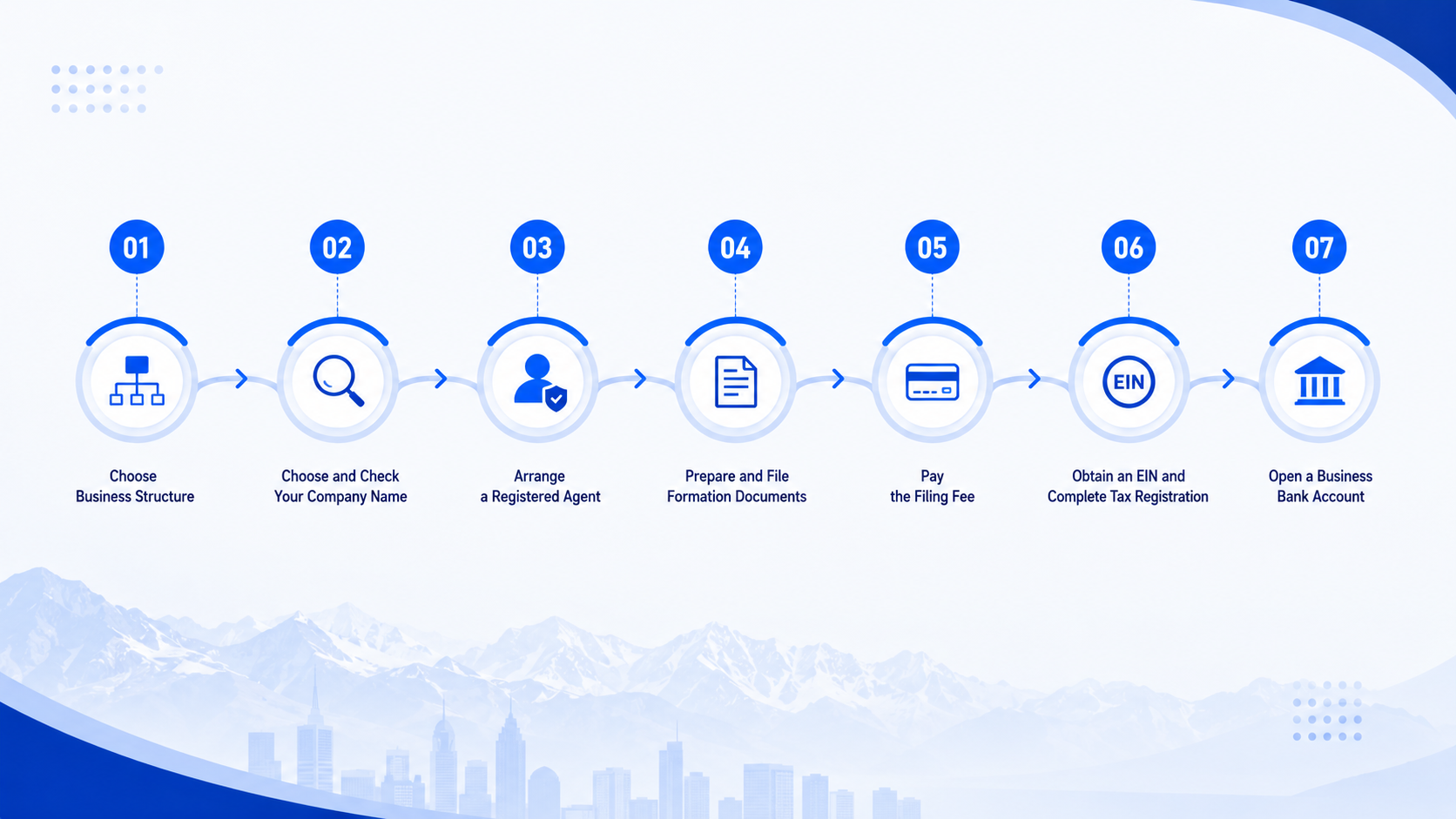
Step 1: Choose a Business Structure
First, decide whether an LLC, Corporation, Partnership, or another structure is appropriate for your business.
For international entrepreneurs, this decision can affect taxation, ownership, management, and future compliance. Therefore, it is better to make the decision before preparing your formation documents.
Step 2: Choose and Check Your Company Name
Next, select a unique company name and search the Colorado business database.
If the name is available and meets the state's requirements, you can proceed with the formation filing. Checking the name in advance can help reduce the risk of filing problems.
Step 3: Arrange a Registered Agent
You then need to provide registered agent information for the company.
For entrepreneurs living outside the United States, a professional registered agent can be a convenient option. It allows the company to maintain the required Colorado contact address without requiring the owner to relocate to the state.
Step 4: Prepare and File Formation Documents
After choosing the structure, name, and registered agent, prepare the appropriate formation document.
For example, an LLC generally files Articles of Organization with the Colorado Secretary of State. The state provides an online filing system, and the filing becomes effective after the required payment is completed unless a delayed effective date is selected.
Step 5: Pay the Filing Fee
The required filing fee depends on the type of filing. Before submitting your application, check the latest fee information on the Colorado Secretary of State's official website because state fees and requirements may change.
Step 6: Obtain an EIN and Complete Tax Registration
After the company is formed, determine whether it needs an EIN and which federal and Colorado tax registrations apply.
For example, Colorado's tax registration materials require an FEIN for many entity types, including LLCs and corporations.
However, tax registration is separate from the initial company formation filing, so international entrepreneurs should treat it as a subsequent compliance step.
Step 7: Open a Business Bank Account
Once your company documents and tax information are ready, you can begin preparing for a U.S. business bank account.
Banks and financial institutions may ask for formation documents, EIN information, ownership details, identification documents, proof of address, and information about the company's business activities.
For international entrepreneurs who want to complete Colorado Company Registration remotely, preparing these documents in advance can make the subsequent banking process much easier. Ingstart can also assist overseas entrepreneurs with U.S. company formation and related business services, providing a more convenient option for those who need support throughout the setup process.

Colorado Company Registration: Main Advantages
Flexible Business Structures
One advantage of Colorado Company Registration is the range of business structures available. Entrepreneurs can choose an LLC, Corporation, Partnership, or another suitable structure according to their business needs.
This flexibility makes Colorado suitable for different types of businesses, from startups and service companies to technology and e-commerce businesses.
Online Filing Process
Colorado provides an online business filing system, which makes the formation process more convenient. For international entrepreneurs, this can reduce the need for in-person visits during the initial registration stage.
As a result, Colorado Company Registration can be relatively accessible even when the business owner lives outside the United States.
Diverse Business Environment
Colorado has a diversified economy with strong activity in technology, tourism, professional services, manufacturing, and other industries.
This variety gives international entrepreneurs different opportunities when choosing a business location and developing a U.S. market strategy.
Straightforward Ongoing Filing
Colorado businesses generally need to maintain their registration by filing a Periodic Report each year. The Colorado Secretary of State specifically states that an LLC must file a periodic report annually to remain in good standing.
This requirement is important for international business owners because company formation is only the beginning. Keeping the company in good standing requires ongoing compliance.
Colorado Company Registration: Annual Compliance
Colorado Company Registration: Periodic Report
After completing Colorado Company Registration, the company must continue to meet Colorado's ongoing filing requirements.
For applicable reporting entities, a Periodic Report is generally required each year. The report is used to keep the state's business records up to date. Colorado law requires reporting entities to file these reports on time, and failing to do so can put the business at risk of penalties or loss of good standing.
Colorado Company Registration: Maintain Company Records
Businesses should also keep their company information accurate and up to date. This may include the registered agent, principal address, management information, and other details required by the state.
If any important information changes, the company should update its records through the appropriate filing.
Colorado Company Registration: Tax Compliance
Annual state filing is only one part of ongoing compliance. Depending on the company's activities and tax classification, it may also have federal and state tax obligations.
For example, businesses involved in taxable sales may need to manage Colorado sales tax registration and filings. Colorado's 2026 tax materials state that the state sales tax rate is 2.9%, while applicable city, county, and special district rates can vary by location.
Therefore, international business owners should review their actual activities rather than assuming that every Colorado company has the same tax obligations.
Colorado Company Registration: What International Entrepreneurs Should Know
For non-U.S. entrepreneurs, Colorado Company Registration can be a practical way to establish a U.S. business. Nevertheless, the process should be viewed as more than simply registering a company name.
You should first choose an appropriate business structure, prepare accurate company information, appoint a registered agent, complete the state filing, and then handle EIN and applicable tax registrations. After that, maintaining the company requires regular filings and other compliance work.
Most importantly, requirements can vary depending on your company structure, ownership, business activities, and tax status. Checking the latest Colorado requirements before filing can help avoid unnecessary delays and compliance problems.
With the right preparation, Colorado Company Registration can provide international entrepreneurs with a clear starting point for building and operating a business in the U.S. in 2026.
Article Recommendations
- US Bank Accounts 2026: Remote Personal & Business Banking Guide
- US Company Registration Guide: LLC vs LTD, State Selection & Foreign Profit Tax
- US LLC States for Non-US Residents: A Practical Guide
Still have questions? Contact our team on WhatsApp at +1 213 751 2111. We'll help you find the right solution for your business and keep your company compliant as it grows.