
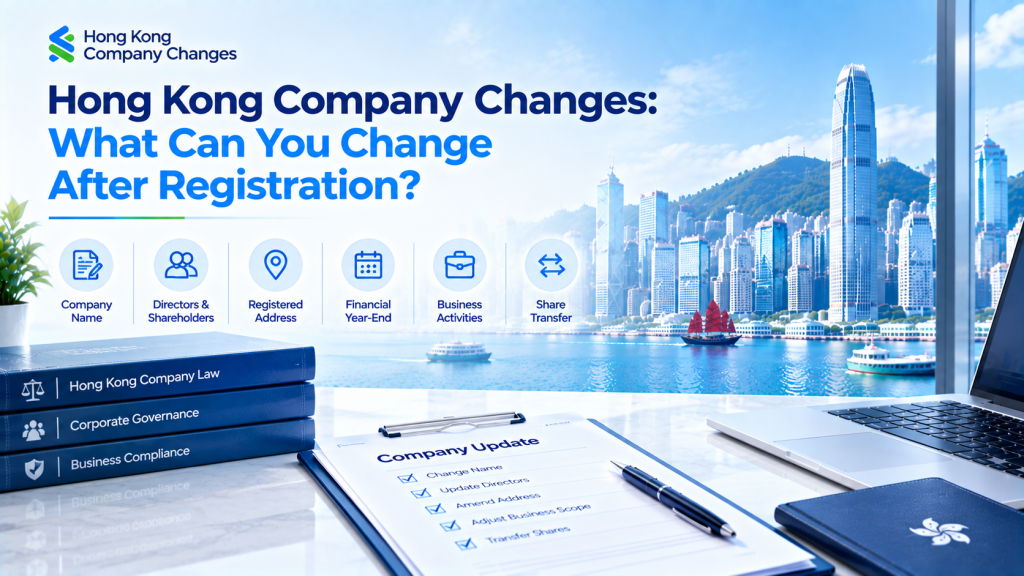
After incorporating a company in Hong Kong, business needs may change over time. As a result, owners may need to update some of their company information. Hong Kong Company Changes can cover the company name, directors, shareholders, registered address, financial year-end, business activities, and shareholding structure.
For international business owners, it is important to understand which company details can be changed and what documents or procedures may apply. This guide explains the main Hong Kong Company Changes you can make after registration.
Hong Kong Company Changes: What Can Be Changed?
Hong Kong companies can update various corporate details after incorporation. However, the procedure depends on the type of change.
Company Name
A company can change its registered name after incorporation if the shareholders decide that a new name is more suitable. The company needs to apply for the name change through the Hong Kong Companies Registry and follow the required procedures. The new name must also meet the applicable naming requirements.
A company may change its English name, Chinese name, or both. After the change is completed, the company should also update its business records and notify relevant institutions, such as its bank. The company's business registration documents may also need to be updated. In addition, the company may need to arrange new company stamps and other business materials.

Directors and Shareholders
Another common type of Hong Kong Company Changes involves directors and shareholders. A company can appoint or remove directors when its management structure changes. Shareholders can also change when shares are transferred or sold.
When making these changes, the company needs to prepare the relevant corporate documents and identification information. The exact requirements depend on the type of change and the company's existing structure. For international owners, it is important to keep the company's statutory records consistent with the information submitted to the Companies Registry.
Registered Address
A Hong Kong company must maintain a registered office address in Hong Kong. However, the registered address can be changed after incorporation. If the company moves to another address or uses a different corporate service provider, it should update its registered office information through the appropriate procedure. Keeping the address up to date is important because official notices and company documents may be sent to the registered office.
Financial Year-End
Companies may also change their financial year-end when their existing accounting period no longer fits their business needs.
For example, an international company may want to align its financial year with its parent company or another group entity. In this case, the company should review the applicable accounting and tax requirements before changing the year-end.
Because the financial year-end can affect accounting and tax reporting, business owners should plan the change carefully.
Business Activities
A company's business activities may also change as the business develops.
Common changes may include:
- Change in the nature of business
- Changes to the company's constitutional documents
- Updates to company records and statutory information
The company should make sure that its corporate records remain consistent with its actual business activities. For international entrepreneurs, this is especially important when the company expands into new markets or changes its main source of business.
Share Transfer
Share transfers are another important form of Hong Kong Company Changes. Hong Kong companies can generally transfer or sell shares between parties, subject to the company's constitutional documents and applicable legal requirements. A share transfer may also create a stamp duty obligation.
Before completing a transfer, the parties should agree on the transaction terms and prepare the relevant documents. They should also review the company's financial, tax, and compliance position. In particular, the buyer should understand whether the company has outstanding liabilities, unpaid taxes, penalties, or other obligations. This review can help reduce unexpected problems after the transfer.
For a company transfer involving new directors or shareholders, the incoming individuals must also meet the applicable legal requirements. In general, a director of a Hong Kong company must be at least 18 years old.
Company Name Change
A company name change involves several practical matters that business owners should consider.
First, a company can change only its Chinese name, only its English name, or both names. Second, the company needs to complete the required filing and obtain the updated corporate documents. The business registration information should also be kept consistent.
After the name change, the company should notify its bank and other relevant service providers. Otherwise, the old company name may continue to appear on account records or business documents. Finally, the company may need to replace its company stamps, invoices, contracts, website information, and other business materials.
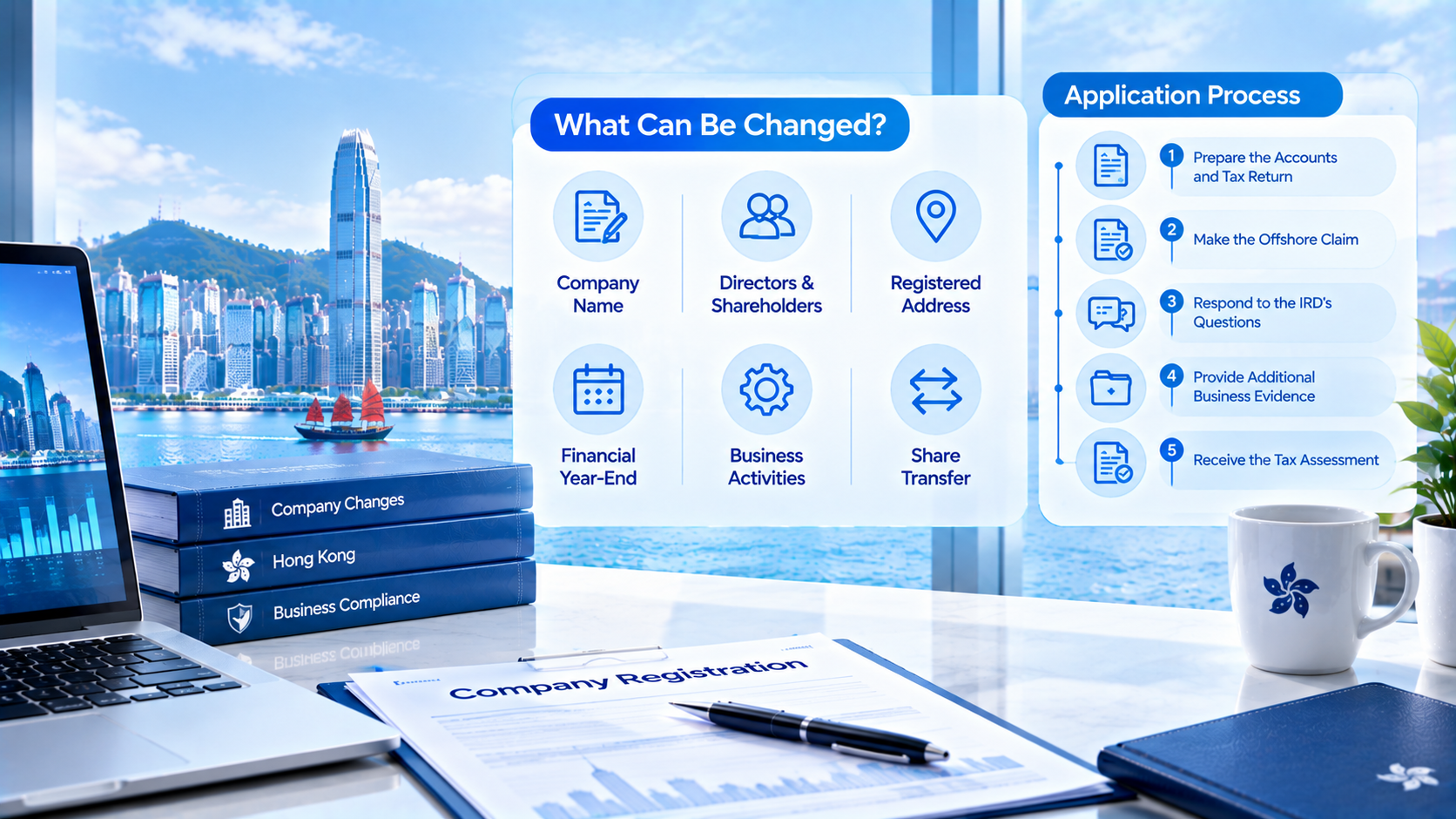
Share Transfer Considerations
Share transfers require careful preparation because they can affect ownership and control of the company. Before completing a transfer, the parties should review the company's existing shareholding structure and agree on the transfer terms. A written share transfer agreement can help clearly record the rights and responsibilities of the parties.
The company should also check whether its constitutional documents contain any restrictions or procedures for transferring shares. In addition, the parties should consider the company's existing debts, tax matters, penalties, and other outstanding obligations before completing the transaction.
Depending on the company's circumstances, shareholder approval or other corporate procedures may also be required. Therefore, the parties should follow the company's constitutional documents and applicable Hong Kong requirements rather than relying on a general procedure.
How to Manage Hong Kong Company Changes
Because different changes require different documents and filings, international business owners should prepare the relevant information before submitting an application.
A typical preparation process may include:
- Confirming the type of company change
- Checking the company's current statutory information
- Preparing identification and corporate documents
- Reviewing shareholder or director arrangements
- Completing the required forms or resolutions
- Updating the relevant company records
- Notifying banks or other institutions when necessary
For international entrepreneurs who manage their Hong Kong companies remotely, keeping these records organized can make future changes easier.
IngStart provides Hong Kong company registration and ongoing corporate compliance services for international businesses. Its services can help business owners manage company changes, annual compliance, tax-related matters, banking support, and corporate documents through one platform.
Conclusion
Hong Kong Company Changes allow businesses to adjust their corporate structure and information as their needs develop. Common changes include the company name, directors, shareholders, registered address, financial year-end, business activities, and shareholding structure.
However, each type of change may involve different documents, approvals, filings, and tax considerations. Therefore, international business owners should check the specific requirements before making a change.
By keeping corporate information accurate and completing the required procedures on time, companies can maintain proper records and support their long-term business operations in Hong Kong.
Article Recommendations
- Hong Kong Company Registration Guide 2026: Steps and Requirements for Global Entrepreneurs
- How to Open a US Company Bank Account in Hong Kong in 2026
- Hong Kong Company Tax Guide 2026: Rates, Filing Process & Requirements
If you still have questions, please contact our team on WhatsApp at +1 213 751 2111. We'll help you find the right solution for your business and keep your company compliant as it grows.