
Singapore Company Registration has become a popular choice for international entrepreneurs and companies expanding into Asia. Singapore’s stable business environment, strategic location, developed financial system, and extensive international connections make it an attractive base for cross-border business.
For overseas entrepreneurs, Singapore Company Registration can provide more than just a local business presence. It can also support international trade, regional expansion, investment, and long-term business development.
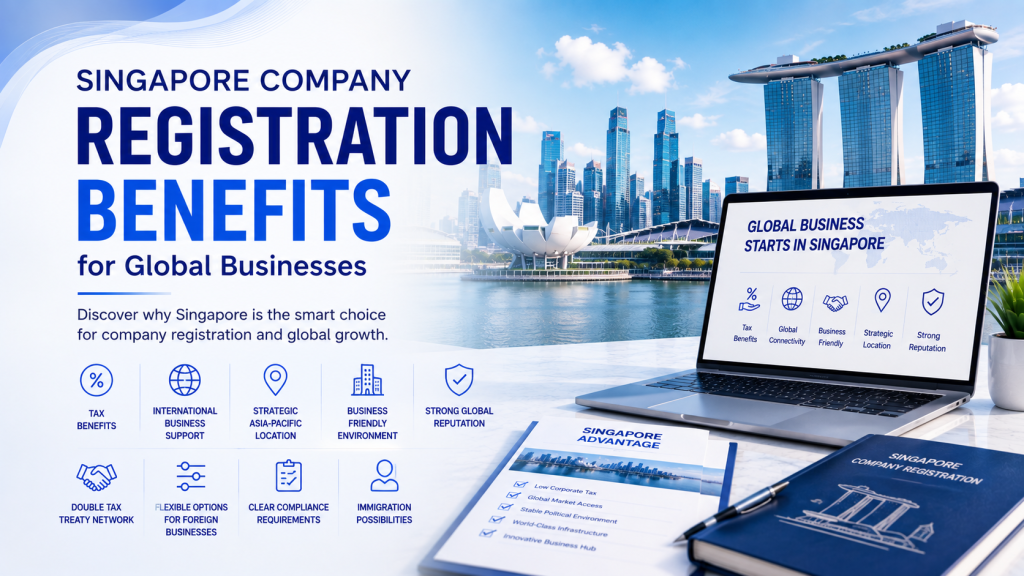
Here are the main benefits you should know before registering a company in Singapore in 2026.
Tax Benefits of Singapore Company Registration
One of the main reasons businesses consider Singapore Company Registration is its competitive corporate tax system.
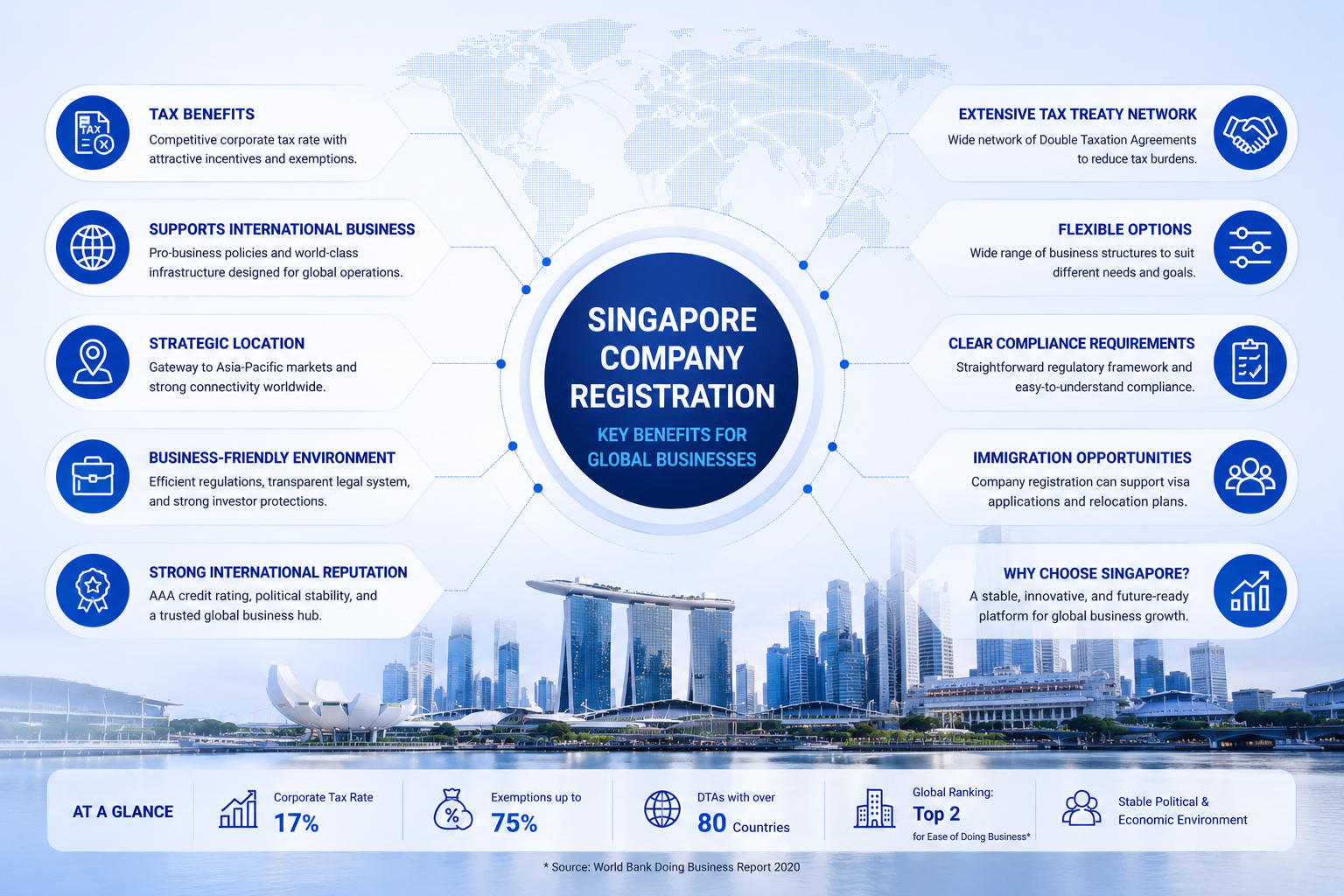
Singapore's standard Corporate Income Tax rate is 17% of chargeable income for both local and foreign companies. In addition, qualifying companies may benefit from partial tax exemptions and other tax incentives. For YA 2026, Singapore also provides a 40% Corporate Income Tax rebate for qualifying taxpaying companies.
However, foreign-sourced income should not be assumed to be automatically tax-free. Singapore tax resident companies may qualify for exemptions on certain specified foreign-sourced dividends, branch profits, and service income when the relevant conditions are satisfied. Therefore, companies should review their income sources and tax structure carefully before making investment decisions.
Singapore Company Registration Supports International Business
Singapore is widely recognized as an international business and financial hub. Its location in Southeast Asia makes it convenient for companies serving customers and suppliers across Asia-Pacific and other global markets.
For businesses engaged in international trade, e-commerce, technology, consulting, logistics, or financial activities, a Singapore company can provide a useful regional operating base. Singapore also has an extensive network of international trade and tax agreements, which can support businesses involved in cross-border transactions.
Strategic Location for Asia-Pacific Expansion
Singapore is located at a major international shipping and trade crossroads. Its proximity to major Asian markets makes it particularly attractive for businesses that want to develop operations in Southeast Asia. For Chinese and other Asian entrepreneurs, Singapore can also serve as a convenient regional base for managing business relationships across different markets. As a result, Singapore Company Registration can be useful for companies that want to expand beyond their home market without immediately establishing operations in multiple countries.

Business-Friendly Corporate Environment
Singapore has a well-developed corporate registration and regulatory system. Businesses can complete registration through ACRA's Bizfile system, while foreign businesses can choose from several structures depending on their expansion plans.
For example, foreign businesses can establish:
- A Singapore subsidiary or local company
- A Singapore branch
- A representative office
- A re-domiciled Singapore company
Each structure has different legal, tax, and compliance implications. Therefore, companies should choose the structure that matches their business objectives.
Strong International Business Reputation
Another advantage of Singapore Company Registration is the country's strong international business reputation.
Singapore is known for its transparent regulatory environment, developed infrastructure, and professional business services. Establishing a company there can therefore help international businesses build a more credible regional presence.
For companies serving overseas customers, suppliers, or investors, a Singapore business entity may also make it easier to present the business as an established international operation. However, company registration alone does not guarantee higher credibility. Businesses still need to maintain proper corporate governance, financial records, tax compliance, and business operations.
Extensive Double Taxation Agreement Network
Singapore has established a broad network of Avoidance of Double Taxation Agreements (DTAs), limited DTAs, and Exchange of Information Arrangements.
As of 2026, Singapore has signed such agreements and arrangements with around 100 jurisdictions. These agreements can help determine how certain cross-border income is taxed and may reduce the risk of double taxation when the applicable conditions are met.
This is particularly relevant for businesses receiving income from multiple countries. However, the availability of treaty benefits depends on the specific agreement, income type, tax residency, and other conditions. Companies should therefore obtain professional tax advice before relying on a DTA.
Flexible Options for Foreign Businesses
Foreign entrepreneurs do not have to use exactly the same structure for every business model. For example, a foreign company that wants to conduct full commercial operations in Singapore may establish a local company or subsidiary. A business that only wants to study the market may consider a representative office, while an existing overseas company may choose to establish a branch. This flexibility allows businesses to choose an entry strategy based on their investment plans and operational needs. Foreign businesses must also engage a registered corporate service provider (CSP) when registering a business structure in Singapore.
For overseas entrepreneurs who want to simplify this process, IngStart provides Singapore company registration and ongoing business support, including corporate compliance, banking assistance, tax-related services, and other administrative services for international businesses.
Relatively Clear Ongoing Compliance Requirements
Registering a Singapore company is only the beginning. Companies must continue to meet corporate, tax, and regulatory obligations after incorporation.
Depending on the structure and circumstances, businesses may need to:
- Maintain company registers and corporate information
- File required annual returns
- Maintain accounting records
- Submit corporate tax filings
- Register for GST when applicable
- Obtain industry-specific licenses
- Update changes to company information
For example, companies may need to register for GST when taxable turnover exceeds S$1 million or when they reasonably expect taxable turnover to exceed S$1 million in the next 12 months. Therefore, businesses should consider ongoing compliance costs when evaluating the overall benefits of Singapore Company Registration.
Can Singapore Company Registration Help With Immigration?
Some entrepreneurs choose Singapore because they also want to explore opportunities to live and work there. However, registering a company does not automatically provide immigration or permanent residence rights. Entrepreneurs who want to relocate to Singapore need to meet the requirements of the relevant work pass or immigration program. The company itself is only one part of the overall application process. Therefore, immigration planning should be considered separately from company registration.
Why Choose Singapore Company Registration?
Overall, Singapore Company Registration can offer several advantages for international entrepreneurs and businesses:
- A competitive 17% corporate income tax rate
- Potential tax exemptions and incentives for qualifying businesses
- A strong regional business environment
- Convenient access to Asian markets
- A broad international tax agreement network
- Flexible structures for foreign businesses
- A well-developed corporate and financial system
- Strong international business credibility
However, these benefits do not mean Singapore is automatically the best jurisdiction for every business. Your industry, target market, tax residency, ownership structure, investment plans, and compliance requirements should all be considered before making a decision.
Final Thoughts on Singapore Company Registration
Singapore Company Registration can be a strategic option for international businesses seeking a stable base for Asian and global operations. The combination of a competitive corporate tax system, international connectivity, business-friendly infrastructure, and extensive tax treaty network makes Singapore attractive to many foreign entrepreneurs.
At the same time, businesses should not focus only on registration costs or tax rates. Local compliance, tax residency, licensing, corporate structure, and long-term business objectives are equally important. By choosing the right structure and planning compliance requirements from the beginning, entrepreneurs can make better use of Singapore as a regional business hub and create a stronger foundation for international expansion.
Article Recommendations
- Singapore Company Annual Filing Guide 2026: Requirements, Documents & Compliance Tips
- Singapore Company Tax Guide 2026: Rates, Rules & Compliance Requirements
- Singapore Company Registration Types Guide for Foreign Entrepreneurs
If you still have questions, please contact our team on WhatsApp at +1 213 751 2111. We'll help you find the right solution for your business and keep your company compliant as it grows.