
The Bank of Lithuania revoked the Paytend License after an inspection found serious and systematic compliance failures at PAYTEND EUROPE, UAB. The regulator announced the decision on March 6, 2026. The findings covered transaction monitoring, anti-money laundering and counter-terrorist financing (AML/CFT), internal controls, regulatory reporting, and financial reporting.
As a result, Paytend can no longer provide financial services under its former authorization. For users of Paytend and similar cross-border payment platforms, the case also raises a wider question: what does an EMI license actually protect, and what happens when a regulated payment provider can no longer meet its regulatory requirements?
Paytend License Was Revoked
The Bank of Lithuania found several serious deficiencies during its inspection of PAYTEND EUROPE, UAB. The problems went beyond one transaction or one employee. Instead, they affected several parts of the company's compliance and control framework.
Key Regulatory Findings
The regulator identified several major issues:
- Insufficient transaction monitoring: The company's monitoring measures could not effectively identify suspicious customer activity.
- Weak alert analysis: Staff did not always review alerts about potentially suspicious activity in a timely and thorough way.
- Incomplete internal investigations: Some investigations remained formal or incomplete.
- Failure to report suspicious transactions: The company did not submit suspicious transaction reports to the Financial Crime Investigation Service even when indicators required further escalation.
- Weak internal controls: The company lacked effective internal control procedures and a clear distribution of responsibilities.
- Insufficient AML/CFT resources: The company did not allocate enough resources to prevent money laundering and terrorist financing.
- Poor conflict-of-interest management: The company did not properly separate control functions from business interests.
- Incorrect regulatory information: The company gave the regulator incorrect information about its relationship with a high-risk customer.
- Recordkeeping problems: The company did not properly retain and submit correspondence related to the high-risk customer.
- Late regulatory reporting: The company did not approve and submit its audited 2024 annual financial statements and other required documents and supervisory reports on time.
The Bank of Lithuania described these violations as serious and systematic. The findings covered transaction and business relationship monitoring, AML/CFT risk management, and the internal control system.
What the License Revocation Means
The regulator concluded that Paytend no longer met the requirements for its regulated financial activities. Therefore, the Bank of Lithuania revoked the license. From March 3, 2026, Paytend could no longer provide financial services. The company also had to inform customers about the procedure for settling with them within five business days.
Customers who still held funds with Paytend had to contact the company directly to request the return of those funds. Paytend must return the funds to an account at another financial institution specified by the customer.
This situation goes beyond a temporary restriction or tighter risk controls. The license revocation means that Paytend can no longer operate as an authorized EMI for the regulated financial services covered by that license.
Why a European EMI License Does Not Mean a Bank
Many users see a European financial license and assume that the provider works in the same way as a traditional bank. However, an electronic money institution (EMI) is not the same as a bank.
An EMI can provide certain payment and electronic money services, but it does not automatically have the same business model or authorization as a bank. Depending on its authorization and services, an EMI may provide payment accounts, cards, electronic money, and related services without operating as a full-service deposit-taking bank.
This difference matters when users choose a payment platform. A card, IBAN, mobile application, or online banking interface may make a financial service look similar to a traditional bank. However, the underlying legal structure, safeguarding arrangements, payment infrastructure, and regulatory framework can differ.
As a result, users should look beyond the interface and understand which regulated entity actually provides the service. The risk becomes more important when an EMI expands quickly into higher-risk business areas. For example, rapid growth in cross-border payments, card programs, digital assets, or other complex payment services can increase the need for strong customer due diligence and transaction monitoring.
A typical risk chain can look like this:
- The platform expands its payment or card business quickly.
- The customer base becomes more complex.
- Higher-risk transactions enter the system.
- AML monitoring does not develop at the same speed.
- The regulator identifies weaknesses in monitoring, reporting, or internal controls.
- Regulatory action follows.
The Paytend case does not establish that every EMI or cross-border payment platform follows this pattern. However, it shows why the strength of a provider's compliance framework matters alongside its license and product features.

What Went Wrong at Paytend?
Transaction Monitoring Failed to Identify Risk
One of the most important findings involved transaction and business relationship monitoring. For any financial institution, understanding customer activity and identifying unusual transactions are basic parts of risk management. The Bank of Lithuania found that Paytend's monitoring measures could not effectively identify suspicious customer activity.
This was not simply a matter of missing a small number of transactions. The regulator identified deficiencies throughout the monitoring process, including internal procedures, employee responsibilities, and monitoring measures used in practice. Staff did not always analyze alerts properly or on time, while some internal investigations remained formal or incomplete.
For cross-border payment services, this is particularly important. Users may focus on the IBAN, card, application, or payment interface. Regulators, however, also look at whether the institution can understand customer behavior, identify unusual activity, investigate potential risks, and follow the movement of funds.
As the number and complexity of transactions increase, monitoring requirements also become more demanding. If the monitoring system cannot keep up, the platform may face higher financial crime risks.
Suspicious Transactions Were Not Reported
A monitoring problem becomes even more serious when risk signals appear but the institution does not take the required action. The Bank of Lithuania stated that Paytend failed to submit suspicious transaction reports to the Financial Crime Investigation Service despite indicators that warranted further escalation.
Financial institutions do not need to eliminate every possible risk. However, they need to identify potential risks, investigate them, keep proper records, and report suspicious activity when the applicable requirements call for it.
Therefore, the issue was not simply that Paytend faced suspicious transactions. The regulator's concern was that the institution did not have an effective process for identifying, analyzing, escalating, and reporting those risks. This is an important principle for international payment businesses: the scope of the business must match the strength of its compliance system.
Internal Controls Were Not Effective
The problems also extended beyond transaction monitoring and suspicious transaction reporting. The Bank of Lithuania found deficiencies in Paytend's internal control procedures, distribution of responsibilities, AML/CFT resources, and conflict-of-interest management. The regulator also found that Paytend did not properly separate control functions from business interests.
A strong financial institution needs clear responsibilities between business operations and risk control. The business team may focus on growth, customers, and transaction volume. At the same time, compliance and risk teams need enough independence and authority to identify problems and require corrective action.
When internal controls become weak, several problems can appear at the same time. Business activity may expand while customer risk becomes harder to manage. Investigations may become formal rather than substantive. Responsibilities may become unclear. Regulatory reports and records may also become incomplete.
From a regulator's perspective, these combined weaknesses can create a more serious problem than an isolated operational mistake.
What Should Paytend Users Do?
The first question for many users is simple: Can Paytend still be used? According to the Bank of Lithuania, Paytend could no longer provide financial services from March 3, 2026. Therefore, users should not treat the situation as an ordinary temporary restriction or a routine tightening of risk controls.
The immediate issue is the handling of existing customer relationships and funds. The Bank of Lithuania stated that Paytend had to inform customers about the settlement procedure. Customers holding funds through Paytend had to contact the institution directly to request their return. Paytend must return the funds to an account at another financial institution designated by the customer.
Practical Steps for Paytend Users
For users, several practical steps are important:
- Check your current balance and transaction records.
- Follow Paytend's instructions for requesting the return of funds.
- Provide an account at another financial institution when required.
- Keep records of account statements, payment history, and correspondence.
- Review alternative payment and banking arrangements for future transactions.
Users should also distinguish between the loss of a regulated license and the legal existence of the company itself.
A license revocation means that the institution can no longer provide the regulated financial services covered by that authorization. It does not necessarily mean that the underlying legal entity disappears immediately.
What Does the Paytend Case Tell International Businesses?
The Paytend case is relevant beyond one company.
For international businesses, cross-border payment providers can offer useful services such as payment accounts, cards, foreign currency transactions, and international transfers. However, convenience should not be the only factor when selecting a financial provider.
Businesses should also consider:
- Which legal entity provides the service
- Which regulator supervises that entity
- What type of license it holds
- How customer funds are safeguarded
- Where customer funds are held
- What happens if the provider loses its authorization
- Whether the provider has suitable compliance controls
- Whether the provider can support the company's transaction profile
A European authorization can provide an important regulatory framework, but businesses should not treat it as a guarantee that a provider will remain authorized forever.
Regulated financial businesses must continue to meet regulatory requirements after receiving their licenses. The Paytend case shows that authorization is an ongoing responsibility, not a permanent certificate of safety.
Paytend License and the Broader EMI Risk
The Paytend License case also highlights a broader issue in the European payment sector. An EMI may provide a convenient alternative to traditional banking services. For international businesses, this can help with receiving payments, paying suppliers, managing cards, or handling cross-border transactions.
However, the more complex the business becomes, the more important compliance and risk management become. A provider may offer a smooth user experience while still facing significant operational and regulatory responsibilities behind the scenes.
Therefore, international businesses should avoid choosing a financial provider based only on:
- A European license
- A well-designed application
- An IBAN
- A payment card
- Fast account opening
- Low transaction fees
Instead, businesses should also examine the provider's regulatory status, business model, safeguarding arrangements, and suitability for their actual transaction needs.
How Can International Businesses Reduce Payment Risk?
The Paytend case also provides a practical lesson for businesses that rely on cross-border payment channels.
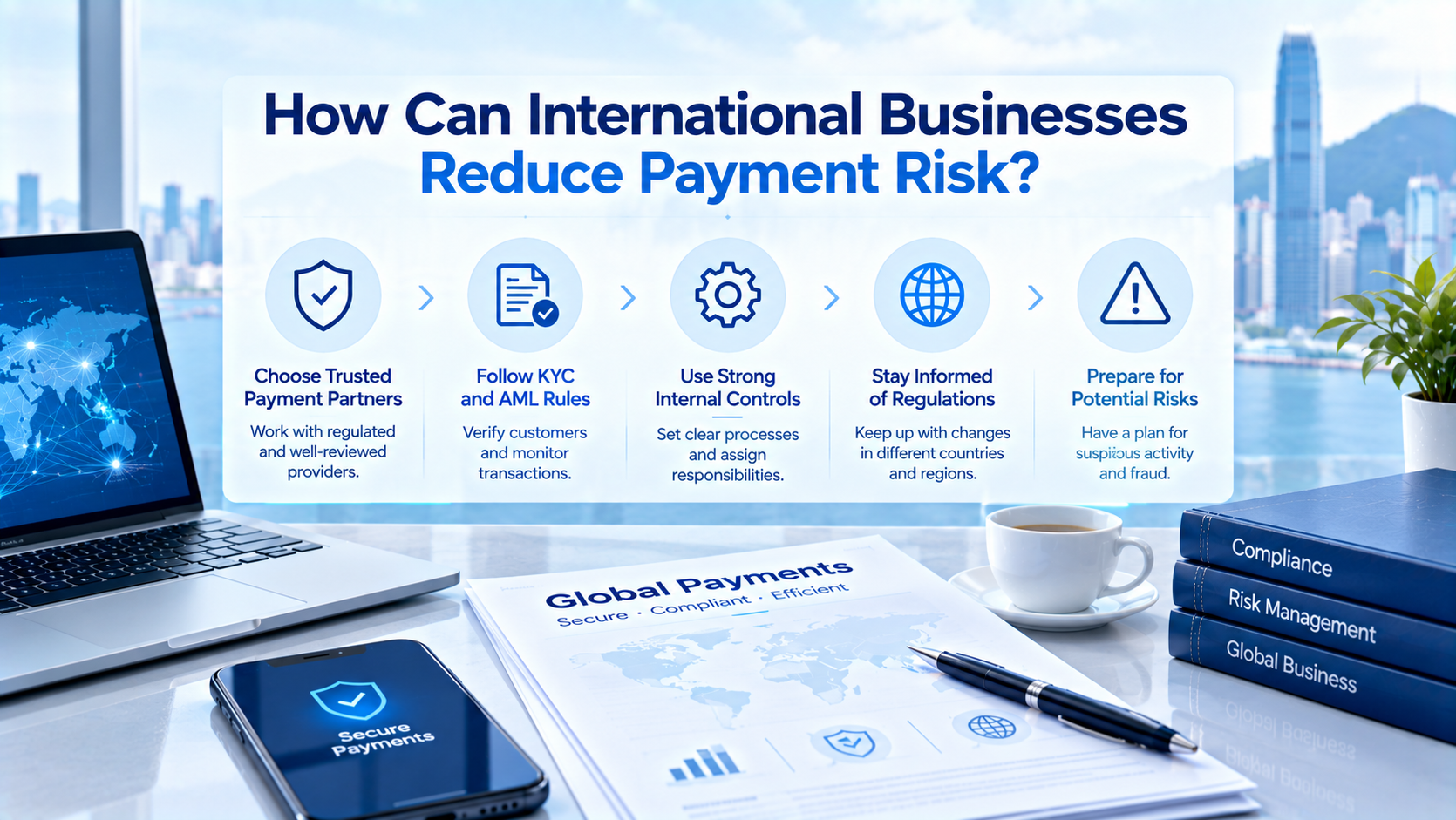
Diversify Payment Channels
First, companies should avoid putting all payment activity through one provider. Maintaining more than one suitable banking or payment route can reduce disruption if a provider changes its services or faces regulatory restrictions.
Keep Complete Transaction Records
Second, businesses should keep proper records of their transactions and account balances. These records can help when a provider requests additional information or when the company needs to transfer funds to another institution.
Check Regulatory Status
Third, companies should regularly review the regulatory status of their financial providers. A provider's license status can change, so checking official regulatory information provides more reliable information than relying only on marketing materials.
Match Providers to Business Activities
Finally, businesses should make sure their payment channels match their actual business activities. A provider that works well for ordinary commercial payments may not suit higher-risk activities or complex cross-border transaction structures.
For international entrepreneurs who need help with company registration, banking, tax services, and ongoing compliance, IngStart provides business support across several international jurisdictions. A more organized setup process can help businesses prepare their corporate and banking structures before they begin moving larger volumes of funds.
Conclusion
The Paytend License was revoked after the Bank of Lithuania identified serious and systematic deficiencies in transaction monitoring, AML/CFT controls, internal governance, regulatory reporting, and financial reporting.
The case shows that holding a European financial license does not remove the need for ongoing compliance. A regulated payment provider must maintain effective controls, monitor customer activity, report suspicious transactions when required, and meet its regulatory reporting obligations.
For Paytend users, the priority is to follow the official process for returning remaining funds and to establish alternative payment arrangements where necessary.
For international businesses using similar services, the wider lesson is to evaluate not only the product interface and license, but also the provider's regulatory status, safeguarding arrangements, compliance framework, and contingency options.
The Paytend case is therefore a reminder that businesses should assess a payment channel not only by its convenience today, but also by the provider's ability to maintain its regulatory obligations over time.
Article Recommendations
- W-7 Form Guide for ITIN Applications: How to Apply for or Renew an ITIN
- CRS Reporting: Can US Accounts Avoid CRS?
- You Changed the IP and Logged In Separately. Why Are Your Accounts Still Flagged as Linked?
If you still have questions, please contact our team on WhatsApp at +1 213 751 2111. We'll help you find the right solution for your business and keep your company compliant as it grows.