
US Business Tax Compliance Guide: Required Tax Filings & Compliance After Company Formation (2026)
Introduction
US Business Tax Compliance starts the moment your company is formed. Registering a US company is only the first step. After incorporation, your business must meet both federal and state filing requirements to remain compliant.
Many international entrepreneurs believe they only need to file taxes after earning revenue. In reality, that isn't always true. Some companies must file tax forms even if they have no income or business activity.
Understanding the rules early helps you avoid penalties and unnecessary stress. It also makes running your business much easier as it grows.
In this guide, you'll learn the key tax filing requirements, common compliance obligations, and practical tips for keeping your US company in good standing.
Why US Business Tax Compliance Matters
Every US business has ongoing compliance responsibilities. These responsibilities do not end after company formation. Instead, they continue throughout the life of your business.
Most companies need to complete two types of obligations.
- Federal tax filings, managed by the Internal Revenue Service (IRS).
- State tax and compliance filings, managed by the state where the business is registered or operates.
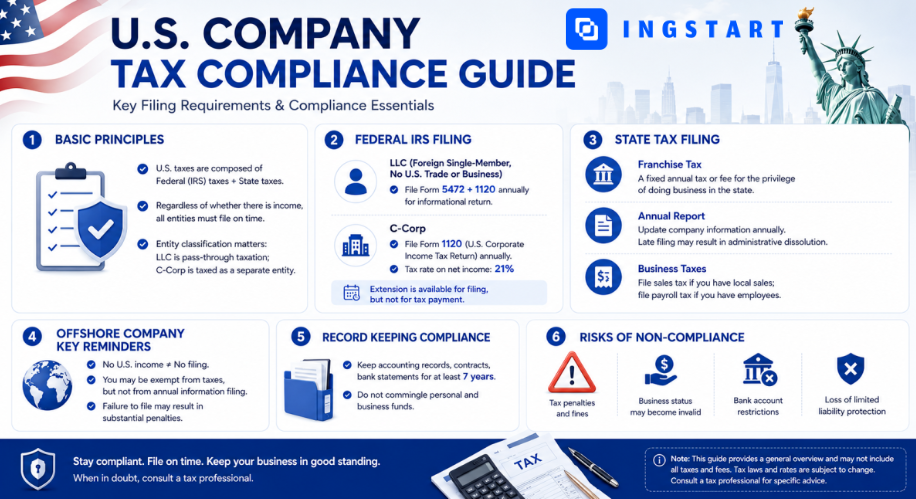
Many overseas founders are surprised to learn that filing requirements do not always depend on profit. Even if your company has no sales, no employees, or no US customers, you may still need to submit annual tax forms or state reports.
Your business structure also affects your filing obligations. For example, an LLC and a C Corporation follow different tax rules. Choosing the right structure is important, but understanding your ongoing responsibilities is even more important.
Staying compliant protects your company in several ways. It helps you avoid penalties, keeps your business in good standing, and makes it easier to open bank accounts, apply for financing, or expand into new markets.
The good news is that US Business Tax Compliance doesn't have to be complicated. Once you understand the basic rules and build a simple annual routine, compliance becomes much easier to manage.
Federal US Business Tax Compliance Requirements
Federal tax filing requirements depend on your business structure. For most international entrepreneurs, the two most common structures are an LLC and a C Corporation.
US Business Tax Compliance for LLCs
An LLC can have one owner or multiple owners. Each structure follows different federal filing rules.
A single-member LLC owned by a foreign person often needs to file Form 5472 together with a pro forma Form 1120. This filing requirement may apply even if the company has no revenue during the year.
A multi-member LLC is generally treated as a partnership for federal tax purposes. In many cases, it files Form 1065 each year to report business income and expenses.
Some LLC owners also choose to have their company taxed as a C Corporation or an S Corporation. This election changes how the business files taxes, so it's important to understand the consequences before making a decision.
US Business Tax Compliance for C Corporations
A C Corporation is a separate legal taxpayer.
Each year, it generally files Form 1120 to report its taxable income. If the company earns a profit, it pays federal corporate income tax based on the applicable tax rate.
Even if the company has little or no business activity, annual filing requirements may still apply. Ignoring these obligations can lead to penalties and additional compliance issues.
Federal Filing Deadlines for US Business Tax Compliance
Most businesses must file their federal tax returns every year.
The filing deadline depends on the company's tax classification and accounting year. Many calendar-year businesses file in April. Businesses can usually request extra time to file their return, but an extension does not extend the deadline for paying taxes that are due.
Meeting federal deadlines is one of the most important parts of US Business Tax Compliance. Filing on time helps your business stay compliant and reduces the risk of unnecessary penalties.
State US Business Tax Compliance Requirements
Federal tax filing is only part of the process. Every US business should also understand state compliance requirements.
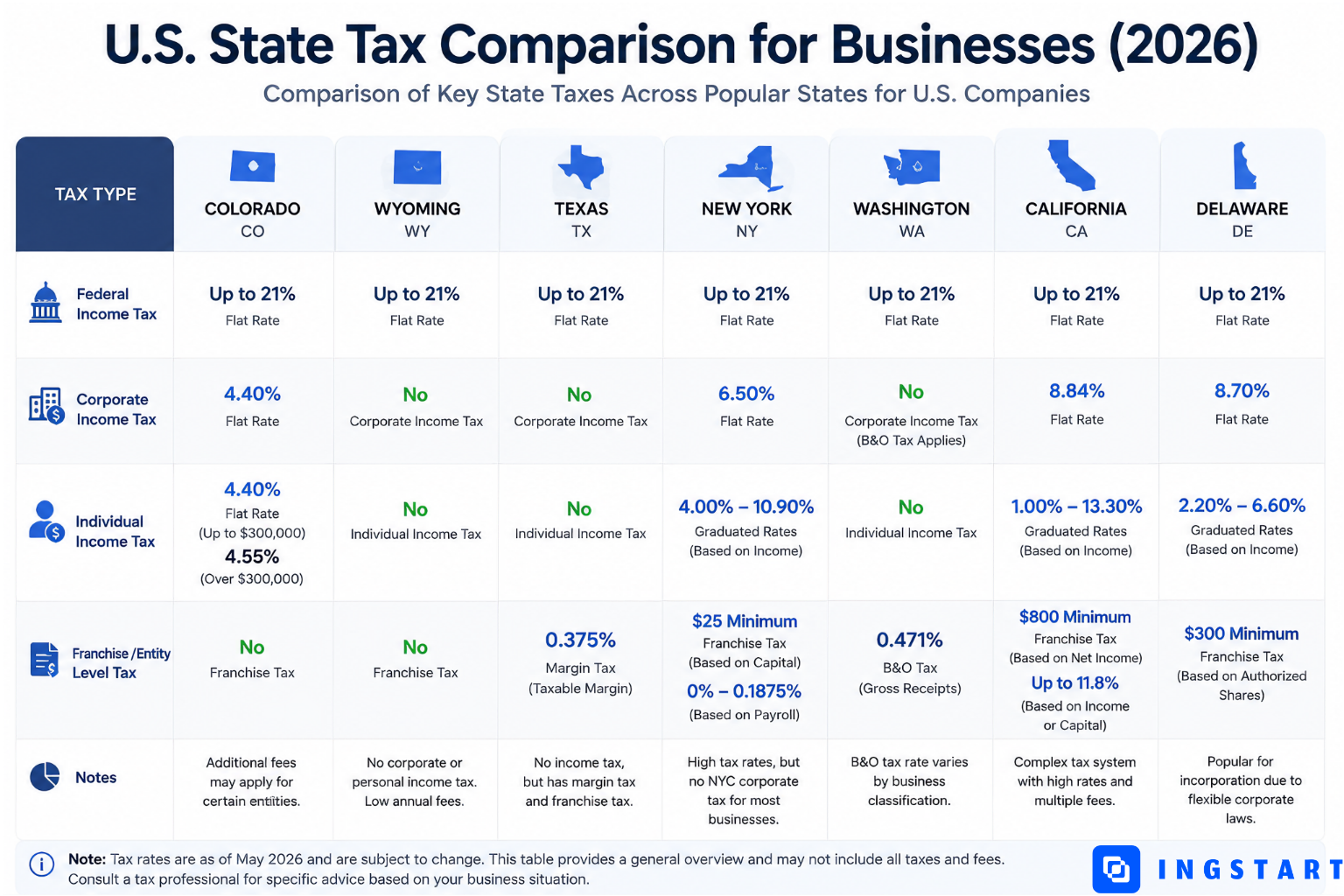
Each state has its own rules. Some states charge franchise tax, while others focus on annual reports or business taxes. The exact requirements depend on where your company is registered and where it does business.
Ignoring state requirements can be costly. Even if your federal tax return is filed on time, missing a state filing may result in penalties or the loss of your company's good standing.
Franchise Tax and US Business Tax Compliance
Many business owners confuse franchise tax with corporate income tax. They are not the same.
A franchise tax is usually a fee for maintaining your company's legal status in a state. It often applies whether your business earns a profit or not.
For example, Delaware requires most corporations to pay an annual franchise tax. California also requires many businesses to pay an annual minimum tax or filing fee.
Because the rules vary by state, always review the requirements where your company is registered. Staying informed is an important part of US Business Tax Compliance.
Annual Reports for US Business Tax Compliance
Many states require businesses to file an annual report.
This report confirms that your company information is still accurate. It may include your business address, registered agent, directors, managers, or ownership details.
Filing an annual report is usually simple, but it should never be overlooked. Missing the deadline may lead to late fees, administrative dissolution, or the loss of good standing.
For international founders, adding annual report deadlines to a business calendar is one of the easiest ways to stay compliant.
Sales and Payroll Tax Compliance
Not every business needs to register for sales tax or payroll tax. These obligations depend on how your business operates.
If you sell taxable goods or services, you may need to register for sales tax in one or more states. The rules depend on where your customers are located and whether your business creates a tax obligation in that state.
If you hire employees in the United States, you'll usually need to register for payroll tax before paying wages. Payroll tax returns are often filed throughout the year instead of only once a year.
As your business grows, review these obligations regularly. New products, new employees, or expansion into another state may create new filing requirements.

US Business Tax Compliance for Inactive Companies
One of the biggest misunderstandings is that an inactive company has no filing obligations.
In many cases, that isn't true.
For example, a foreign entrepreneur may form a Delaware LLC but never start business operations. The company may have no income, no US customers, and no employees. Even so, it may still need to file federal information returns and complete state compliance requirements.
Failing to file these forms can lead to significant penalties. Some IRS information return penalties can reach thousands of dollars. States may also charge late fees or change your company's legal status.
The safest approach is simple. If your company still exists, review its filing obligations every year—even if it hasn't started doing business.
How to Maintain US Business Tax Compliance
Staying compliant is much easier when you build good habits from the beginning. You don't need to remember every tax rule. Instead, focus on keeping your business organized throughout the year.
Small tasks completed on time can prevent bigger problems later. This approach also makes tax season much less stressful.
Business Records for US Business Tax Compliance
Good records are the foundation of every compliant business.
Keep copies of your invoices, receipts, bank statements, contracts, and accounting records. These documents support your tax filings and help you answer questions if a tax authority requests additional information.
As a general rule, keep your business records for at least seven years. Digital records are usually acceptable if they are complete, secure, and easy to access.
Separate Business and Personal Finances
One of the easiest ways to avoid bookkeeping problems is to separate your business and personal finances.
Use a dedicated business bank account for company transactions. Avoid mixing personal expenses with business payments.
Clear financial records improve bookkeeping, simplify tax filing, and help protect your company's limited liability.
Review Your US Business Tax Compliance Every Year
Your compliance obligations may change as your business grows.
For example, hiring employees, expanding into another state, or selling new products may create additional tax filing requirements. A quick annual review helps you identify these changes before filing deadlines arrive.
Many international founders also choose professional support as their business expands. This reduces compliance risks and allows them to focus on growth instead of paperwork.
At Ingstart, we help international entrepreneurs with company formation, annual compliance, tax filings, and cross-border business support. Our team works with founders from around the world and provides practical solutions for managing US Business Tax Compliance with confidence.
Conclusion
Building a US company takes time and effort. Keeping it compliant is just as important.
US Business Tax Compliance includes both federal and state filing requirements. Even if your company has no income, you may still need to file tax forms or annual reports.
The good news is that compliance becomes much easier when you understand the rules early, keep accurate records, and meet filing deadlines. A simple compliance routine today can save you time, money, and unnecessary penalties in the future.
US Business Tax Compliance FAQs
Q: Do I need to file taxes if my company has no income?
Yes. Some businesses must still file federal or state forms even if they have no revenue.
Q: What's the difference between federal and state tax filing?
Federal filings are submitted to the IRS. State filings follow the rules of the state where your business is registered or operates.
Q: Does every state charge franchise tax?
No. Franchise tax rules vary by state. Always check the requirements in your registration state.
Q: When do I need to register for sales tax?
Register when your business creates a sales tax obligation in a state, such as selling taxable products or reaching state thresholds.
Q: How long should I keep business records?
Most businesses should keep financial records, contracts, invoices, and bank statements for at least seven years.
Q: Should I get professional help with US Business Tax Compliance?
If you're unfamiliar with US tax rules or manage your business from overseas, professional support can help you stay compliant and avoid costly mistakes.
Q: Need Help with US Business Tax Compliance?
Managing a US company from overseas can be challenging, but staying compliant doesn't have to be.
- US Company Registration: The Complete Guide for Foreign Founders
- Vietnam Simplifies Customs Classification Procedures to Reduce Compliance Costs
- Brand Overseas Expansion Complete Guide: How Can Enterprises Build a Sustainable Overseas Growth System?
Still have questions? Contact our team on WhatsApp at +1 213 751 2111. We'll help you find the right solution for your business and keep your company compliant as it grows.