
Vietnam Simplifies Customs Classification Procedures to Reduce Compliance Costs
Vietnam is taking another step toward modernizing its customs system.
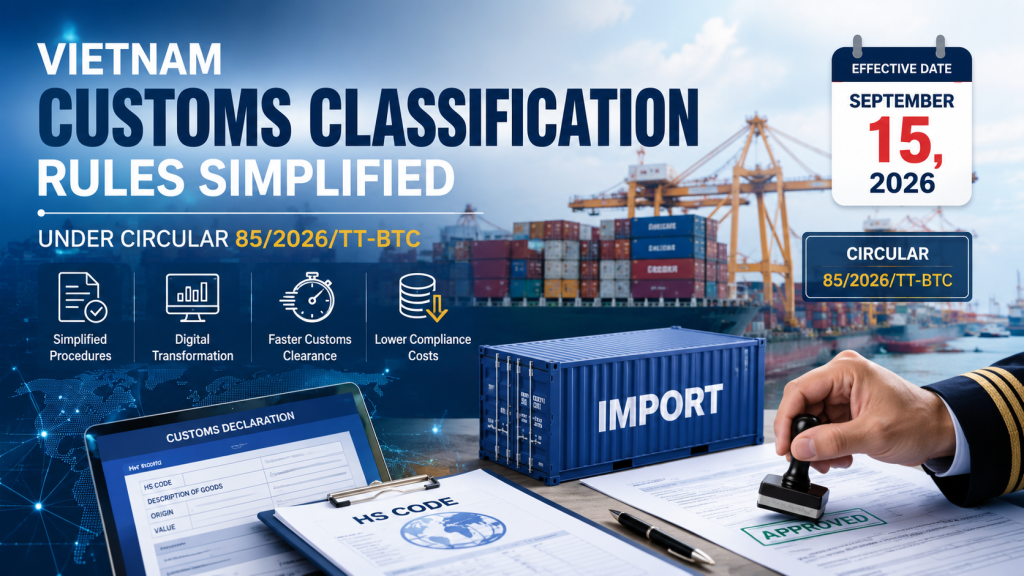
The Ministry of Finance has issued Circular No. 85/2026/TT-BTC, which will take effect on September 15, 2026, replacing Circular No. 14/2015/TT-BTC and Circular No. 17/2021/TT-BTC. The new regulation introduces significant changes to the country’s customs classification framework, with a strong focus on digitalization, streamlined procedures, and lower compliance costs for businesses.
Key Changes Under the New Rules
One of the most notable improvements is the increased use of digital systems and data sharing between government agencies. By reducing paper-based documentation and simplifying customs procedures, Vietnam aims to shorten customs clearance times and improve overall trade efficiency.
The circular also allows businesses to determine HS codes by directly referencing classification standards issued by competent authorities, reducing uncertainty and minimizing the need for repeated supporting documentation.
Another important clarification is that goods classification results will no longer be used for product quality inspections or food safety inspections. This separates customs classification from regulatory inspection procedures, helping businesses avoid duplicate compliance requirements.
Lower Compliance Burden for Importers
The new rules are expected to significantly reduce administrative costs, particularly for manufacturers and companies importing machinery and production equipment.
For combined machinery classified under Chapters 84, 85, and 90 of the Harmonized System, businesses will no longer be required to register deduction tracking forms. Instead, they only need to submit a machinery catalog before the first customs declaration, simplifying future import procedures.
Sampling procedures have also been streamlined. Only one witness is now required during customs sampling, replacing the previous requirement for multiple parties to be present and reducing delays during inspections.
What This Means for International Businesses
The reform reflects Vietnam’s continued efforts to improve its business environment and facilitate international trade.
For companies exporting to Vietnam or establishing manufacturing and supply chain operations in the country, the updated customs rules offer several potential benefits:
- Faster customs clearance
- Reduced paperwork and administrative requirements
- Lower compliance costs
- Greater certainty in HS code classification
- Simplified procedures for importing machinery and production equipment
As the new regulation comes into force on September 15, 2026, businesses involved in Vietnam trade should review their customs compliance processes and prepare for the updated requirements.
Final Thoughts
Vietnam’s latest customs reform is another indication of the country’s commitment to modernizing its trade infrastructure and creating a more efficient import and export environment.
For international businesses, understanding these regulatory changes early can help reduce compliance risks, improve operational efficiency, and ensure smoother cross-border trade with Vietnam.