

Hong Kong Company Audit: Does an Inactive Company Need to File Taxes?
A Hong Kong Company Audit remains an important compliance requirement even when a business has little or no activity. Many international entrepreneurs assume that a company can skip its audit and tax filing if it has no revenue. However, Hong Kong law does not provide a general exemption based only on the absence of business activity.
Under the Companies Ordinance (Cap. 622), most Hong Kong companies must prepare financial statements and arrange an annual audit. A company may qualify for an audit exemption if it meets the legal definition of a dormant company. However, simply having no sales, customers, or business transactions does not automatically give a company dormant status.
Tax filing also follows separate rules. The Inland Revenue Department (IRD) may issue a Profits Tax Return even if the company has no taxable profits. Therefore, business owners should check their company's legal status and tax filing requirements before deciding which obligations apply.
Hong Kong Company Audit: When Is an Audit Required?
For most Hong Kong companies, the law requires an annual audit of their financial statements. This requirement generally applies even when the company makes no profit or conducts very little business.
However, a company may qualify for an exemption if it meets the statutory requirements for dormant status under section 447 of the Companies Ordinance.
To qualify, a private company generally needs to pass a special resolution declaring that it will become dormant and deliver that resolution to the Companies Registry. The company must also meet the applicable legal conditions.
Therefore, having no business activity is not the same as having legally recognized dormant status. Before skipping an audit, confirm that the company has completed the required procedure and qualifies for the exemption.
You can review the official Companies Registry guidance on dormant companies for more information.

Hong Kong Company Audit: When Do You Need to File Taxes?
The timing of a company's tax filing depends on when the IRD issues its Profits Tax Return and the deadline stated in the notice.
Newly Incorporated Companies
A newly incorporated company does not necessarily receive its first Profits Tax Return immediately after registration. The IRD commonly issues the first return around 18 months after incorporation or the start of business, although the timing can vary.
Once the company receives the return, it should check the filing deadline and prepare the required documents. The deadline often gives the company one month to respond, but the date on the actual notice takes priority.
Existing Hong Kong Companies
After the first tax filing, the IRD may issue Profits Tax Returns in later years according to its filing arrangements. Companies should check each notice rather than assume that every return arrives in April or follows the same annual schedule.
If the company receives a return while it has no business income, it should still follow the IRD's instructions. Depending on the circumstances, the company may need to complete the return even if it reports no assessable profits.
For official details, see the IRD's guidance on Profits Tax Returns and supporting documents.
Hong Kong Company Audit: Documents You Should Prepare
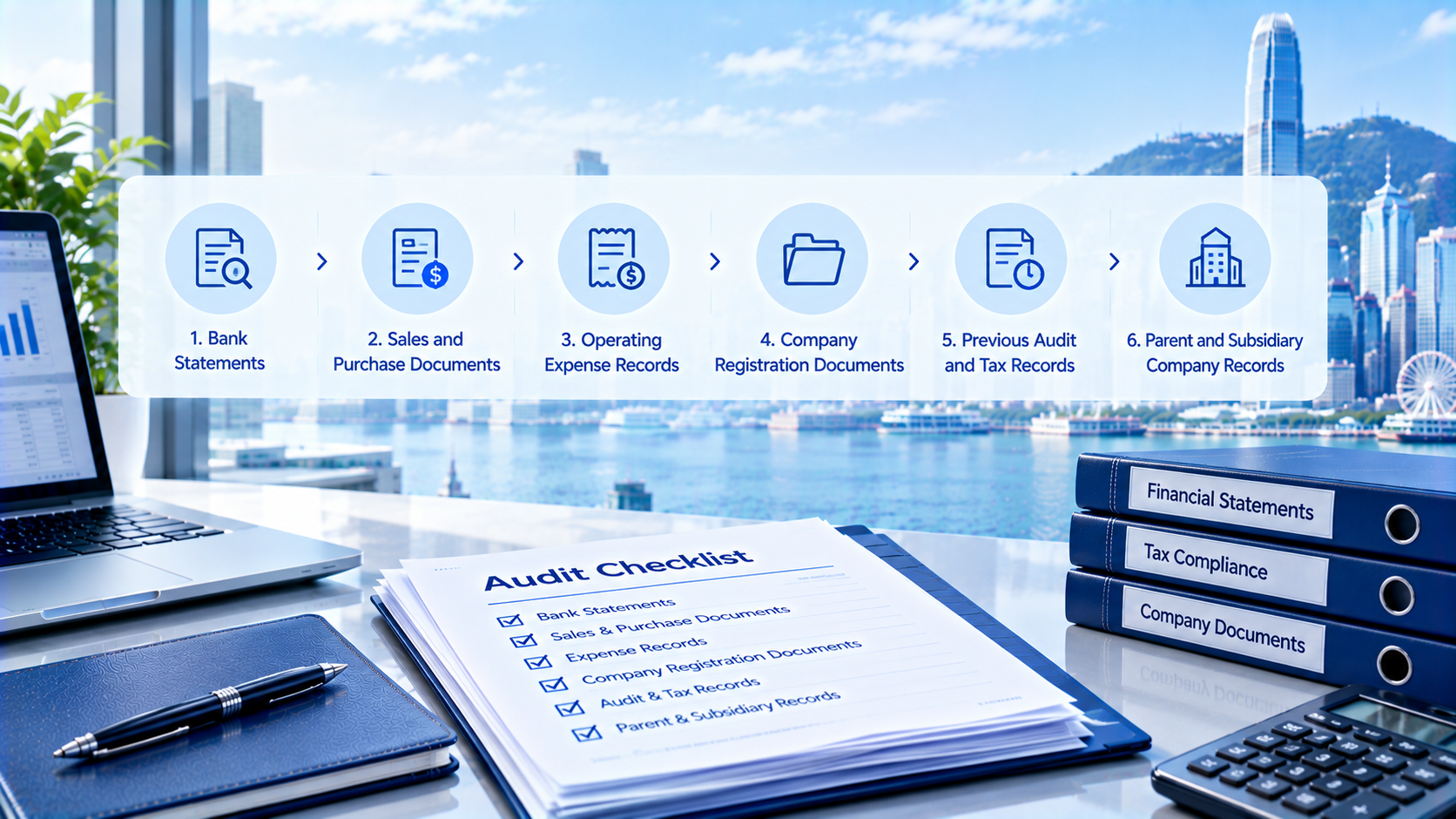
Preparing the right records can make the accounting, audit, and tax filing process easier. The exact requirements depend on the company's activities and reporting period. However, international business owners should generally organize the following documents.
1. Bank Statements
Collect monthly statements for every company bank account. Both electronic and paper statements can help the accountant review transactions and prepare the financial records.
If the company operates several accounts, provide statements for each one. Even an inactive business should review its bank records to identify any transactions during the relevant period.
2. Sales and Purchase Documents
Prepare sales and purchase contracts, invoices, receipts, and other supporting documents for business income and expenses. These records help the accountant match transactions to the relevant entries in the accounts.
Make sure the supporting documents clearly show the transaction details and the parties involved. You should also explain any bank transactions that do not have an obvious supporting document.
3. Operating Expense Records
If the company has incurred operating expenses, collect the relevant invoices and receipts. Common examples include shipping charges, salaries, rent, office costs, and transport expenses.
The accountant can then review whether the expenses qualify for accounting or tax purposes. Keep in mind that recording an expense does not automatically mean the IRD will allow it as a tax deduction.
4. Company Registration Documents
Prepare the company's Certificate of Incorporation, Business Registration Certificate, and Articles of Association. You should also provide documents relating to changes made during the reporting period, such as changes to directors, shareholders, share capital, or the company name.
These documents help the accountant confirm the company's current structure and registered information.
5. Previous Audit and Tax Records
For a company that has filed accounts before, provide the previous year's audited financial statements, profit and loss account, tax computation, tax payment receipts, and relevant IRD correspondence.
These records help the accountant check previous filings and identify any outstanding returns or tax payments.
6. Parent and Subsidiary Company Records
If the company belongs to a corporate group, inform the accountant about its relationship with the parent company and any subsidiaries. Depending on the structure and reporting requirements, the accountant may need related company financial statements or other supporting documents.
Providing these records early can help the accountant determine which documents the company needs for its audit and tax filing.
How IngStart Can Help With Hong Kong Company Compliance
For international entrepreneurs, managing a Hong Kong company's accounting records, annual audit, tax filing, and corporate documents from overseas can be time-consuming.
IngStart provides company registration and ongoing compliance services for international businesses. Its services can help business owners organize company information, manage recurring compliance tasks, and prepare for related business services.
Conclusion
A Hong Kong Company Audit is generally required even when a company has no revenue or conducts very little business. A company may qualify for an audit exemption if it meets the legal requirements for dormant status, but the absence of business activity alone does not provide that exemption.
Tax filing also follows separate rules. Companies should check the deadlines on their Profits Tax Returns and follow the IRD's instructions, even when they have no taxable profits.
To manage compliance effectively, keep bank statements, transaction records, company documents, previous audit reports, and tax records organized. Most importantly, confirm the company's legal status before assuming that it can skip an audit or tax filing.
Article Recommendations
- Hong Kong Company Registration: Do Individuals Need ODI Filing?
- Hong Kong Business Registration Guide: How to Apply for a Business Registration Certificate
- Hong Kong Company Audit: Annual Review vs Audit
If you still have questions, please contact our team on WhatsApp at +1 213 751 2111. We'll help you find the right solution for your business and keep your company compliant as it grows.