

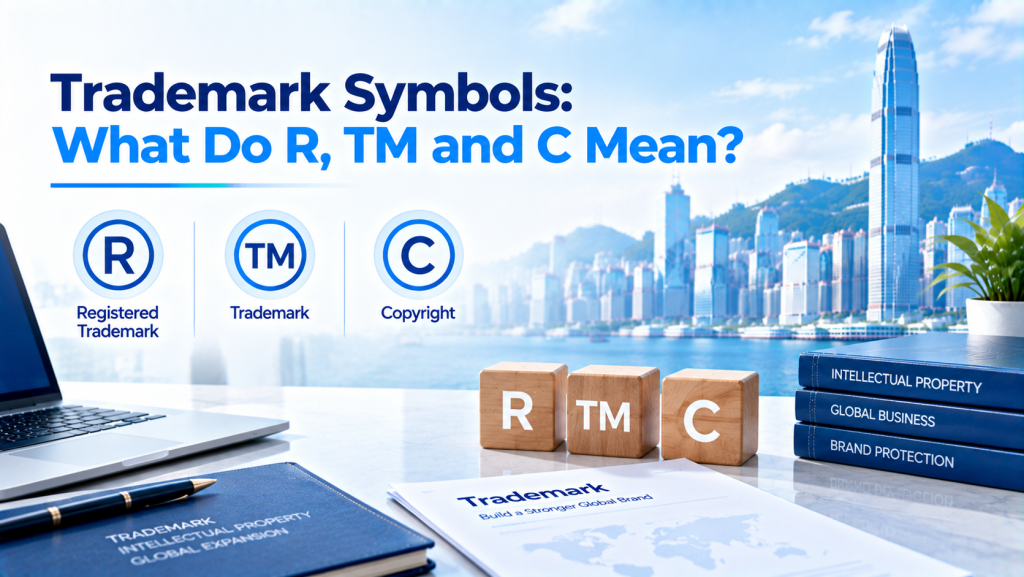
When building an international brand, you may see Trademark Symbols such as R, TM, and C next to a name, logo, product, or piece of content. Although these symbols may look similar, they represent different types of intellectual property rights.
For businesses operating across different countries, understanding these symbols is useful. In particular, R and TM relate mainly to trademarks, while C relates to copyright. Their legal meaning and permitted use can also vary between jurisdictions.
So, what do R, TM, and C actually mean? Let us look at each symbol in more detail.
Trademark Symbols: What Do R, TM and C Mean?
The three symbols have different purposes and should not be treated as interchangeable.
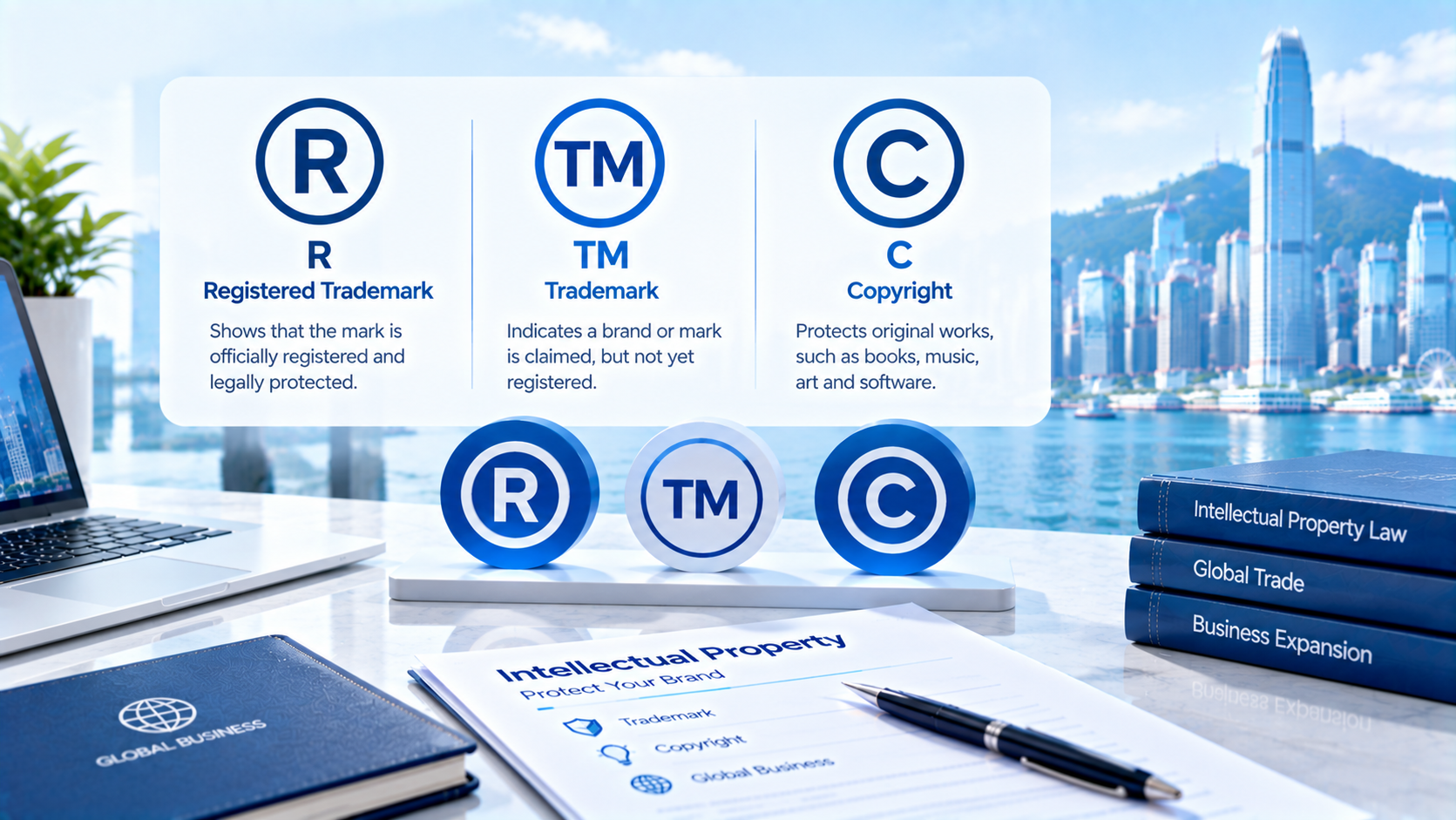
| Symbol | Meaning | Main Use |
|---|---|---|
| R | Registered trademark | Shows that a trademark has completed registration |
| TM | Trademark | Indicates that a sign is used as a trademark |
| C | Copyright | Indicates a copyright claim in a creative work |
The important point is that these symbols do not represent the same type of intellectual property protection. Therefore, businesses should use them according to the applicable rules in their target markets.

R: Registered Trademark
The R symbol generally indicates that a trademark authority has registered the relevant trademark.
A registered trademark can give its owner stronger and more clearly defined rights in the relevant jurisdiction. Depending on local law, registration may give the owner an exclusive right to use the mark for specified goods or services and allow the owner to take action against certain unauthorized uses.
However, businesses should not assume that they can use R simply because they have submitted a trademark application. The trademark authority normally needs to complete the registration process first. Therefore, if your application remains under examination, using TM may be more appropriate where local rules permit it.
TM: Trademark
TM is short for “trademark.” Businesses commonly use it to indicate that a word, name, logo, or other sign functions as a trademark.
Unlike R, TM does not generally mean that the trademark has already completed registration. Businesses may use TM while developing a brand or while a trademark application remains pending, depending on the rules of the relevant country.
The exact legal effect of TM varies by jurisdiction. In many markets, the mark mainly serves as a notice that the owner considers the sign to be a trademark. Therefore, using TM does not by itself prove that a trademark authority has officially registered the mark.
C: Copyright
The C symbol represents copyright rather than trademark protection.
Businesses and creators commonly use it with creative works such as:
- Books and articles
- Photographs and illustrations
- Videos and films
- Music and other artistic works
- Software and digital content
Copyright rules differ from trademark rules. In many countries, copyright protection begins automatically when an eligible original work comes into existence, without requiring registration or a copyright symbol.
Even so, businesses and creators often use C as a clear copyright notice. It can help communicate ownership and remind others that the work receives copyright protection.
Trademark Symbols and International Business
For international businesses, the most important point is that intellectual property protection is generally territorial.
A trademark registered in one country does not automatically provide the same trademark rights in every other country. Businesses that want protection in several markets need to consider the relevant national or regional systems.
Therefore, before using R, TM, or another trademark notice internationally, businesses should check the rules in each target market. For example, a company may hold a registered trademark in one country while another country still examines its application. The appropriate symbol or notice may therefore differ between markets.
How Should Businesses Use These Symbols?
Using Trademark Symbols correctly can help businesses communicate the status of their intellectual property.
A simple approach is:
- R should appear only after the relevant trademark receives registration, and businesses should confirm that local law permits its use.
- TM can identify a word, name, logo, or other sign as a trademark, especially when the mark has not yet received registration.
- C can accompany a copyright notice for an eligible creative work.
- Local rules should always be checked before using any symbol internationally, because trademark laws and symbol requirements vary between jurisdictions.
This distinction is especially important for companies selling products online or operating across multiple markets.
Trademark Symbols: What International Entrepreneurs Should Know
International entrepreneurs often register a company and a trademark at the same time, but these are separate matters. Company registration creates a legal business entity. Trademark registration, on the other hand, protects a brand name, logo, or other qualifying sign within the relevant trademark system.
Therefore, registering a company name does not automatically mean that the same name receives trademark protection. Before filing, businesses should also search existing trademarks in their target markets. A trademark search can help identify potential conflicts and reduce the risk of rejection.
For international entrepreneurs who need help with company formation and related business administration, IngStart provides company registration and ongoing business services across multiple jurisdictions. This can make it easier to manage company setup and other administrative tasks while preparing for international expansion.
R, TM and C: Key Differences
The simplest way to remember the differences is:
- R means the trademark has completed registration in the relevant jurisdiction.
- TM indicates that a sign is being used or claimed as a trademark, but it does not by itself prove registration.
- C relates to copyright rather than trademark rights.
- The legal effect and permitted use of these symbols can vary by country or region.
- Trademark registration and company registration are separate legal matters.
Understanding these differences can help businesses avoid misleading notices and use intellectual property symbols more appropriately.
Conclusion
Trademark Symbols such as R, TM, and C are widely used in international business, but they do not have the same meaning.
The R symbol generally identifies a registered trademark, while TM commonly indicates a trademark claim or use. In contrast, C relates to copyright and mainly appears with creative works. The specific legal rules for these symbols can vary between countries.
Therefore, businesses should check the trademark and copyright rules in each market where they operate. By understanding the difference between these symbols and obtaining the appropriate intellectual property protection, international businesses can manage their brands and creative assets more effectively.
Article Recommendations
- Hong Kong Tax Zero Return: Requirements, Differences and Risks
- CRS Reporting: Can US Accounts Avoid CRS?
- You Changed the IP and Logged In Separately. Why Are Your Accounts Still Flagged as Linked?
If you still have questions, please contact our team on WhatsApp at +1 213 751 2111. We'll help you find the right solution for your business and keep your company compliant as it grows.