
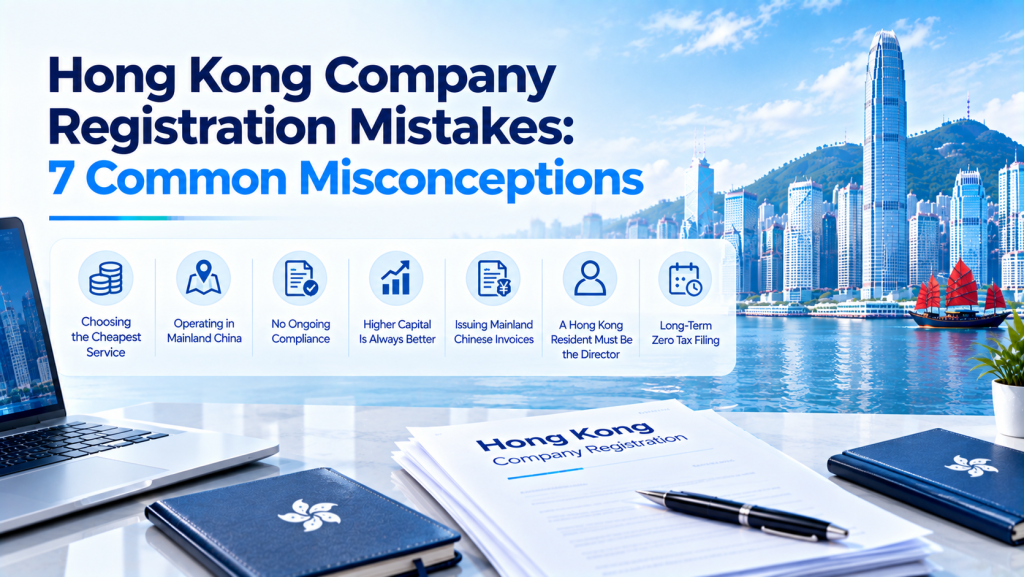
When planning Hong Kong Company Registration, international entrepreneurs may focus mainly on the incorporation process. However, some common misconceptions can create problems later. Understanding the rules in advance can help you avoid unnecessary costs, delays, and compliance issues.
Below are seven common Hong Kong Company Registration mistakes that overseas business owners should understand before setting up a company.
Hong Kong Company Registration Mistakes You Should Know
Choosing the Cheapest Service
Many service providers offer Hong Kong company formation services, but their prices and service levels can vary. Some entrepreneurs choose a provider only because it offers the lowest price.
However, a low price does not always mean lower overall costs. Poor document preparation, slow communication, or missed compliance deadlines can create additional work later.
Therefore, when comparing Hong Kong Company Registration services, look at the provider's experience, service scope, communication, and ongoing support instead of focusing only on the initial price.

Operating in Mainland China
Another common misunderstanding is that a Hong Kong company can automatically operate in Mainland China simply because it has been successfully registered in Hong Kong.
A Hong Kong company can conduct cross-border trade and business with Mainland customers and suppliers. However, this does not automatically give the company the right to establish a physical business operation in Mainland China.
If an overseas business wants to establish a local presence in the Mainland, it may need to use an appropriate Mainland structure and complete the required registration or approval procedures.
For example, a representative office has a limited scope of activities and cannot directly conduct business for profit. Therefore, Hong Kong Company Registration and Mainland business registration should be treated as separate matters.
No Ongoing Compliance
Some entrepreneurs assume that completing Hong Kong Company Registration means the company can operate without further administrative work.
In reality, incorporation is only the beginning. A Hong Kong private company generally needs to file an annual return with the Companies Registry every year, within 42 days after the anniversary of its incorporation date. The annual return contains information such as the registered office, directors, shareholders, and company secretary.
Companies also need to consider accounting and profits tax obligations based on their actual circumstances. As a result, international owners should plan for annual compliance from the beginning rather than treating company formation as a one-time task.
Higher Capital Is Always Better
Another misconception is that a company should use a very high share capital to show financial strength. In fact, Hong Kong law does not require a minimum amount of paid-up capital for a local company.
Therefore, choosing a higher amount does not automatically make the company stronger or more credible. The appropriate share capital should instead reflect the company's business needs and funding arrangements.
Entrepreneurs should also understand that share transfers can involve stamp duty. The duty relates to the relevant transfer transaction rather than simply to the amount of capital stated when the company is incorporated.
Issuing Mainland Chinese Invoices
Some international entrepreneurs assume that a Hong Kong company works like a Mainland Chinese company and can issue Mainland VAT invoices.
This is another common misconception. Hong Kong does not operate a Mainland-style VAT invoice system. A Hong Kong business may issue invoices, receipts, or other commercial documents according to its business needs, but these documents are not the same as Mainland China's VAT special invoices.
Therefore, if your customers require Mainland tax invoices, you should consider how the transaction is structured and whether a Mainland entity is required.
A Hong Kong Resident Must Be the Director
The term “legal representative” can also cause confusion for overseas entrepreneurs.
Hong Kong company law does not use the same legal representative concept as Mainland China. For a private company, the company must have at least one director who is a natural person. However, the director does not have to be a Hong Kong resident.
A Hong Kong company must also appoint a company secretary. If the secretary is an individual, that person should ordinarily reside in Hong Kong. Therefore, international entrepreneurs can generally become directors of a Hong Kong company even when they live outside Hong Kong, subject to the applicable company requirements.
Long-Term Zero Tax Filing
Some business owners believe that a Hong Kong company can simply submit zero or nil tax information every year to avoid tax compliance.
This is not correct. Whether a company has profits tax to pay depends on its actual business activities and taxable profits. A company should not use a nil or zero filing simply because it wants to reduce administrative work.
In addition, companies must keep appropriate records and respond to tax filing requirements from the Inland Revenue Department. Current profits tax return guidance requires companies to complete the relevant items in their tax returns, entering “0” where an item has no amount rather than leaving required fields blank.
Therefore, Hong Kong Company Registration does not create an automatic right to make long-term zero filings. The company should assess its actual activities and tax position each year.
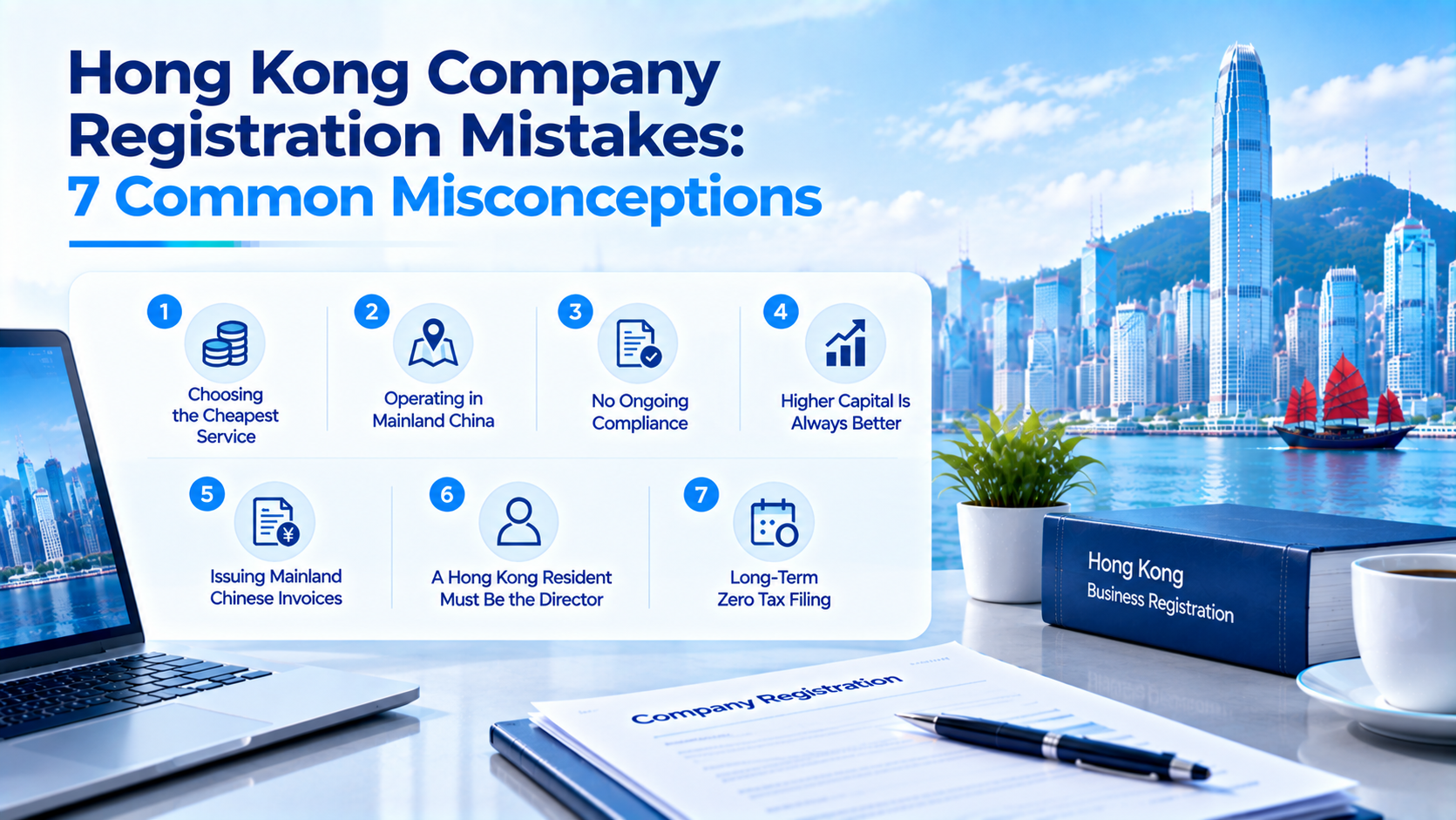
How to Avoid Hong Kong Company Registration Mistakes
Understanding these common mistakes can make the incorporation process easier for international entrepreneurs.
Before starting Hong Kong Company Registration, consider the following:
- Compare service providers based on both price and service quality.
- Confirm whether your business needs operations in Mainland China.
- Plan annual returns, accounting, and tax compliance from the beginning.
- Choose share capital based on actual business needs.
- Understand the difference between Hong Kong commercial invoices and Mainland VAT invoices.
- Check the requirements for directors and company secretaries.
- Review your actual tax position before submitting a nil or zero filing.
For overseas entrepreneurs who want support with company formation, banking, tax-related services, and ongoing compliance, IngStart provides integrated services for international businesses. This can help business owners manage company registration and related administrative work from one platform.
Conclusion
Hong Kong Company Registration can provide international businesses with a useful base for cross-border activities. However, successful incorporation does not mean that every common assumption about Hong Kong companies is correct.
The most important point is to understand the difference between Hong Kong and Mainland China rules, choose a suitable company structure, and maintain proper compliance after incorporation.
By checking these issues before registration, international entrepreneurs can avoid common mistakes and build a more practical foundation for their Hong Kong business.
Article Recommendations
- Hong Kong Company Registration Guide 2026: Steps and Requirements for Global Entrepreneurs
- How to Open a US Company Bank Account in Hong Kong in 2026
- Hong Kong Tax Zero Return: Requirements, Differences and Risks
If you still have questions, please contact our team on WhatsApp at +1 213 751 2111. We'll help you find the right solution for your business and keep your company compliant as it grows.