
If you no longer plan to operate a Hong Kong private company, Hong Kong Company Deregistration may provide a formal way to close the business. Instead of leaving the company inactive, you can complete the deregistration process and remove an eligible company from the Companies Register after it meets the relevant requirements.
For international business owners, closing a Hong Kong company involves more than simply stopping business activities. You need to deal with outstanding obligations and obtain the required tax clearance before moving forward. This guide explains the main Hong Kong Company Deregistration requirements, documents, process, and key considerations in 2026.
Why Consider Hong Kong Company Deregistration?
International business owners may choose to close a Hong Kong company for several reasons.
- Business closure or restructuring: A company may no longer serve a purpose after the business stops operating, changes its structure, merges with another business, or moves to another market.
- Business transfer: When the company transfers its business to another entity, the owner may no longer need to keep the original company.
- Financial considerations: Closing an inactive company can reduce ongoing administrative and compliance costs.
- Change in business strategy: Some companies support a specific project or market. After the project ends, the owner may decide to close the company.
- Ongoing compliance obligations: A Hong Kong company generally needs to meet its corporate and tax obligations while it remains registered. Therefore, formal deregistration may make sense when the company has genuinely stopped operating and meets the relevant requirements.
However, little or no business activity does not automatically make a company eligible for deregistration. The company still needs to meet the requirements set by the Hong Kong authorities.
Hong Kong Company Deregistration Process
The Hong Kong Company Deregistration process normally involves both the Inland Revenue Department (IRD) and the Companies Registry.
First, the company needs to apply to the IRD for a Notice of No Objection. The IRD will review the company's tax position before deciding whether to issue the notice. As of 2026, the application fee is HK$270 and the fee is non-refundable. The IRD's published service standard states that it normally processes a Notice of No Objection application within 21 working days after receiving the application.

After the IRD issues the Notice of No Objection, the company can move to the Companies Registry stage.
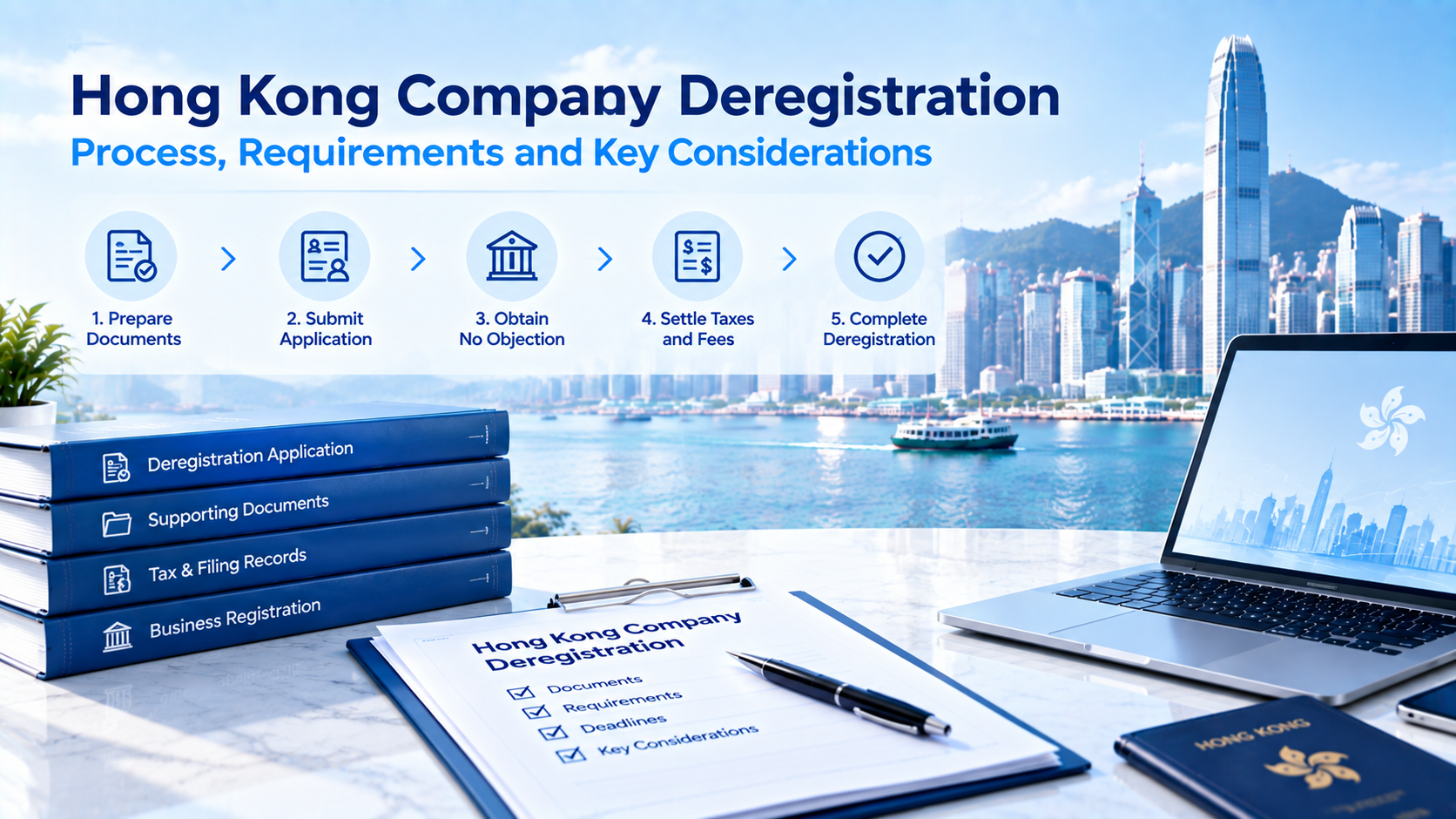
The main steps include:
- Prepare the required information and documents.
- Apply to the IRD for a Notice of No Objection.
- Provide any information the IRD needs to review the company's tax position.
- Receive the Notice of No Objection after meeting the relevant requirements.
- Submit Form NDR1 to the Companies Registry within three months from the date of the Notice of No Objection.
- Pay the applicable filing fee.
- Wait for the statutory Gazette publication and objection period.
- Complete the deregistration process and dissolve the company once the deregistration takes effect.
The Companies Registry currently requires applicants to submit Form NDR1 within three months after the Notice of No Objection date. As of 2026, the filing fee for Form NDR1 is HK$420.
Because the Companies Registry needs to complete the statutory publication process, Hong Kong Company Deregistration usually takes several months rather than just a few days.
Hong Kong Company Deregistration Requirements and Documents
Before starting Hong Kong Company Deregistration, business owners should organize the company's corporate, tax, and financial records.
Common documents and information may include:
- Certificate of Incorporation and company formation documents
- Business Registration Certificate
- Articles of Association
- Latest Annual Return and company records
- Director and shareholder information
- Audited financial statements or relevant closing accounts
- Tax records and information about outstanding tax matters
- Notice of No Objection issued by the IRD
- Form NDR1 for the Companies Registry application
The exact requirements may vary according to the company's circumstances. Therefore, international business owners should check the latest requirements before submitting an application.
Even after the company stops trading, it should not simply stop meeting its filing obligations. A private company generally continues to have annual return obligations while it remains registered.
Important Considerations for Hong Kong Company Deregistration
Notice of No Objection
The Notice of No Objection plays an important role in the Hong Kong Company Deregistration process. Before issuing the notice, the IRD reviews the company's tax position. If the company has outstanding tax matters, the owner may need to resolve them before the application can move forward.
Once the IRD issues the notice, the company should proceed to the next stage without unnecessary delay. Applicants generally need to submit Form NDR1 and the Notice of No Objection to the Companies Registry within three months from the date of issue. Missing this deadline may delay the application or result in rejection.
Outstanding Tax and Filing Obligations
A Notice of No Objection does not automatically remove every tax responsibility.
If the company later identifies unpaid tax or other outstanding matters, the owner should deal with them promptly. The IRD may retain its legal rights concerning the deregistration application or the restoration of a deregistered company.
For this reason, business owners should review profits tax returns, tax assessments, accounting records, and other outstanding matters before applying.
Business Registration Fees
Business owners should also review the company's Business Registration obligations.
When the IRD receives a valid Notice of No Objection application, it may hold over certain Business Registration fees and levies that would otherwise become payable after the application. However, the relevant fees and levies may become payable if the company does not complete deregistration.
Therefore, an application does not automatically cancel every outstanding Business Registration obligation.
Property and Stamp Duty
Company assets also require attention before Hong Kong Company Deregistration.
A company that owns Hong Kong property should take particular care. Transferring property to shareholders before deregistration does not automatically make the transfer exempt from stamp duty.
Such a transfer may create separate stamp duty obligations. Companies that own property or other significant assets should therefore seek professional advice before proceeding.
Profits Tax Returns and Closing Accounts
A company applying for deregistration may still need to complete its profits tax obligations.
The IRD may request relevant accounts and supporting documents to determine the company's final tax position. Keeping proper accounting records can therefore help the company complete the process more efficiently.
A dormant company may have different accounting and filing circumstances under the applicable rules. However, inactive status does not automatically remove every tax or filing obligation.
What Happens If You Do Not Deregister a Hong Kong Company?
Simply abandoning a Hong Kong company does not achieve the same result as completing Hong Kong Company Deregistration.
A company that remains on the register may continue to have corporate filing, tax, and Business Registration obligations. For example, a private company generally needs to deliver an annual return to the Companies Registry each year.
Ignoring these obligations can lead to penalties and enforcement action. In addition, continued non-compliance may create unnecessary administrative work and costs for the company and its officers.
Banking and other business relationships can also become more difficult to manage when a company's compliance status remains unclear. For this reason, international business owners should not assume that an inactive company will automatically disappear from the official register.
Risk of Government Enforcement
Failing to maintain a registered company can lead to regulatory action. Depending on the type of default, the company or its officers may receive notices or face penalties. As a result, leaving a company inactive does not remove its legal responsibilities.
Potential Banking Problems
A company with outdated corporate records may also face questions from banks and other financial institutions. Banks can review a company's legal status, ownership information, and business activities as part of their ongoing compliance procedures. If the information is incomplete or outdated, the bank may request additional documents or conduct a further review.
Additional Compliance Costs
An inactive company may continue to create annual compliance and administrative costs while it remains registered. Business owners who have genuinely stopped using a Hong Kong company should therefore consider whether formal Hong Kong Company Deregistration is more suitable than maintaining the entity indefinitely.
How International Business Owners Should Prepare
International entrepreneurs can make Hong Kong Company Deregistration more efficient by preparing the company before submitting the application.
Before starting the process, consider checking:
- Business status: Confirm that the company has genuinely ceased business activities.
- Tax position: Check whether the company has settled outstanding taxes and submitted the required tax returns.
- Corporate filings: Review annual returns and other company filings to make sure they are up to date.
- Business Registration: Check for outstanding Business Registration fees or levies.
- Company assets: Review Hong Kong property and other significant assets before deregistration.
- Banking and contracts: Check outstanding bank accounts, contracts, liabilities, and other business relationships.
- Company records: Make sure corporate information and supporting documents remain complete and consistent.
For businesses that manage companies across different jurisdictions, organized records can also simplify future compliance work. IngStart provides company registration and compliance services for international businesses, including corporate document management and compliance support. These services can help business owners keep track of company records and recurring obligations when preparing to close a company.
Hong Kong Company Deregistration: Key Points to Remember
Hong Kong Company Deregistration is a formal legal process rather than simply stopping business operations.
The main points are:
- Eligibility: Make sure the company meets the relevant deregistration requirements before applying.
- Tax clearance: Obtain the IRD's Notice of No Objection before proceeding with the Companies Registry application.
- NDR1 filing: Submit Form NDR1 within three months after the Notice of No Objection date.
- Outstanding obligations: Review tax, filing, and Business Registration matters before closing the company.
- Company assets: Check property and other significant assets before starting the deregistration process.
- Ongoing duties: Continue meeting relevant obligations until the deregistration takes effect.
- Compliance risks: Leaving an inactive company unattended can create continuing costs and potential penalties.
Conclusion
Hong Kong Company Deregistration provides a formal way for eligible companies that have stopped operating to close their Hong Kong corporate registration.
For international business owners, preparation remains an important part of the process. Tax matters, annual filings, Business Registration obligations, company records, bank accounts, and assets should all be reviewed before submitting the application. After that, the company can apply for the Notice of No Objection and proceed with the Companies Registry application.
In 2026, the process continues to involve both the IRD and Companies Registry. By completing each stage correctly and keeping company records organized, business owners can reduce unnecessary delays and manage the closure of an inactive Hong Kong company in a more structured way.
Article Recommendations
- Hong Kong CRS: Dual Tax Residency and Bank Account Guide
- Hong Kong Annual Return: Late Filing Guide for Companies
- Brand Overseas Expansion Complete Guide: How Can Enterprises Build a Sustainable Overseas Growth System?
If you still have questions, please contact our team on WhatsApp at +1 213 751 2111. We'll help you find the right solution for your business and keep your company compliant as it grows.