
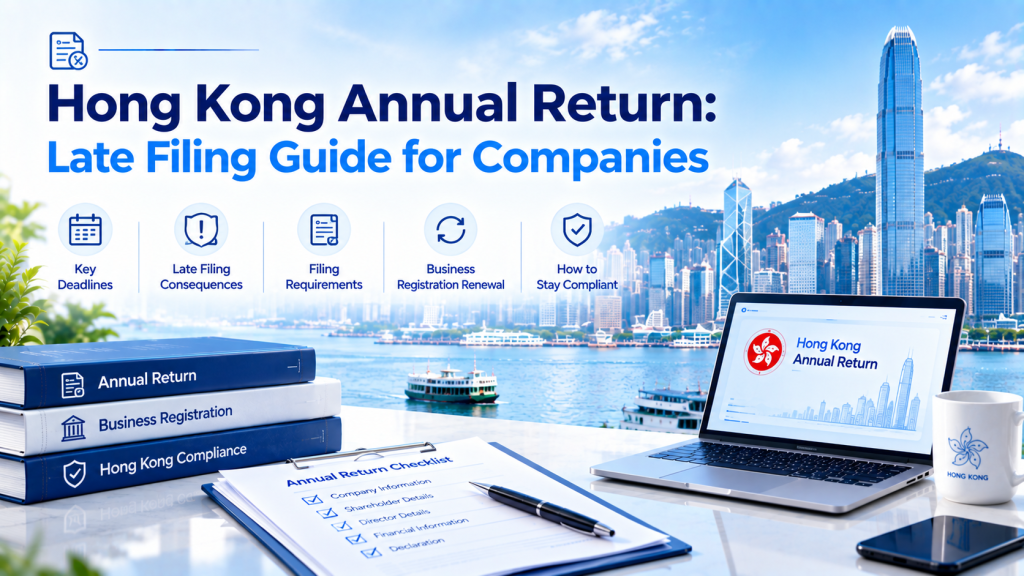
A Hong Kong Annual Return is an important part of ongoing company compliance. For most local private companies, the annual return must be delivered to the Companies Registry within 42 days after the company's return date, which is normally the anniversary of its incorporation. Missing this deadline can lead to higher registration fees and, in serious cases, legal consequences.
For international entrepreneurs, the process can sometimes be confusing because Hong Kong company compliance involves more than one government department. In addition to filing the annual return with the Companies Registry, companies also need to keep their Business Registration Certificate valid and meet other applicable tax and reporting obligations.
Therefore, understanding the Hong Kong Annual Return deadline and the consequences of late filing can help company owners avoid unnecessary costs and compliance problems.
Hong Kong Annual Return: What Happens If You File Late?
The most immediate consequence of a late Hong Kong Annual Return is a higher registration fee.
For a local private company limited by shares, the standard annual registration fee is HK$105 when the annual return reaches the Companies Registry within 42 days after the company's return date. If the company misses this deadline, the fee increases according to how late the filing is.
The current fee structure is:
- Within 42 days: HK$105
- More than 42 days but within 3 months: HK$870
- Filed after 3 months and within 6 months: HK$1,740
- More than 6 months but within 9 months: HK$2,610
- More than 9 months: HK$3,480
These amounts apply to local private companies with share capital. Other company types, such as public companies and registered non-Hong Kong companies, have different fee schedules.
Therefore, international company owners should check their company's exact entity type before assuming that the same late fee applies.
Hong Kong Annual Return and Legal Consequences
Late filing is not only a financial issue. Under the Companies Ordinance, a company that fails to deliver its annual return on time, together with responsible persons in certain circumstances, may face prosecution. For a local private company, the Companies Registry states that a breach can result in a maximum penalty of HK$50,000 for each breach and, for a continuing offence, a daily default fine of HK$1,000.
This means that leaving an overdue filing unresolved for a long period can create a much bigger compliance problem than simply paying the late registration fee.
Hong Kong Annual Return: Why Late Filing Can Affect Your Business
A late Hong Kong Annual Return can also create practical problems for the company. First, the company may need to pay substantially more to bring its filing up to date. Second, an overdue statutory filing can make it harder to demonstrate that the company keeps its records and compliance obligations up to date.
This can matter when the company needs to work with banks, professional service providers, investors, or other business partners. While late filing does not automatically mean that a bank will close an account or reject a transaction, an incomplete compliance record can create additional questions during due diligence.
For international entrepreneurs, this is particularly important because many company matters are handled remotely. A missed reminder or communication from a service provider can easily lead to an overdue filing. Therefore, it is better to treat the Hong Kong Annual Return as a recurring compliance deadline rather than a task that only needs attention when a problem occurs.

Hong Kong Annual Return: What Does the Filing Include?
For a typical local private company, the annual return provides updated information about the company.
The filing may include information such as:
- Company name and registration information
- Registered office address
- Company secretary information
- Director information
- Shareholder information
- Share capital and shareholding details
- Other required company particulars
The purpose is to keep the Companies Registry's records up to date.
However, an annual return should not be confused with a company's tax return. The Hong Kong Annual Return is a Companies Registry filing, while profits tax filing is handled separately through the Inland Revenue Department. This distinction is important for international owners because completing one compliance task does not automatically complete all of the company's annual obligations.
Hong Kong Annual Return and Business Registration Renewal
Another important part of Hong Kong company compliance is the Business Registration Certificate.
The Business Registration Office issues a renewal demand note before the current Business Registration Certificate expires. Once the required payment is made, the demand note becomes the renewed Business Registration Certificate. Businesses can also handle renewal electronically through the relevant government services.
Hong Kong businesses can have either a one-year or three-year Business Registration Certificate, depending on the arrangement selected. Therefore, the renewal date does not always work in exactly the same way for every company.
For this reason, company owners should manage both the Hong Kong Annual Return deadline and the Business Registration Certificate expiry date separately.
Hong Kong Annual Return: Important Filing Deadlines
For a local private company, the annual return should generally reach the Companies Registry within 42 days after the anniversary of the company's incorporation or re-domiciliation date. The Companies Registry also provides an online Annual Return Filing Calculator that companies can use to determine the relevant deadline.
For example, if a private company's incorporation anniversary falls on June 10, the company generally has 42 days after that return date to deliver its annual return. The 42-day period includes Sundays and public holidays. Therefore, international business owners should not calculate the deadline based only on working days.
It is also important to remember that different company types follow different return dates. Public companies, companies limited by guarantee, and registered non-Hong Kong companies may have different requirements.
Hong Kong Annual Return: How to Fix a Late Filing
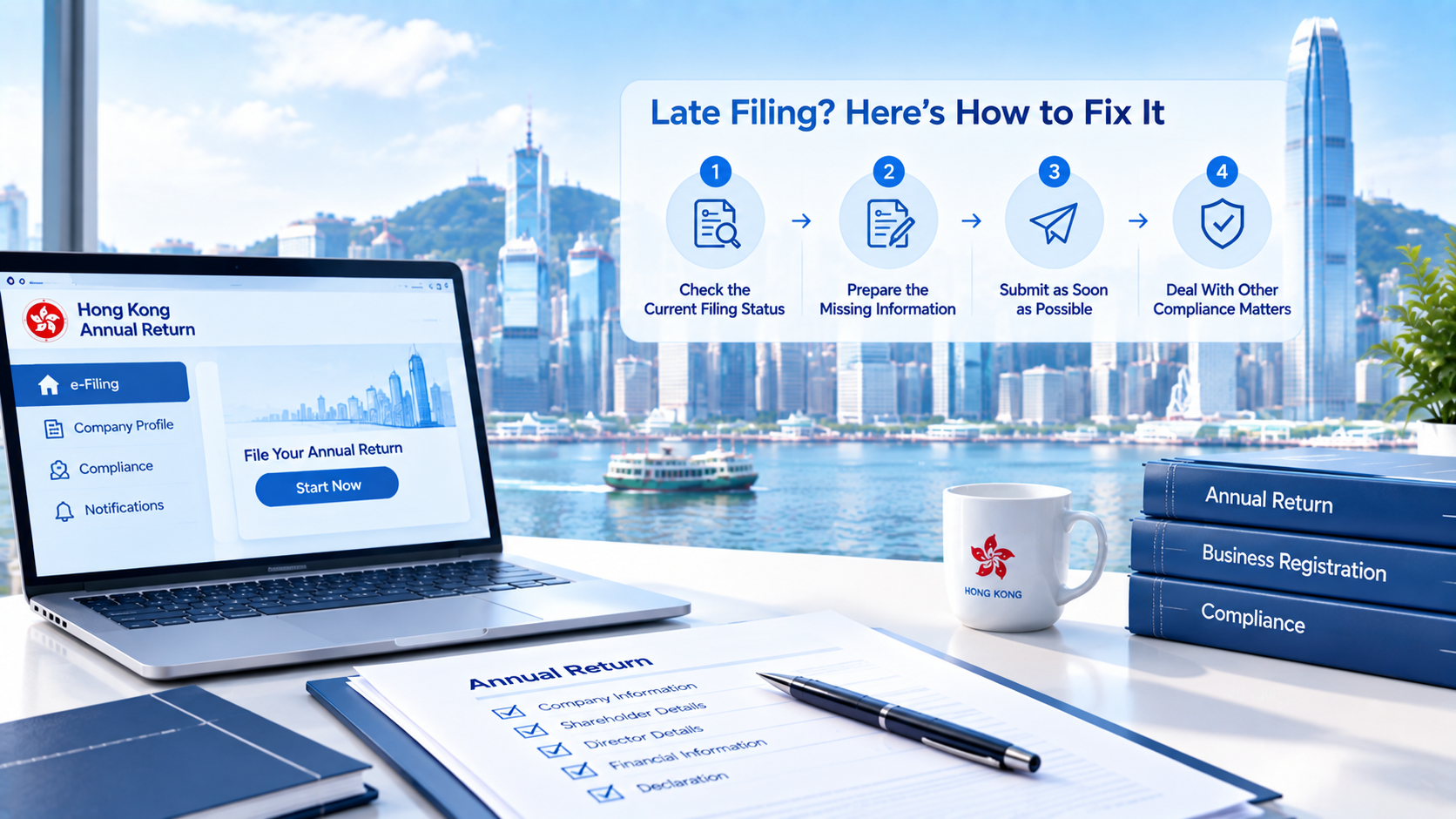
If your Hong Kong Annual Return is already overdue, the best approach is to act as soon as possible.
Step 1: Check the Current Filing Status
First, confirm the company's incorporation date, return date, and latest annual return status. You can use the Companies Registry's online services to check company information and determine the relevant filing deadline. The Registry also provides an Annual Return e-Reminder service for registered users.
Step 2: Prepare the Missing Information
Next, check whether any company information has changed since the previous filing.
For example, you may need to review:
- Directors
- Shareholders
- Company secretary
- Registered office
- Shareholding information
- Other registered company particulars
Keeping the information accurate is important because the annual return is intended to update the company's official records.
Step 3: Submit the Hong Kong Annual Return as Soon as Possible
Once the information is ready, submit the overdue annual return and pay the applicable registration fee. Do not wait for another government reminder before taking action. The Companies Registry states that it does not have discretion to waive the higher statutory registration fees for late annual returns. Therefore, delaying the filing usually does not make the situation easier. Instead, it may increase the cost and the risk of further compliance action.
Step 4: Deal With Other Outstanding Compliance Matters
After completing the overdue Hong Kong Annual Return, check whether the company also has other outstanding obligations.
For example, you should review the status of:
- Business Registration Certificate
- Profits Tax filing
- Company records
- Registered office information
- Company secretary arrangements
- Other applicable statutory filings
This helps prevent the company from fixing one overdue item while another compliance problem remains unresolved.
Hong Kong Annual Return: How to Avoid Future Delays
The easiest way to avoid late filing is to create a compliance schedule before the company's anniversary date. International entrepreneurs can set reminders several weeks before the annual return deadline. It is also useful to keep company documents and changes in one organized location so that the required information is ready when the filing date approaches. If you work with a company secretary or compliance provider, make sure the provider clearly explains the filing schedule and confirms when the filing has been completed.
For overseas business owners, digital compliance services can make this process easier. IngStart provides online company registration and compliance services for international businesses, including company document management and ongoing compliance support. By keeping important company information organized online, business owners can manage their Hong Kong company more easily even when they live outside Hong Kong.
What International Entrepreneurs Should Know About Hong Kong Annual Return
A Hong Kong Annual Return is not simply an administrative formality. It is part of the company's statutory compliance responsibilities and helps keep the Companies Registry's records current. For a typical local private company, filing within 42 days after the return date helps the company avoid the much higher late registration fees. If the company misses the deadline, it should take action quickly rather than wait for the problem to become more serious.
At the same time, company owners should remember that the annual return and Business Registration Certificate are separate compliance matters. Keeping both up to date is important for maintaining an organized company record. For international entrepreneurs, the best approach is simple: know your deadlines, keep your company information updated, and deal with overdue filings as soon as possible.
Conclusion
The Hong Kong Annual Return is an essential part of maintaining a Hong Kong company. For local private companies, the filing generally falls due within 42 days after the company's return date, and late filing can lead to significantly higher registration fees. In more serious cases, non-compliance may also result in prosecution and fines.
If your annual return is already overdue, do not ignore it. Check the company's filing status, prepare the required information, submit the overdue return, pay the applicable fee, and review any other outstanding compliance obligations.
By managing annual returns and Business Registration Certificate renewals on time, international company owners can reduce unnecessary costs and keep their Hong Kong businesses in good standing.
Article Recommendations
- Hong Kong Company Tax Guide 2026: Rates, Filing Process & Requirements
- Hong Kong Company Registration Guide 2026: Steps and Requirements for Global Entrepreneurs
- Hong Kong Bank Opening Guide: National Day Holiday & Account Opening Tips
If you still have questions, please contact our team on WhatsApp at +1 213 751 2111. We'll help you find the right solution for your business and keep your company compliant as it grows.