
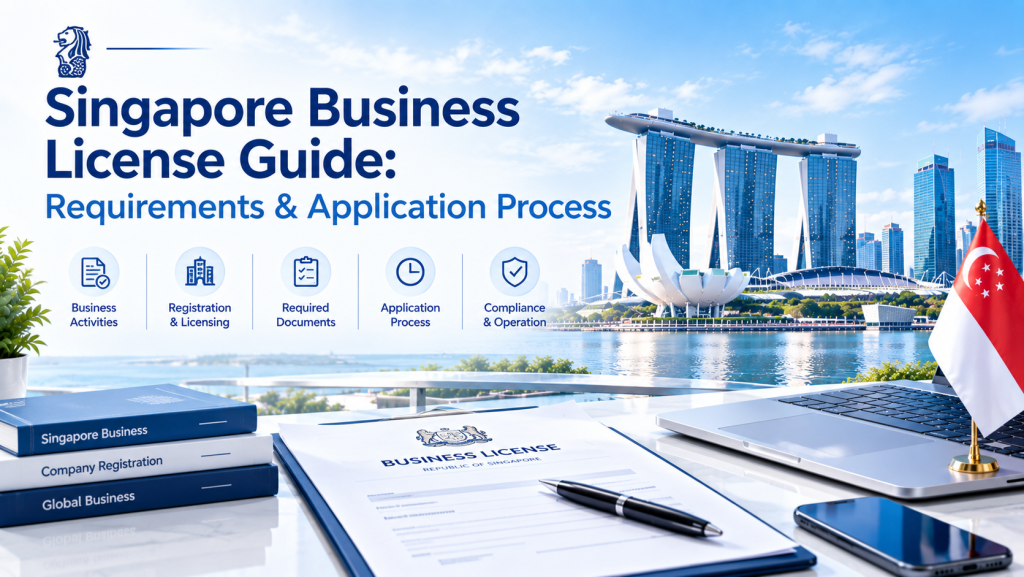
Singapore is a major business hub that attracts entrepreneurs and companies from around the world. However, registering a company is not always enough to start operating. Depending on your industry and business activities, you may also need a Singapore Business License, permit, or other regulatory approval.
It is important to understand the difference between company registration and business licensing. Singapore does not have one general business license that every company must obtain. Instead, businesses may need specific licences or permits based on what they do. The Accounting and Corporate Regulatory Authority (ACRA) recommends using the GoBusiness Licence e-Adviser to check the requirements for your business.
What Is a Singapore Business License?
A Singapore Business License is not a single licence issued to every newly registered company. First, a business must complete the appropriate registration with ACRA. After registration, the company should check whether its business activities require additional licences or permits.
For example, certain industries may have specific regulatory requirements. Businesses involved in importing or exporting goods may also need trade permits and a Customs account. Other regulated activities may require approval from the relevant government authority. Therefore, the exact licence requirements depend on the nature of your business.
Singapore Company Registration Before Licensing
Before applying for an industry-specific licence, you generally need to establish the appropriate business structure and register the business.
ACRA provides an online registration process through Bizfile. For a local company, the registration process includes choosing a business name, providing company details, adding directors and shareholders, submitting the constitution, and completing the final review and payment.
For foreign entrepreneurs, there are also local residency requirements. A Singapore company must have at least one director who meets the local residency rules. A company secretary must also be appointed within six months after registration.
Choose and Reserve a Company Name
The first step is to choose a suitable company name and reserve it through Bizfile. The name should comply with Singapore's naming requirements and should not create conflicts with existing registered names or restricted terms. You should also consider whether the name is suitable for your planned business activities and brand strategy.
Prepare Company Information
Before registration, prepare the required company information.
This can include:
- Company name
- Business activities
- Registered office address
- Financial year end
- Directors
- Shareholders
- Share capital
- Company constitution
- Required identification and position-holder information
ACRA requires a Singapore registered office address. The registered office is used for official communications and company records and must be open and accessible to the public during the required business hours.

Submit the Company Registration
Once the required information is ready, the company can be registered through Bizfile. The application includes a final review and payment before submission. Entrepreneurs may also engage a corporate service provider to handle the registration process on their behalf. After successful registration, the company receives its registration information and Business Profile.
How to Apply for a Singapore Business License
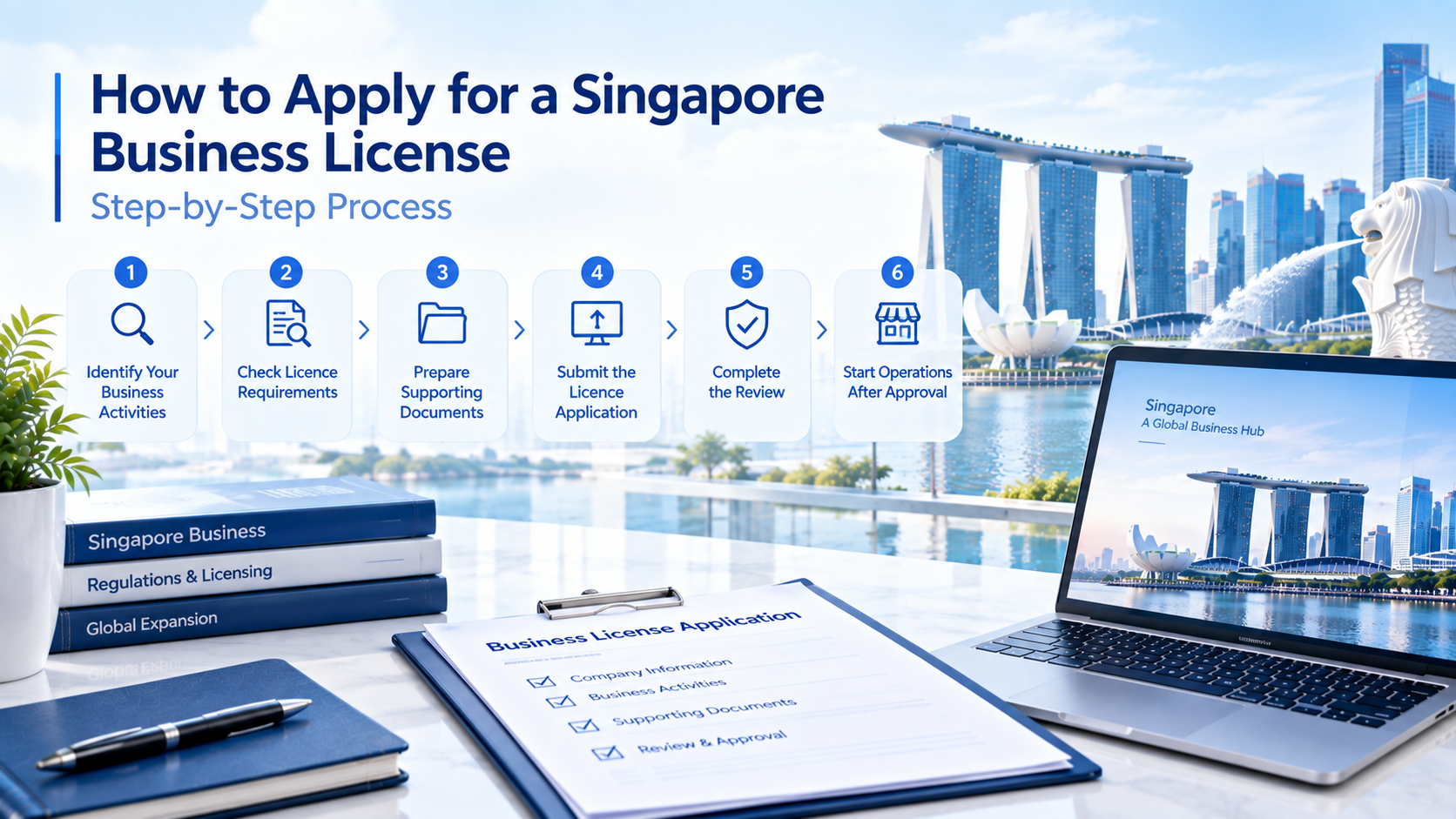
After registering the company, you should determine whether your specific business activity requires a licence or permit. The process generally involves the following steps.
Step 1: Identify Your Business Activities
First, clearly define what your company will do. Your primary and secondary business activities can affect whether additional licences are required. Therefore, choose the appropriate business activity descriptions during company registration and keep them updated when your business changes.
Step 2: Check Licence Requirements
Next, use the GoBusiness Licence e-Adviser to check which licences and permits may apply to your business.
This step is important because licensing requirements differ between industries. A company providing professional services may have different requirements from a food business, education provider, financial services company, or trading company.
If no additional licence is required, the business may generally begin operating after completing the necessary company registration requirements.
Step 3: Prepare Supporting Documents
If your business requires a licence, prepare the documents requested by the relevant authority.
Depending on the licence, these may include:
- Company registration details
- Business activity information
- Registered office information
- Identity documents
- Professional qualifications
- Premises information
- Safety or operational documents
- Financial information
- Other industry-specific documents
The exact requirements depend on the licence you are applying for.
Step 4: Submit the Licence Application
After preparing the required documents, submit the application through the relevant government platform or licensing authority. GoBusiness also provides a self-service function that allows businesses to apply for multiple licences where applicable.
Step 5: Complete the Review
The relevant government authority will review the application. Some applications may require additional information, inspections, professional qualifications, or other forms of approval. Therefore, the processing time can vary depending on the type of licence and the complexity of the business activity.
Step 6: Start Operations After Approval
Once the required licence or permit has been approved, you can operate the relevant business activity according to the licence conditions. Remember that company registration and business licensing are separate compliance matters. Completing company registration does not automatically mean that every regulated activity is approved.
Singapore Business License Requirements for Foreign Entrepreneurs
Foreign entrepreneurs can establish businesses in Singapore, but they need to consider additional requirements. ACRA states that every business must have at least one local resident in Singapore, although the exact role and eligibility depend on the business structure. For a local company, at least one director must meet the local residency requirements.
Foreigners who want to move to Singapore to operate their business may also need an appropriate work pass. For example, eligible entrepreneurs with venture-backed or innovative technology businesses may consider the EntrePass route. Therefore, foreign entrepreneurs should consider both company registration and immigration requirements before starting operations.
Singapore Business License and Registered Office Requirements
A Singapore company must maintain a registered office in Singapore. The registered office is where official communications and notices can be sent, and where company records and registers are maintained.
ACRA requires the registered office to be open and accessible to the public during normal business hours on each business day. The registered office does not necessarily have to be the same location where the company conducts its actual business activities. This means that entrepreneurs should arrange a compliant Singapore registered office before completing company registration.
Singapore Business License Compliance After Approval
Obtaining a licence is only one part of ongoing compliance. If your business holds an industry-specific licence, you need to follow its conditions and renew or update it when required.
You should also keep your company information accurate. ACRA requires companies to maintain updated information about directors, shareholders, company officers, and other relevant records. Certain changes must be filed through Bizfile within the applicable deadlines.
Companies also need to meet their annual filing obligations. ACRA states that local companies must file annual returns and keep their company information up to date. As a result, business owners should treat licensing and corporate compliance as ongoing responsibilities rather than one-time procedures.
Important Tips for Applying for a Singapore Business License
Check the Exact Licence You Need
Do not assume that every Singapore company needs the same licence. First identify your business activities and then check the applicable requirements through GoBusiness and the relevant government authority.
Prepare Accurate Information
All information submitted during company registration and licensing should be accurate and consistent. Incorrect business activities, incomplete documents, or inconsistent information may cause delays during the review process.
Check Industry-Specific Requirements
Some industries have additional rules. For example, businesses involved in international trade may need customs registration and trade permits before moving goods across Singapore's borders. Therefore, check the rules that apply specifically to your industry before starting operations.
Plan the Application Timeline
The time needed to obtain a licence depends on the type of application. Some licences may be straightforward, while others may require additional review, documents, or inspections. Planning ahead can help you avoid delays when launching your business.
Consider Professional Assistance
Singapore company registration and licensing requirements can be difficult to manage if you are unfamiliar with the local system.
For foreign entrepreneurs, a professional corporate service provider can help with company registration, document preparation, compliance, and related business services. Ingstart also provides Singapore company registration and ongoing business compliance services, which can help overseas entrepreneurs manage the setup process more efficiently.
Conclusion
A Singapore Business License is not a single licence that every company must obtain. Instead, Singapore businesses may need different licences or permits depending on their specific activities and industry.
The basic process is to first register the company with ACRA, prepare a compliant registered office and company structure, and then check whether additional licences are required. If a licence is necessary, the business should prepare the relevant documents, submit the application, complete the review, and comply with the licence conditions after approval.
For foreign entrepreneurs, it is especially important to consider local residency, company secretary, registered office, immigration, licensing, and ongoing filing requirements together. By checking the latest requirements through ACRA and GoBusiness before starting operations, you can reduce unnecessary delays and build a more compliant business structure in Singapore.
Article Recommendations
- Singapore OCBC Account Opening Guide: Requirements & Process
- Singapore Company Annual Return Penalties: Late Filing Fines and Compliance Risks
- Singapore Business Bank Account Opening Guide
If you still have questions, please contact our team on WhatsApp at +1 213 751 2111. We'll help you find the right solution for your business and keep your company compliant as it grows.