
UK Company Tax Guide 2026: Complete Tax Requirements & Filing Process
What Is UK Company Tax?
UK Company Tax is an important topic for overseas entrepreneurs who plan to establish and operate a company in the United Kingdom. After registering a UK company, business owners need to understand and comply with relevant tax requirements, including Corporation Tax, Value Added Tax (VAT), and payroll-related taxes.
In 2026, UK companies must follow tax regulations based on their business activities, income sources, and company structure. Therefore, understanding UK Company Tax requirements can help overseas business owners manage compliance responsibilities and avoid potential penalties.
Although some UK companies may not carry out business activities locally, they may still need to complete certain tax filings. For this reason, companies should understand their tax obligations and prepare the required documents in advance.
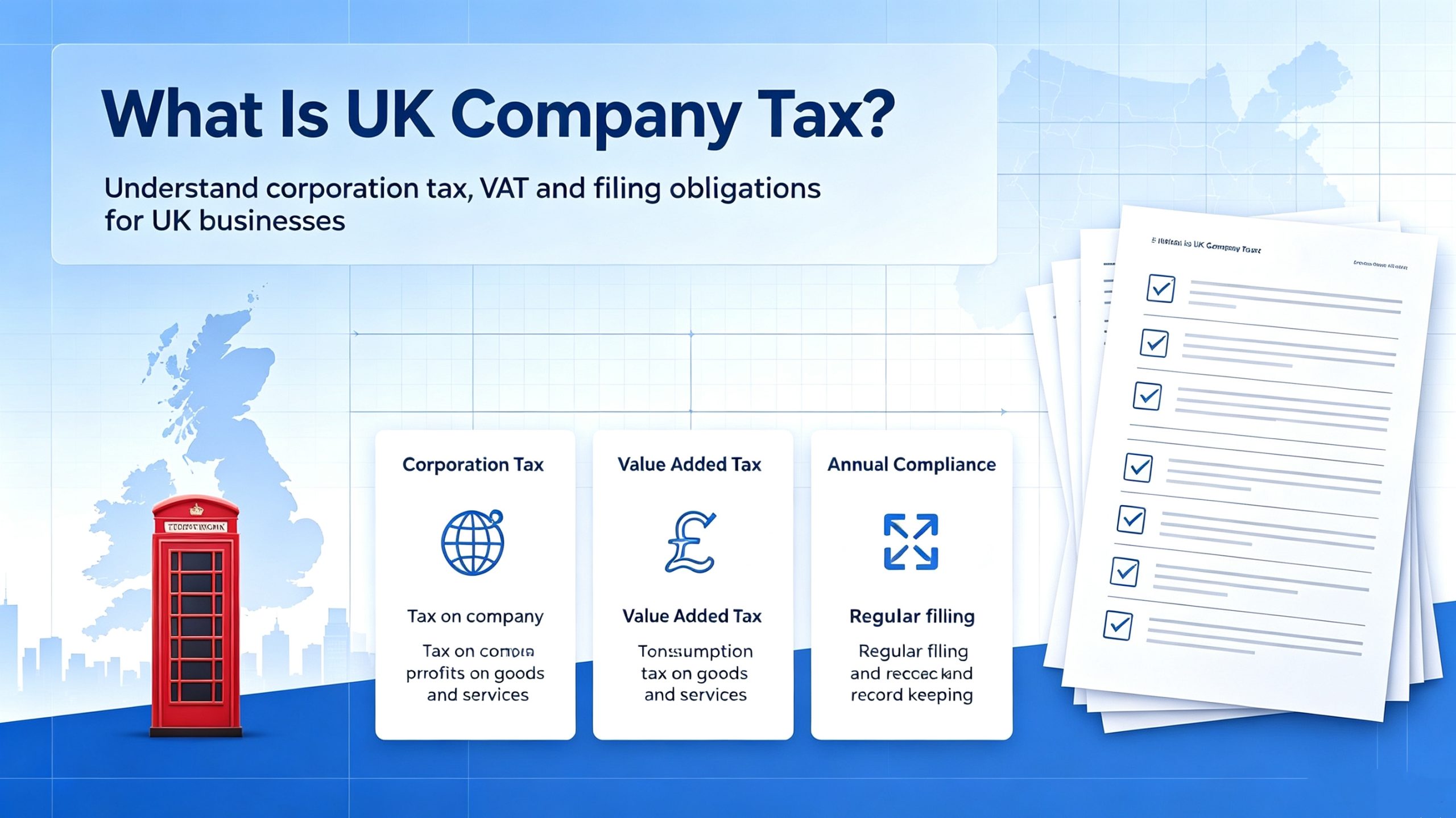
UK Company Tax Filing Subjects in 2026
The tax obligations of a UK company mainly depend on whether the company conducts actual business activities in the United Kingdom. Generally, UK companies can be divided into two main categories: companies without UK operations and companies operating in the UK.
UK Company Tax for Non-UK Operating Companies
A non-UK operating company refers to a UK company that does not conduct business activities in the United Kingdom. For example, the company does not provide services to UK customers, trade with UK companies, or maintain local business operations.
Since the company’s profits are not generated from UK activities, its tax obligations may be different from companies operating locally. In many cases, such companies may only need to complete the required tax reporting based on their actual situation.
However, not having business activities in the UK does not mean the company has no compliance responsibilities. Therefore, overseas owners should still complete necessary tax filings and maintain proper business records according to UK regulations.
UK Company Tax for Companies Operating in the UK
Companies that operate in the UK usually have more tax responsibilities. Similar to companies in other countries, these businesses need to calculate taxable income, submit tax returns, and pay relevant taxes based on their profits and activities.
For UK operating companies, the main tax obligations may include:
- Corporation Tax on company profits;
- VAT on taxable goods and services;
- National Insurance contributions for employees;
- Customs duties for import and export activities;
- Stamp Duty for certain company transactions.
In addition, if the company hires employees in the UK, it must handle payroll-related taxes and employer contributions according to local requirements.
For overseas entrepreneurs, managing UK Company Tax can be challenging when they are unfamiliar with local regulations. Therefore, professional compliance support can help simplify tax management and ensure that companies complete their obligations correctly. Ingstart provides global company services and compliance solutions to assist international business owners with company operations and ongoing compliance requirements.

What Taxes Do UK Companies Need to Pay?
UK Company Tax includes several types of taxes, and the exact tax obligations depend on the company’s business activities and financial situation. Therefore, overseas entrepreneurs should understand the main tax categories before operating a UK company.
Generally, UK companies may need to pay Corporation Tax, VAT, transfer-related taxes, and employer-related costs.
Corporation Tax
Corporation Tax is one of the main taxes under UK Company Tax. It applies to the profits generated by UK companies from their business activities.
Companies need to calculate their taxable profits and submit Corporation Tax returns according to UK tax rules. In addition, certain payments, such as interest and some royalty payments, may be subject to withholding tax unless a reduced rate or exemption applies under relevant tax agreements.
Therefore, companies should review their specific situation carefully and ensure that tax calculations are accurate.
Value Added Tax (VAT)
VAT is another important part of UK Company Tax. Companies that meet the VAT registration requirements need to register with HM Revenue & Customs (HMRC) and charge VAT on applicable goods and services.
The standard VAT rate in the UK is 20%. However, different products and services may have different VAT treatments depending on their categories.
For this reason, companies should monitor their business turnover and determine whether VAT registration is required. Meanwhile, maintaining complete sales and expense records can help companies complete VAT reporting more efficiently.
Transfer Taxes
UK companies may also need to consider transfer-related taxes, including Stamp Duty and Stamp Duty Reserve Tax (SDRT).
Stamp Duty mainly applies to certain documents and transactions, such as share transfers and other securities transactions. Generally, the tax is calculated based on the consideration paid for the transaction.
In addition, Stamp Duty Reserve Tax may apply when rights or interests in UK company shares are transferred through an agreement. The specific tax treatment depends on the transaction type and related circumstances.
Therefore, companies should review possible tax obligations before completing share transfers, acquisitions, or other major transactions.
Payroll Tax and National Insurance Contributions
Besides company-level taxes, businesses with employees in the UK also need to manage payroll-related responsibilities.
Employers are generally responsible for:
- Withholding employee income tax through payroll;
- Paying employer National Insurance contributions;
- Managing payroll reporting requirements.
Moreover, companies should include employee-related costs when planning their overall UK Company Tax obligations.
By understanding different tax categories in advance, overseas business owners can better prepare for their UK company operations and avoid unexpected compliance issues.
How to Complete UK Company Tax Filing?
Completing UK Company Tax filing requires companies to prepare financial records, submit tax documents, and pay required taxes within the specified deadlines. Therefore, companies should follow the correct filing process to maintain compliance with UK tax regulations.
Generally, the UK Company Tax filing process includes preparing financial accounts, communicating with HM Revenue & Customs (HMRC), and completing tax payments.
Prepare Financial Accounts and Reports
Before submitting UK Company Tax filings, companies need to prepare complete financial accounts and related reports.
At the end of each financial year, companies should prepare financial statements based on their business records, including:
- Balance sheets;
- Profit and loss statements;
- Cash flow statements;
- Other relevant accounting records.
These documents provide important information about the company’s financial position and are also the foundation for tax calculations.
In addition, keeping accurate accounting records throughout the year can help companies complete tax filings more efficiently and reduce potential errors.
Maintain Communication with HM Revenue & Customs (HMRC)
HM Revenue & Customs (HMRC) is responsible for managing tax matters in the UK. Therefore, companies should maintain proper communication with HMRC and provide accurate information when required.
Moreover, business owners should pay attention to changes in UK tax rules and adjust their compliance arrangements when necessary.
For overseas entrepreneurs, understanding UK tax procedures can sometimes be difficult. As a result, many international business owners choose professional service providers to assist with accounting, tax filing, and compliance management.
Pay Taxes on Time
After completing tax calculations and submitting the required documents, companies must pay the relevant taxes within the required deadline.
Therefore, businesses should carefully review their tax amounts and ensure that payments are completed on time. If any errors are found during the filing process, companies should contact HMRC and make corrections when necessary.
By preparing documents in advance and following the correct filing procedures, companies can manage UK Company Tax obligations more smoothly.
UK Company Tax Filing Requirements in 2026
After registering a UK company, business owners need to follow ongoing tax and compliance requirements. Therefore, understanding these rules is important for maintaining the company’s legal status and avoiding unnecessary penalties.
Keep Accounting Records After Company Formation
From the date of company registration, businesses should maintain regular accounting records, including income, expenses, invoices, and transaction documents.
In addition, companies should organize their financial records regularly instead of waiting until the tax filing deadline. Proper record keeping can make UK Company Tax filing easier and more accurate.
Register for Tax When Operating in the UK
If a UK company carries out business activities in the country, it may need to register with HMRC and complete the relevant tax procedures.
Therefore, overseas owners should confirm their tax obligations before starting local business activities.
Register for VAT When Required
Companies that meet the VAT registration threshold need to apply for a VAT number and complete VAT reporting according to UK regulations.
After registration, companies can charge VAT on applicable transactions and manage VAT returns based on their business activities.
Complete Annual Compliance Requirements
Besides UK Company Tax filing, UK companies also need to complete annual compliance obligations. Failure to meet these requirements on time may result in penalties or other compliance issues.
Therefore, companies should manage tax filing and annual compliance together to ensure smooth business operations.
Documents Required for UK Company Tax Filing
Before completing UK Company Tax filing, companies need to prepare the necessary financial documents and business records. Proper preparation can help ensure accurate tax reporting and reduce the risk of delays during the filing process.
The required documents may vary depending on the company’s business activities. However, UK companies usually need to provide the following information:
Bank Statements
Bank statements are important documents for UK Company Tax filing. Companies should provide records of business transactions, including income received and payments made.
In addition, maintaining complete bank records can help companies match financial information with actual business activities and support accurate tax calculations.
Income Invoices and Expense Records
Companies also need to prepare documents related to their income and expenses, including:
- Sales invoices;
- Purchase invoices;
- Business expense receipts;
- Other related financial documents.
These records are used to prepare accounting reports and calculate taxable income. Therefore, companies should keep complete invoice and expense records throughout the year.
UK Company UTR Number and Verification Code
When completing UK Company Tax filing, companies may also need to provide their UK Company UTR (Unique Taxpayer Reference) number and verification information.
The UTR number is issued by HMRC and is an important identification number for company tax matters. Therefore, companies should keep this information safely and ensure it is available when handling tax-related procedures.
Documents Provided After UK Company Tax Filing
After completing UK Company Tax filing, companies will receive several important tax and accounting documents. These documents can be used as compliance records and may be required for future business or tax management.
Annual Accounts
Annual Accounts are financial reports prepared for the company’s financial year. They usually include basic financial information such as the company’s income, expenses, assets, and liabilities.
These accounts help show the company’s financial position and support ongoing compliance requirements.
Corporation Tax Computation
Corporation Tax Computation shows how the company’s taxable profit and Corporation Tax amount are calculated.
In addition, it helps explain the relationship between the company’s financial records and the final tax payable amount.
CT600 Form
The CT600 form is the main Corporation Tax return submitted to HMRC.
Through this form, companies report their Corporation Tax information and confirm their tax obligations for the relevant accounting period.
Full Accounts from Companies House
Companies may also need to prepare Full Accounts documents for filing and record-keeping purposes.
Keeping complete copies of tax and accounting documents can help companies manage future compliance requirements more efficiently.
Conclusion: Manage UK Company Tax Compliance Effectively
UK Company Tax is an important responsibility for businesses registered in the United Kingdom. Therefore, overseas entrepreneurs should understand the main tax types, filing procedures, and required documents before operating a UK company.
Although UK tax requirements may seem complicated, proper preparation and accurate record keeping can make compliance management easier. By completing tax filings on time and maintaining updated business records, companies can reduce risks and support long-term development.
For international business owners, professional support can simplify UK Company Tax management. Ingstart provides global company services and compliance solutions, helping overseas entrepreneurs manage company formation, accounting, and ongoing compliance requirements more efficiently.
Article Recommendations
- UK Company Registration 2026: Complete Guide for Global Entrepreneurs
- 2026 TikTok Europe VAT Compliance Guide
- Brand Overseas Expansion Complete Guide: How Can Enterprises Build a Sustainable Overseas Growth System?
If you still have questions, please contact our team on WhatsApp at +1 213 751 2111. We'll help you find the right solution for your business and keep your company compliant as it grows.