
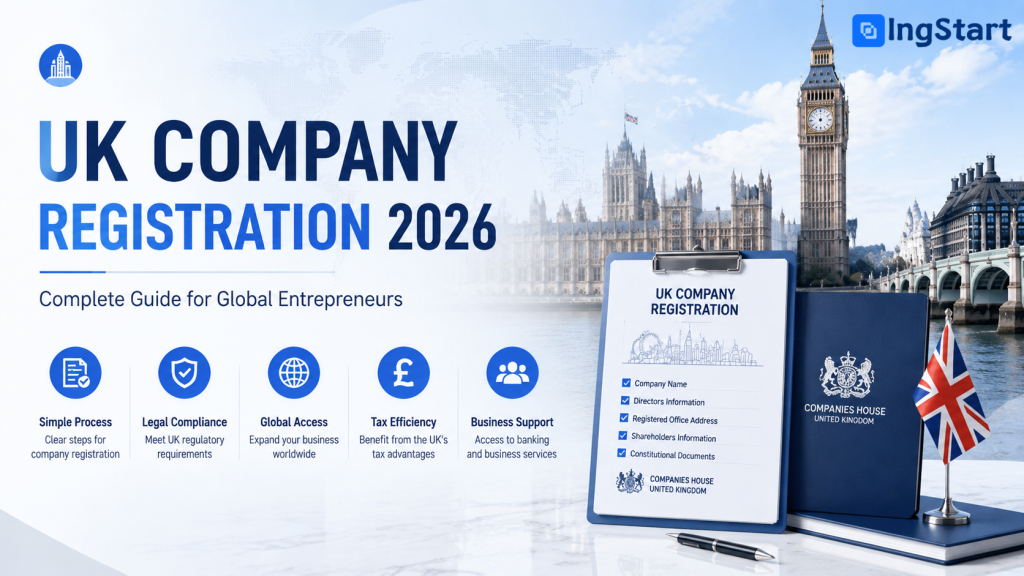
UK Company Registration 2026: Complete Guide for Global Entrepreneurs
UK Company Registration is a popular choice for many global business owners who want to start a company in the UK.
The UK has a strong economy, a trusted legal system, and a well-developed banking system. Therefore, many foreign entrepreneurs choose the UK to build their businesses.
In addition, the UK has strong connections with global markets. Companies can work with customers and partners from many countries.
However, starting a company in the UK needs careful preparation. Business owners need to understand the rules, prepare documents, and follow the correct steps.
This guide explains UK Company Registration in 2026. It covers company requirements, required documents, registration steps, and important things after company setup.
UK Company Registration Documents and Requirements
Before starting UK Company Registration, business owners need to prepare basic company information.
First of all, they need to decide the company name, directors, shareholders, business activities, and share capital.
In addition, they need to prepare the required documents.
Good preparation can make the process faster. It can also help avoid common mistakes.
Company Name Requirements
Choosing a company name is the first step of UK Company Registration.
The company name must follow UK rules. It cannot be the same as another registered company.
Also, the company name usually needs to end with:
- Limited;
- LTD.
Before registration, business owners should check if the name is available.
Some words may need special approval. For example, words related to the government or the royal family may have extra rules.
Therefore, checking the name early can help avoid delays.
Director and Shareholder Documents
During UK Company Registration, companies need to provide director and shareholder information.
The required documents usually include:
- Passport or ID documents;
- Personal address details;
- Share ownership information.
A UK company needs at least one director and one shareholder.
The same person can be both a director and a shareholder.
Also, there are no nationality limits for directors and shareholders. Foreign business owners can own 100% of a UK company.
However, all directors and shareholders must provide valid personal documents.
Registered Capital Requirements
UK Company Registration has simple capital rules.A UK company can start with a small amount of share capital. Many companies choose £1 as the starting capital.Business owners do not need to complete a capital check before registration.Because of this, foreign entrepreneurs can set up a UK company with flexible capital options.
Registered Address Requirements
Every UK company needs a registered address in the UK.The address is used to receive official letters and government notices.However, foreign business owners do not always need to rent an office in the UK.Many overseas entrepreneurs use professional services to provide a registered address.In addition, the address must meet UK requirements. A simple mailbox address is not acceptable.
Business Activity Requirements
Before completing UK Company Registration, business owners need to explain their business activities.
The description should include the company’s industry, products, or services.
A clear business activity description helps the company keep correct records.
It can also support future business operations.
UK Company Registration Conditions
Before completing UK Company Registration, business owners should understand the basic company rules in the UK.
The UK has simple and flexible company rules. However, companies still need to provide correct information and follow local requirements.
Company Name Rules
A UK company name must follow the rules of the UK registration authority.
The name must:
- Be different from existing company names;
- Follow naming rules;
- Avoid restricted words.
Most private companies use “Limited” or “LTD” at the end of the company name.
Therefore, checking the company name before registration can help prevent problems later.
Capital Requirements
The capital rules for UK Company Registration are simple.
Most UK companies start with a small amount of share capital. Many companies choose £1 as their initial capital.
Also, companies do not need to complete a capital verification process before registration.
Because of this, the UK is suitable for many small businesses and overseas entrepreneurs.
Director and Shareholder Requirements
A UK company needs at least:
- One director;
- One shareholder.
The director and shareholder can be the same person.
There is no nationality limit for directors or shareholders. Foreign business owners can own a UK company without becoming UK residents.
However, directors and shareholders need to provide valid identification documents.
If there is more than one shareholder, the company should clearly record each person’s share percentage.
Registered Office Address Requirements
Every UK company needs a registered office address in the UK.
This address is used for official communication, including letters from government departments.
However, overseas business owners do not always need to rent a local office.
They can use a professional registered address service to receive company documents and support daily management.
UK Company Registration Process in 2026
The UK Company Registration process is simple when all information is ready.
Generally, business owners can complete the process through several steps.
First, they choose a company name. Next, they prepare company information and documents. After that, they submit the application and wait for approval.
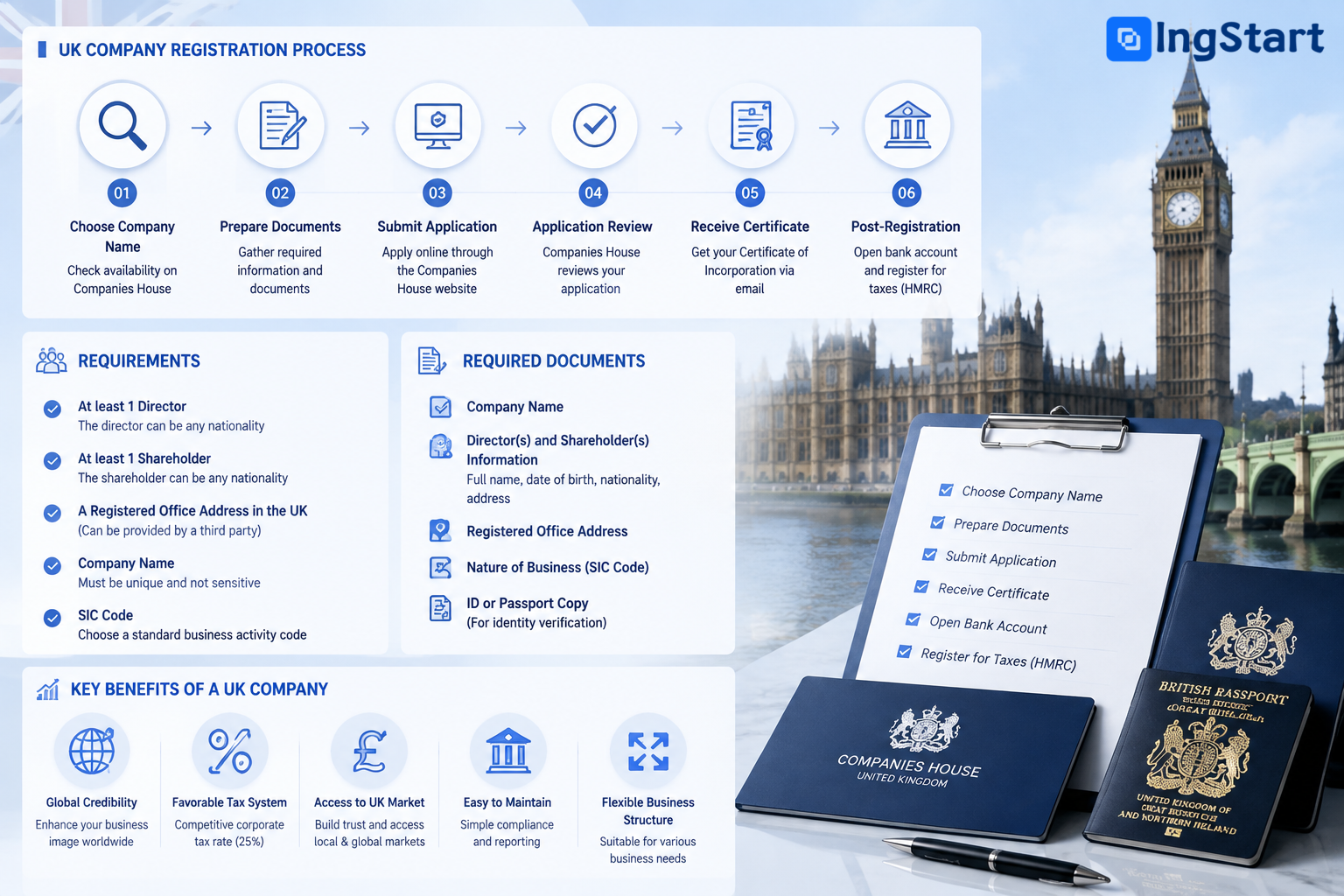
Choose a Company Name
The first step is choosing a suitable company name.
Business owners should check if the name is available and follows UK company rules.
Also, they should check existing trademarks to avoid possible conflicts.
Therefore, checking the name early can make the registration process smoother.
Appoint Directors
After choosing the company name, business owners need to appoint directors.
Directors are responsible for managing the company and making sure company records are correct.
A director:
- Must meet UK legal requirements;
- Does not need to live in the UK;
- Needs to provide personal information.
Directors should also make sure the company follows UK rules after registration.
Confirm Shareholders and Ownership
A UK limited company must have at least one shareholder.
The shareholder can also be the company director.
If one person owns the company, they can hold 100% of the shares.
There is no maximum number of shareholders.
If there are several shareholders, the company should record each person’s ownership percentage.
This helps keep the company structure clear.
Prepare Company Documents
Before submitting the UK Company Registration application, business owners need to prepare the required documents.
These documents usually include:
- Company name;
- Director information;
- Shareholder information;
- Share structure details;
- Business activity information.
The company documents explain the basic information about the business.
After successful registration, the company will receive official documents, including the Certificate of Incorporation.
These documents show that the company has been legally formed in the UK.
However, preparing company documents can be difficult for overseas business owners because they may not know UK company rules. Therefore, choosing professional support can make the process easier.
Ingstart provides a complete UK company registration process for global entrepreneurs. From preparing company information and documents to submitting the application and completing registration steps, Ingstart helps business owners handle the process smoothly. This allows entrepreneurs to save time and focus on building their businesses.

Submit UK Company Registration Application
After preparing all information, business owners can submit the UK Company Registration application.
The registration authority will check the company information.
If everything meets the requirements, the company will be approved.
After approval, business owners will receive company documents.
These documents can be used for future business activities, such as:
- Opening a business bank account;
- Signing agreements;
- Working with business partners.