
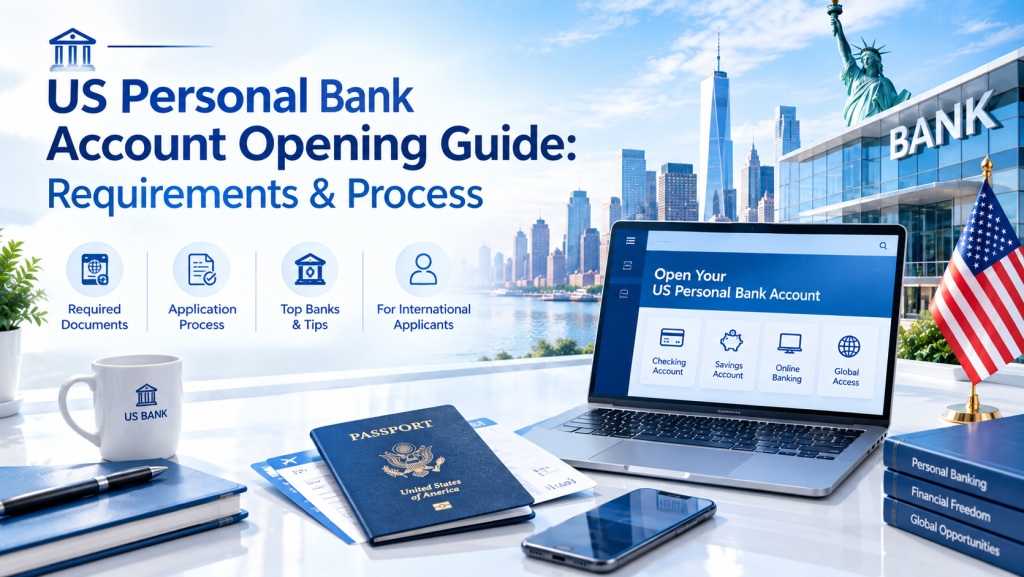
A US Personal Bank Account can be useful for individuals who need to receive U.S. payments, manage personal expenses, pay for services, or maintain funds in U.S. dollars. For international applicants, however, opening an American personal bank account can involve more requirements than opening an account in their home country.
Banks may review your identity, residential address, immigration or residency status, tax information, and the intended use of the account. In addition, each bank has its own eligibility rules and document requirements.
This guide explains how a US Personal Bank Account works, what documents you may need, how the application process usually works, and what international applicants should consider before applying.
What Is a US Personal Bank Account?
A US Personal Bank Account is a bank account opened by an individual with a U.S. financial institution. Depending on the bank, personal accounts may include checking accounts, savings accounts, and other deposit products.
A checking account is generally designed for everyday transactions. Customers may use it to receive payments, pay bills, make transfers, and use a debit card. A savings account, on the other hand, is mainly intended for holding money and potentially earning interest.
For international applicants, the most important issue is not simply choosing between checking and savings. Instead, you should first determine whether the bank accepts applicants with your particular residency, identification, and tax status.
Who Can Open a US Personal Bank Account?
Eligibility varies significantly between banks. U.S. citizens and permanent residents generally have access to a wide range of personal banking products. However, non-U.S. residents may face additional requirements.
Depending on the bank and account, an international applicant may need to provide:
- A valid passport or government-issued identification
- A U.S. residential address or another acceptable address
- A foreign residential address
- U.S. tax information, where applicable
- A Social Security Number (SSN) or Individual Taxpayer Identification Number (ITIN), if required
- Information about employment and income
- Information about the intended use of the account
Some banks may only accept applications from customers who live in the United States. Others may have specific procedures for international customers. Therefore, having a U.S. passport, visa, or address does not automatically guarantee that an applicant can open an account.

US Personal Bank Account Requirements
The exact requirements depend on the bank, account type, and applicant's circumstances. Nevertheless, preparing the following information in advance can make the application easier.
Identification Documents
Banks need to verify the identity of customers before opening an account. A valid passport is commonly used by international applicants. Depending on the bank, other government-issued identification documents may also be accepted. The name on your identification should match the information provided during the application. If your documents contain different spellings or names, the bank may request additional evidence.
Address Information
Address verification is another important part of opening a personal bank account.
A bank may ask for proof of residential address, such as:
- Utility bills
- Bank statements
- Government correspondence
- Lease documents
- Other accepted address documents
The specific requirements vary between banks. International applicants should also understand the difference between a residential address and a mailing address. A bank may require a physical residential address rather than a mailbox or virtual address.
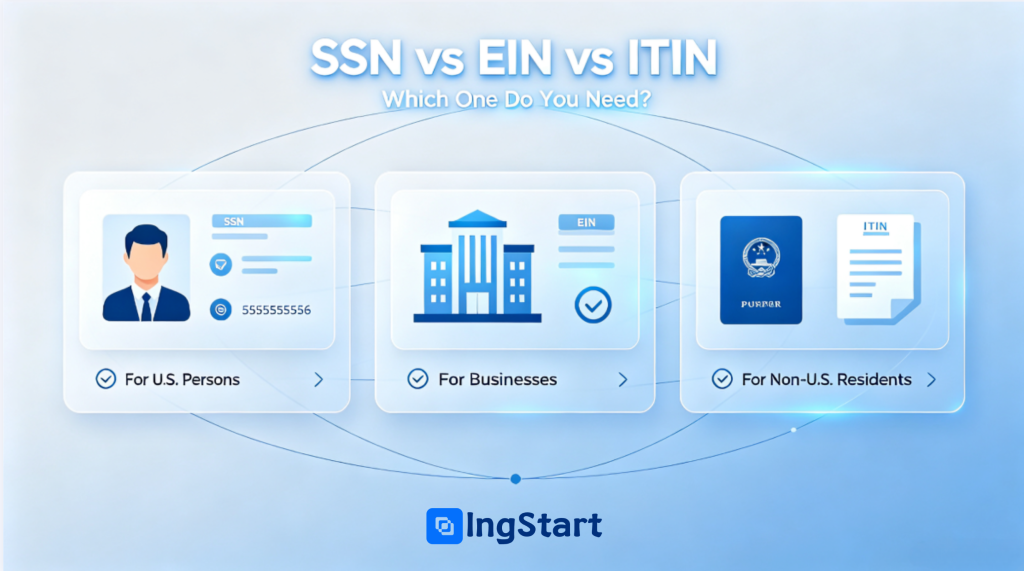
SSN or ITIN
Some U.S. personal bank accounts require an SSN, while others may accept alternative taxpayer identification information depending on the applicant and account.
An Individual Taxpayer Identification Number (ITIN) is issued by the Internal Revenue Service to certain individuals who need a U.S. taxpayer identification number but are not eligible for an SSN. However, obtaining an ITIN does not automatically mean that every U.S. bank will accept an application from the holder. Therefore, applicants without an SSN should check the bank's current requirements before submitting an application.
Employment and Income Information
Banks may ask about your occupation, employer, income, or source of funds. This information helps the bank understand the customer's financial profile and expected account activity. You should provide accurate information rather than selecting an occupation or income level simply because it appears more likely to receive approval.
How to Open a US Personal Bank Account
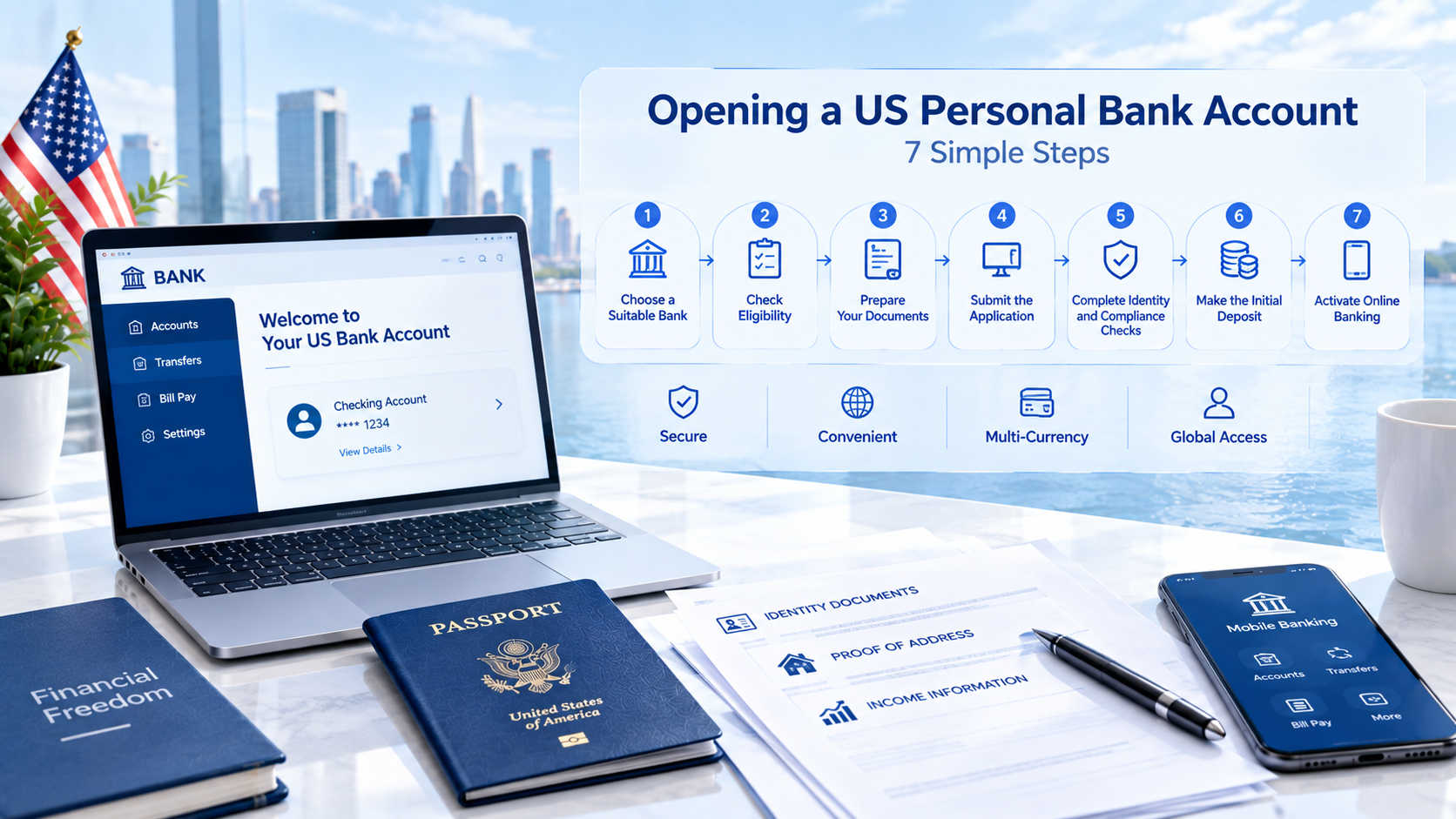
The application process depends on the bank and whether you are applying inside or outside the United States. In general, the process includes several stages.
Step 1: Choose a Suitable Bank
Start by comparing banks based on your eligibility and banking needs.
Consider factors such as:
- Whether non-U.S. residents are accepted
- Whether an SSN or ITIN is required
- Minimum opening deposit
- Monthly maintenance fees
- ATM access
- Online and mobile banking
- International transfers
- Foreign transaction fees
- Branch availability
Do not choose a bank solely because it is a large U.S. bank. A bank that accepts your specific applicant profile may be more useful than one with a large national network.
Step 2: Check Eligibility
Before preparing your application, confirm that the bank accepts customers with your residency and identification status. This step is particularly important for international applicants. Some online applications may require a U.S. address, SSN, or other information that a foreign applicant does not have. In such cases, the application may not be suitable even if the bank offers personal accounts generally.
Step 3: Prepare Your Documents
Prepare your identification, address information, tax information, and other supporting documents. If you are applying at a branch, bringing the original documents can be useful. If the bank accepts online applications, make sure your digital copies are clear and readable.
Step 4: Submit the Application
Depending on the bank, you may apply online, through a mobile application, or at a physical branch. During the application, you may need to provide personal information such as your legal name, date of birth, address, nationality, occupation, tax residency, and contact information.
Step 5: Complete Identity and Compliance Checks
After submitting your application, the bank may conduct identity verification and compliance checks. For international applicants, the bank may review additional information related to residency, tax status, source of funds, and the intended purpose of the account. If the bank requests additional documents, respond with accurate and consistent information.
Step 6: Make the Initial Deposit
Some personal bank accounts require an initial deposit. The amount depends on the specific account. Some accounts may have no minimum opening deposit, while others may require a certain amount. Applicants should also check whether the account has monthly maintenance fees or minimum balance requirements.
Step 7: Activate Online Banking
After approval, you can normally set up online and mobile banking.
Depending on the bank, these services may allow you to:
- Check account balances
- Transfer funds
- Pay bills
- Manage debit cards
- Set up account alerts
- Review transaction history
- Send eligible domestic or international transfers
Can Non-U.S. Residents Open a US Personal Bank Account?
This is one of the most common questions among international applicants. The answer is sometimes, but not with every bank or account. Some U.S. banks focus primarily on customers who live in the United States. Others may have specialized procedures for international customers, foreign nationals, or customers with an existing relationship with the bank.
For non-U.S. residents, the application can also depend on the purpose of the account. For example, someone who frequently travels to the United States may have different banking needs from an international investor or a foreign business owner who wants to separate personal and business funds. As a result, you should check the bank's eligibility requirements before making travel plans or preparing an application.
Can You Open a US Personal Bank Account Remotely?
Remote account opening depends on the bank and applicant profile. Some U.S. banks allow eligible customers to open personal accounts online. However, online availability does not necessarily mean that every international applicant can complete the process remotely.
A bank may require:
- A U.S. residential address
- SSN or other tax identification
- U.S. mobile phone number
- Identity verification
- Existing U.S. banking history
- Additional documentation
For some international applicants, an in-person branch visit may still be necessary. Therefore, be careful with services that claim that anyone can open a U.S. personal bank account remotely without visiting the United States. Bank approval always depends on the financial institution's own policies and compliance review.
US Personal Bank Account vs. Business Bank Account
It is important to distinguish between personal and business banking. A US Personal Bank Account belongs to an individual and is generally used for personal financial activities. A U.S. business bank account, by contrast, belongs to a company and is used for business transactions.
For example, if you operate a U.S. LLC, you should generally keep company funds separate from your personal money. Using a personal account for regular business transactions can create accounting and compliance problems.
If you are establishing a U.S. company, IngStart can also help international entrepreneurs with company formation, U.S. bank account opening support, tax filing, annual compliance, and related business services. This can make it easier to coordinate company formation and banking preparation in one process.
Common Reasons to Open a US Personal Bank Account
International customers may consider a U.S. personal bank account for several legitimate reasons.
Managing U.S. Expenses
If you frequently travel to the United States, a U.S. account can make it easier to manage certain local expenses. Depending on the account and bank, customers may use a debit card for everyday purchases or transfer funds into the account before travelling.
Receiving Eligible U.S. Payments
Some individuals may need a U.S. bank account to receive certain payments from U.S. companies or platforms. However, whether a specific payment can be received depends on the payment provider and the customer's tax and residency status.
Managing U.S. Dollar Funds
A U.S. bank account can also provide a convenient way to hold and manage funds in U.S. dollars. This can be useful for individuals who regularly receive or spend USD.
Separating Personal and Business Funds
If you own a U.S. company, keeping personal and company finances separate can make financial management easier. Your personal account should be used for personal expenses, while the company's account should handle company revenue and business expenses.
What Banks May Ask During the Application
When applying for a US Personal Bank Account, applicants should be prepared to answer questions about their financial background.
Common questions may include:
- Where do you currently live?
- What is your occupation?
- What is your source of income?
- Why do you want to open the account?
- How much money do you expect to deposit?
- Where will the funds come from?
- Will you receive international transfers?
- What countries will you send or receive money from?
These questions are part of the bank's customer identification and compliance procedures. The best approach is to answer honestly and provide supporting documents when requested. There is no reliable "script" that guarantees approval. Banks evaluate applications based on their own risk policies and the information provided by each applicant.
Common Mistakes to Avoid
Opening a U.S. personal account can become more difficult if your application contains inconsistent or incomplete information.
Using an Unacceptable Address
Do not assume that every bank accepts a virtual address, forwarding address, or hotel address. Check the bank's specific address requirements before applying.
Providing Inconsistent Information
Your name, date of birth, address, tax information, and other details should be consistent across your application and supporting documents. Differences may trigger additional verification.
Mixing Personal and Business Funds
If you own a U.S. company, avoid using your personal account as the company's main operating account. Maintaining separate accounts can make bookkeeping and financial reporting much easier.
Applying Without Checking Eligibility
One of the biggest mistakes is submitting applications to banks without first checking whether they accept your applicant profile. Before applying, confirm the requirements for your nationality, residency, identification, tax status, and intended account use.
Tips for International Applicants
If you are applying for a US Personal Bank Account from outside the United States, preparation is especially important. First, determine whether the bank accepts non-U.S. residents. Next, check whether you need an SSN, ITIN, U.S. address, or other documentation.
You should also prepare a clear explanation of why you need the account and how you expect to use it. If you plan to visit a branch, contact the bank beforehand and ask which documents you should bring. Requirements can vary between branches and account types. Finally, do not treat online approval as guaranteed. Banks can request additional information or decline an application after reviewing the customer's profile.
Final Thoughts on US Personal Bank Account Opening
A US Personal Bank Account can be useful for international individuals who need to manage U.S. dollars, handle eligible U.S. payments, or manage personal expenses in the United States.
However, requirements vary widely between banks. Non-U.S. residents may face additional requirements related to identification, address, tax status, and source of funds. Before applying, choose a bank that matches your circumstances, confirm the latest eligibility requirements, prepare your documents, and provide accurate information throughout the application.
For international applicants, the key is not simply finding a bank that offers personal accounts. The better approach is finding a bank and account that accept your applicant profile and meet your actual banking needs.
Article Recommendations
- US Bank Accounts 2026: Remote Personal & Business Banking Guide
- US Bank Accounts 2026: Remote Personal & Business Banking Guide
- East West Bank Account: Business Account Opening Guide 2026
If you still have questions, please contact our team on WhatsApp at +1 213 751 2111. We'll help you find the right solution for your business and keep your company compliant as it grows.