

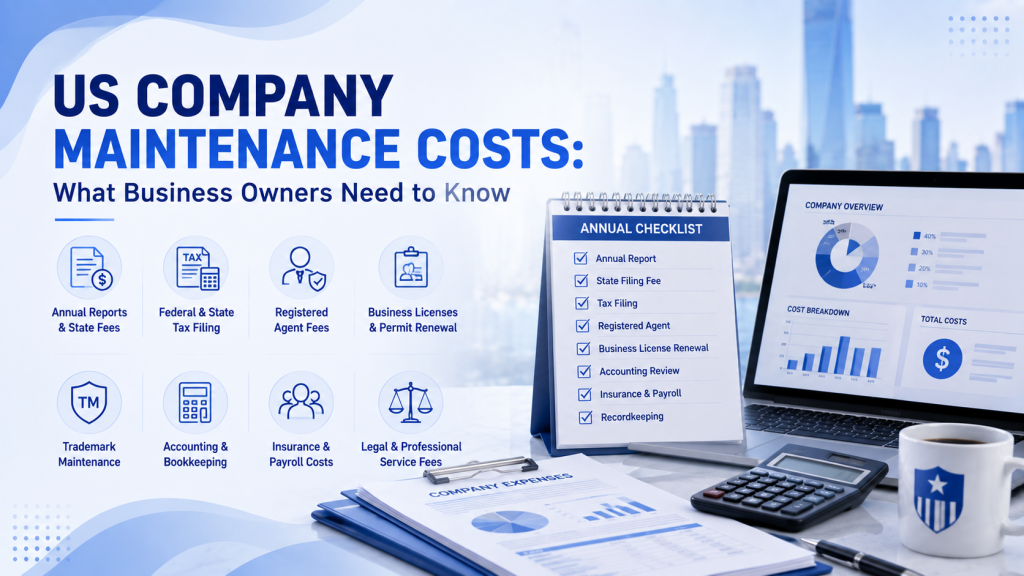
Registering a company in the United States is only the first step. After formation, business owners still need to manage various ongoing expenses to keep the company active and compliant. These US Company Maintenance Costs can include state filings, tax compliance, registered agent services, licenses, and professional services.
However, not every company has the same expenses. The actual cost depends on the state, business structure, industry, and level of business activity. Therefore, international entrepreneurs should understand their potential costs before and after forming a US company.
What Are US Company Maintenance Costs?
US Company Maintenance Costs refer to the ongoing expenses a business may need to pay after company formation. These costs help the company maintain its legal status, meet tax obligations, and continue normal business operations.
For a small company with limited activity, ongoing expenses may be relatively manageable. In contrast, a company with employees, multiple licenses, or more complex transactions may have significantly higher costs.
Common expenses may include:
- Annual or periodic state filing fees
- Federal and state tax filing costs
- Registered agent fees
- Business license and permit fees
- Accounting and bookkeeping fees
- Legal and professional service fees
- Trademark-related costs
- Employee and insurance costs
- Banking and payment service fees
It is important to distinguish between mandatory compliance costs and expenses that only arise because of specific business activities.
What Ongoing Costs Does a US Company Have?
The ongoing costs of a US company can vary considerably. Some expenses occur every year or on a regular schedule, while others only arise when the company expands its operations.
Annual Report and State Filing Fees
Many states require companies to submit an annual report or another type of periodic filing. These filings help the state maintain updated information about the company, such as its address, directors, officers, managers, or registered agent. The filing frequency and fee depend on the state. Some states require annual reports, while others use a biennial schedule or different reporting requirements. Missing a filing deadline can result in late fees, penalties, or administrative dissolution. Therefore, tracking state filing deadlines is an important part of managing US Company Maintenance Costs.
Federal and State Tax Filing Costs
Tax compliance is another major ongoing expense. Depending on the company's structure and activities, a business may have federal, state, or local tax filing responsibilities.
The applicable requirements can depend on:
- The company's legal structure
- Its ownership
- Business income and expenses
- The state where it operates
- The type of business activity
Even when a company has limited or no income, certain information returns or tax filings may still apply. Therefore, business owners should not assume that having no revenue means they have no filing obligations.
Professional tax preparation can also add to the company's annual expenses. Simple businesses may need limited support, while companies with international transactions or more complex structures may require additional accounting assistance.

Registered Agent Fees
A registered agent is generally required for a US company in its state of formation. The agent receives official correspondence, legal notices, and other documents on behalf of the company.
Some business owners may qualify to act as their own registered agent. However, international entrepreneurs often use professional registered agent services because they may not maintain a suitable physical address in the United States. As a result, registered agent fees are a common recurring expense for many foreign-owned US companies.
Business License and Permit Renewal Fees
A company's registration does not automatically give it permission to conduct every type of business. Depending on the industry and location, the company may need additional licenses or permits. For example, regulated industries such as financial services, transportation, healthcare, food services, and certain professional services may have additional requirements. License fees and renewal schedules vary. Therefore, businesses should check the requirements of the relevant state and local authorities instead of assuming that every company follows the same rules.
What Other US Company Maintenance Costs May Apply?
Not every business needs to pay the following expenses. Instead, these costs usually depend on the company's operations, employees, assets, or growth plans.
Trademark Registration and Maintenance Fees
Businesses that want to protect their brand may register trademarks with the United States Patent and Trademark Office (USPTO). The cost can include government filing fees and, when applicable, attorney or professional service fees. Trademark owners may also need to complete maintenance filings after registration. Although trademark protection is not a mandatory company maintenance expense, it can be useful for businesses that plan to build a long-term brand in the US market.
Employee Insurance and Payroll-Related Costs
Companies with employees may have additional expenses related to payroll, employment taxes, workers' compensation insurance, unemployment insurance, and employee benefits. These requirements vary by state and can also depend on the number of employees and the nature of the business. Therefore, a company without employees will usually have fewer employment-related costs than a business with a larger workforce.
Accounting and Bookkeeping Fees
Proper financial records help a company manage its taxes and maintain accurate business information. For this reason, many companies work with accountants or bookkeeping professionals. The cost depends on the number of transactions, business structure, tax requirements, and complexity of the company's financial activities. A company with only a few transactions may need limited bookkeeping support. Meanwhile, businesses with international payments, inventory, payroll, or multiple revenue streams may require more extensive accounting services.
Legal and Professional Service Fees
A growing company may need lawyers, tax professionals, accountants, or other specialists from time to time. For example, legal assistance may be useful when reviewing contracts, changing the company's structure, handling intellectual property matters, or resolving disputes. These services do not necessarily create fixed annual expenses. Instead, they usually depend on the company's actual needs.
Financial Statement and Audit Costs
An independent annual audit does not apply to every US company. In particular, many privately held small businesses do not face the same financial reporting requirements as public companies. However, certain businesses may need audited or professionally reviewed financial statements because of investor requirements, lending arrangements, industry rules, contracts, or other circumstances. Therefore, audit fees should be considered a potential business expense rather than a standard cost for every US company.
Corporate Meeting and Recordkeeping Costs
Corporations may have governance requirements involving shareholder meetings, board meetings, resolutions, and corporate records. For a small private company, these activities may involve limited costs. However, larger businesses may spend more on legal support, corporate administration, document preparation, and recordkeeping. The actual requirements also depend on the company's state of incorporation and governing documents.
Which US Company Maintenance Costs Are Mandatory?
Understanding which expenses are required can help business owners create a more realistic budget. Not every cost listed above applies to every company.
Costs Required to Keep Your Company in Good Standing
State filing requirements are among the most important obligations to monitor. A company may need to submit periodic reports and pay the required state fees to remain in good standing. In addition, the company should maintain a valid registered agent when required and keep its state records up to date. Failure to meet these obligations can result in penalties or loss of good standing.
Costs That Depend on Business Activities
Tax filings, business licenses, payroll expenses, insurance, and other costs can depend heavily on what the company actually does. For example, an e-commerce company may have different compliance needs from a consulting business. Similarly, a company with employees will usually have more employment-related obligations than a company operated by its owners. Therefore, entrepreneurs should evaluate their costs based on their actual business model.
Costs That Only Apply to Certain Companies
Some expenses apply only in specific circumstances. Trademark registration, professional audits, legal disputes, corporate advisory services, and employee training are good examples. Consequently, these costs should not automatically form part of every company's fixed annual budget.
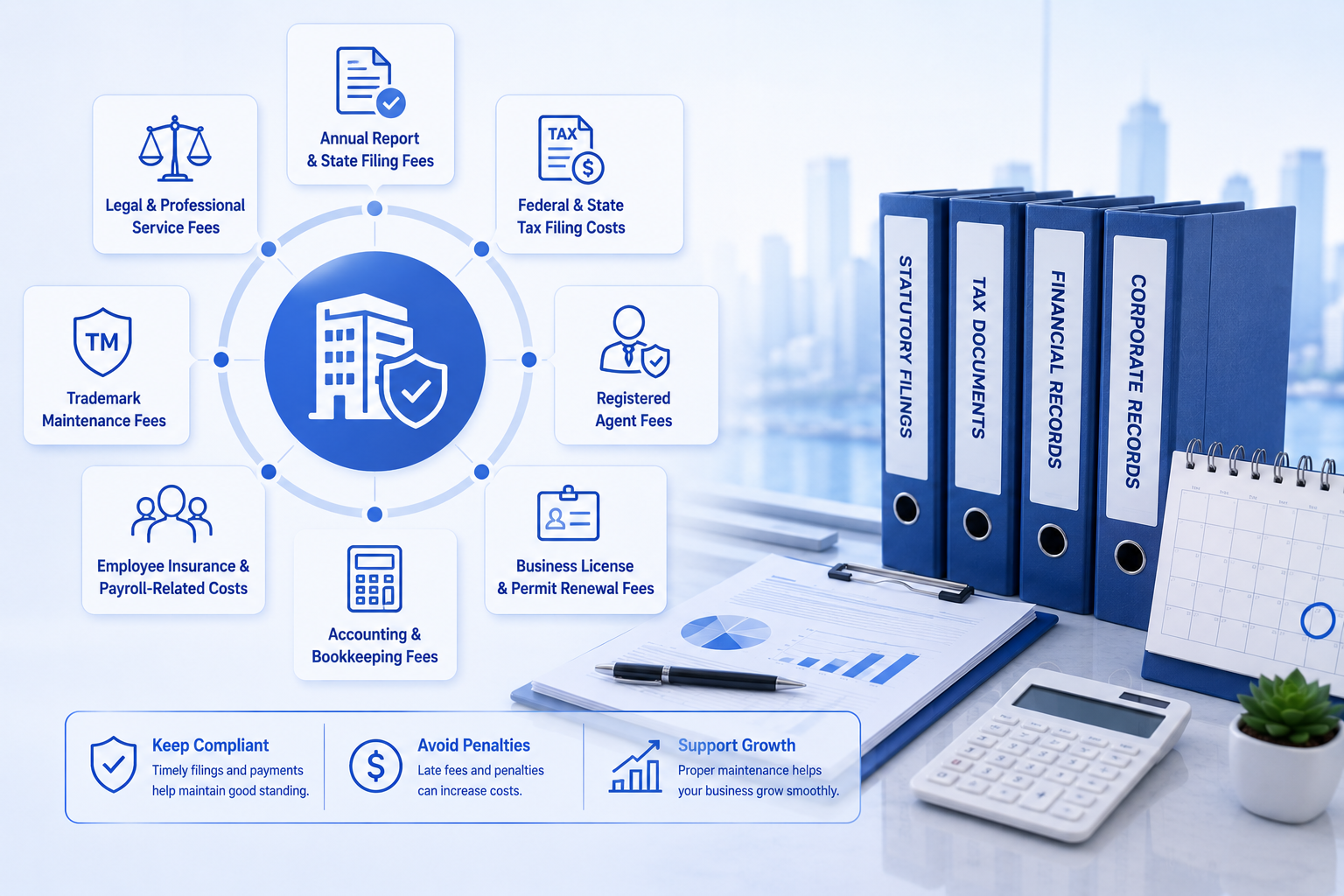
How Much Do US Company Maintenance Costs Depend on the State?
State differences can have a significant effect on US Company Maintenance Costs. Each state establishes its own rules for company filings, fees, taxes, licenses, and other compliance requirements.
State Filing Requirements
The annual report or periodic filing fee can vary significantly between states. Some states charge relatively modest fees, while others impose higher recurring costs. Furthermore, filing schedules differ. A company should therefore check the rules of its specific state instead of relying on a general US-wide schedule.
Tax and Franchise Tax Differences
State tax obligations can also vary. Some states impose franchise taxes, annual business taxes, or other state-level charges, while others use different systems. The company's tax structure and business activities also affect the final amount. As a result, choosing a state only because its initial registration fee is low may not always produce the lowest long-term cost.
License and Permit Requirements
Local and industry-specific requirements can create additional differences between states and cities. For example, a company operating from a physical location may have different licensing requirements from a business that provides services remotely. Therefore, international entrepreneurs should consider both state-level and local requirements when estimating their US Company Maintenance Costs.
How Can You Reduce US Company Maintenance Costs?
Managing ongoing expenses does not necessarily mean choosing the cheapest option at every stage. Instead, the goal should be to avoid unnecessary costs while keeping the company compliant.
Track Annual Filing Deadlines
Late filings can lead to avoidable penalties. Keeping a clear compliance calendar can help the company submit required reports and tax documents on time.
Choose the Right Business Structure
LLCs and corporations have different legal, tax, and administrative characteristics. Selecting a structure that matches the company's business model can help control long-term costs.
Keep Accurate Financial Records
Organized financial records make tax preparation easier and can reduce unnecessary accounting work. In addition, good records help business owners understand where their money goes.
Review Professional Service Fees
Professional services can be valuable, but businesses should review their service needs regularly. Comparing service packages and selecting providers that match the company's actual requirements can help control recurring expenses.
For international entrepreneurs, IngStart provides US company registration and ongoing compliance support, including company maintenance services, tax-related assistance, and other business management solutions. This can make it easier for foreign business owners to manage their US companies without handling every administrative task on their own.
Final Thoughts on US Company Maintenance Costs
US Company Maintenance Costs do not follow one fixed standard. Instead, they depend on the company's state, legal structure, business activities, employees, and compliance needs. Some expenses, such as state filings and certain tax obligations, may be recurring requirements. Others, including trademarks, audits, legal services, and employee training, only apply in specific situations.
Therefore, international entrepreneurs should look beyond the initial company formation fee. By understanding recurring obligations, tracking deadlines, keeping accurate records, and choosing suitable professional services, business owners can manage their ongoing costs more effectively while keeping their US companies in good standing.
Article Recommendations
- US Company Changes: What Information Can You Update After Registration?
- C-Corp Holding LLC: How to Legally Reduce US Business Taxes in 2026
- 5 Common US Company Types You Should Know in 2026
If you still have questions, please contact our team on WhatsApp at +1 213 751 2111. We'll help you find the right solution for your business and keep your company compliant as it grows.