
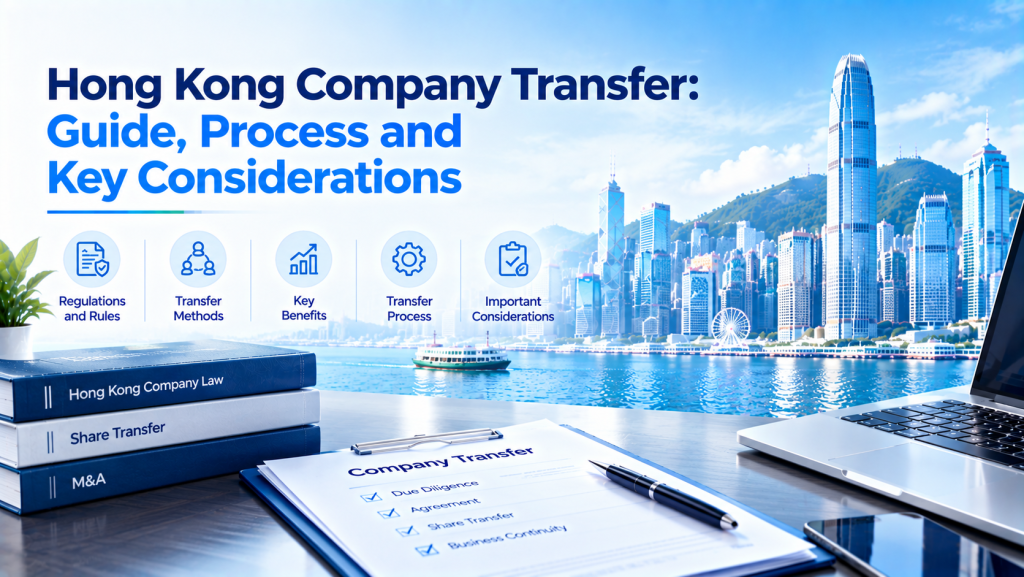
A Hong Kong Company Transfer can be used when a business owner wants to transfer ownership or control of an existing Hong Kong company to another party. Depending on the transaction structure, the transfer may involve shares, company assets, directors, or other corporate information.
For international business owners, a company transfer requires more than simply changing the shareholder's name. The parties should review the company's legal status, financial records, tax position, debts, and corporate documents before completing the transaction. Therefore, this guide explains the main Hong Kong Company Transfer methods, benefits, process, and key considerations.
Hong Kong Company Transfer Regulations
Before starting a Hong Kong Company Transfer, both parties should understand the relevant company rules and the terms that apply to the transaction.
Hong Kong Company Transfer: Company Constitution and Contracts
A transfer should follow the company's articles of association and any relevant contracts. These documents may contain rules about share transfers, shareholder rights, approvals, or other procedures.
Therefore, the buyer and seller should review the company's existing documents before agreeing to the transaction.

Hong Kong Company Transfer: Hong Kong Company Law
Hong Kong companies operate under the Companies Ordinance and other applicable rules. The specific requirements depend on the type of transfer.
For example, a share transfer requires the appropriate transfer documents and corporate records to be updated. Other changes, such as director appointments, may require separate filings.
Hong Kong Company Transfer: Clear Transaction Terms
The parties should clearly agree on the main transaction terms before completing the transfer. These terms may include:
- Transfer price
- Number or percentage of shares
- Payment method
- Completion date
- Share transfer documents
- Responsibilities of the buyer and seller
- Treatment of existing debts and liabilities
A clear agreement can help reduce misunderstandings during the Hong Kong Company Transfer process.
Hong Kong Company Transfer Methods
There are several ways to transfer a Hong Kong business. The appropriate method depends on what the buyer wants to acquire.
Hong Kong Company Transfer: Share Transfer
A share transfer is one of the common methods. The buyer acquires some or all of the company's shares from the existing shareholder. The parties normally need to agree on the transaction terms and prepare the relevant share transfer documents. Stamp duty may also apply to a transfer of Hong Kong shares. With a share transfer, the company itself remains the same legal entity. However, its ownership changes.
Hong Kong Company Transfer: Asset Transfer
Another option is an asset transfer. Instead of purchasing the company shares, the buyer acquires specific business assets. These may include equipment, inventory, intellectual property, contracts, or other assets, depending on the transaction.
The parties should clearly identify which assets and liabilities are included in the agreement. The applicable tax and legal treatment can also differ from a share transfer.
Hong Kong Company Transfer: Merger or Acquisition
A business can also change ownership through a merger or acquisition. In an acquisition, one party may acquire another company's shares or assets. A merger combines businesses into a new or continuing corporate structure.
These transactions can be more complex than a simple share transfer. Therefore, professional legal, tax, and corporate advice may be appropriate for larger transactions.
Hong Kong Company Transfer Benefits
Transferring an existing Hong Kong company can provide several practical benefits, depending on the company's condition and the buyer's business plans.
Hong Kong Company Transfer: Save Time
Buying an existing company may reduce the time needed to establish a new corporate structure. For example, an existing company may already have its registration, corporate records, and basic business structure in place. As a result, the new owner may be able to start the next stage of the business sooner. However, the buyer should first confirm that the company has a clean and suitable corporate history.
Hong Kong Company Transfer: Reduce Setup Work
An existing company can also reduce some of the administrative work involved in starting a new business. The buyer may be able to retain the existing corporate structure while changing the ownership and management information. Nevertheless, this does not remove the need for due diligence.
Hong Kong Company Transfer: Support Business Continuity
In some cases, an existing company may already have business relationships, contracts, suppliers, customers, or operating arrangements. If these remain valid after the transaction, they may help the buyer continue business activities without rebuilding everything from the beginning. However, the buyer should confirm which contracts and business relationships can legally continue after the transfer.
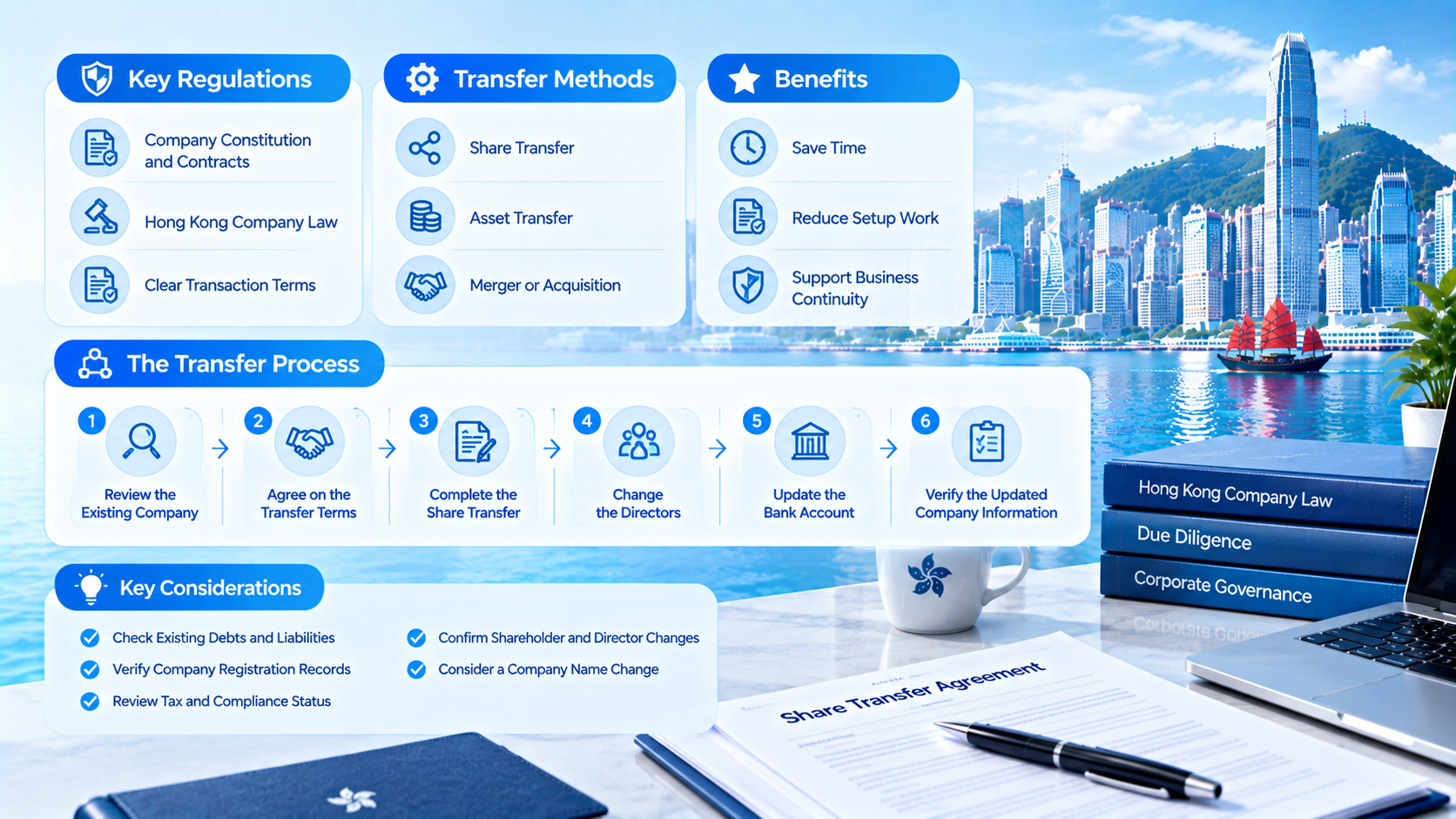
Hong Kong Company Transfer Process
The exact procedure depends on the transaction structure. For a typical share transfer, the process may include the following steps.
Step 1: Review the Existing Company
Before completing a Hong Kong Company Transfer, the buyer should review the company's corporate and financial position.
This review may include:
- Company registration records
- Shareholding structure
- Directors and company secretary
- Outstanding debts
- Tax filings and liabilities
- Government fees and penalties
- Bank account status
- Existing contracts and business obligations
This step is important because the buyer may take over the company together with its existing liabilities.
Step 2: Agree on the Transfer Terms
Next, the buyer and seller should agree on the purchase price, shares being transferred, payment arrangements, completion date, and other key terms. A written agreement can clearly record the responsibilities of both parties and reduce potential disputes.
Step 3: Complete the Share Transfer
If the transaction uses a share transfer, the parties need to complete the relevant share transfer documents. The company's shareholder records should then reflect the new ownership. Any applicable stamp duty and filing requirements should also be handled according to the relevant rules.
Step 4: Change the Directors
If management will also change, the company should complete the required director appointment or resignation procedures. This is separate from the share transfer itself. A person can become a shareholder without necessarily becoming a director. Therefore, the parties should clearly determine whether ownership, management, or both will change.
Step 5: Update the Bank Account
After the ownership or management changes, the company should contact its bank and update the relevant account information. The bank may request updated company documents, identification documents, board resolutions, and information about the new directors or beneficial owners. Additional compliance checks may also apply.
Step 6: Verify the Updated Company Information
After completing the transaction, the parties should check the company's updated records and confirm that the required changes have been properly submitted. This can help identify missing filings or outdated information at an early stage. If the company name also changes, the new name should be updated with the relevant institutions and business materials.
Hong Kong Company Transfer: Key Considerations
A Hong Kong Company Transfer requires careful due diligence. Buyers should not focus only on the purchase price.
Check Existing Debts and Liabilities
Before buying a company, check whether it has outstanding debts, taxes, government fees, penalties, or other liabilities. A company that appears inactive may still have unpaid obligations. Therefore, reviewing its financial and compliance history is important.
Verify Company Registration Records
The buyer should confirm that the company is properly registered and that its corporate information matches the documents provided by the seller. It is also useful to check the company's filing history and identify any previous changes that may affect the transaction.
Review Tax and Compliance Status
Tax matters should receive particular attention. The buyer should check whether the company has completed its required tax filings and whether there are any outstanding tax issues. A professional review can help identify potential problems before the transaction is completed.
Confirm Shareholder and Director Changes
The share transfer and director changes should be properly documented. If the buyer is acquiring full ownership, the relevant shares should be transferred correctly, and the company's shareholder records should be updated. If the directors are also changing, the required director filings should be completed separately.
Consider a Company Name Change
The buyer may also decide to change the company's name after the transfer. A name change normally involves additional procedures and costs. The company may also need to update its bank records, contracts, invoices, website, company stamps, and other business materials.
Hong Kong Company Transfer Support for International Businesses
For international entrepreneurs, managing a Hong Kong Company Transfer from overseas can involve several documents, filings, banking updates, and compliance checks.
IngStart provides Hong Kong company registration and corporate services for international businesses. Its services can support company transfers, corporate changes, banking assistance, tax-related matters, and ongoing compliance, helping business owners manage these administrative tasks more efficiently.
Conclusion
A Hong Kong Company Transfer can be completed through different structures, including share transfers, asset transfers, and more complex mergers or acquisitions. For many transactions, a share transfer is a practical way to change company ownership while keeping the existing legal entity.
However, buyers should first review the company's registration records, debts, tax position, contracts, bank account, and compliance history. The parties should also prepare clear transaction documents and complete the required corporate changes.
With proper due diligence and accurate filings, an international business owner can reduce unnecessary risks and manage the transfer process more smoothly.
Article Recommendations
- Hong Kong Company Registration Guide 2026: Steps and Requirements for Global Entrepreneurs
- How to Open a US Company Bank Account in Hong Kong in 2026
- Hong Kong E-commerce: Benefits and Business Process
If you still have questions, please contact our team on WhatsApp at +1 213 751 2111. We'll help you find the right solution for your business and keep your company compliant as it grows.