
For international entrepreneurs, US Company Registration can open the door to global trade, e-commerce, investment, and business expansion. However, before starting the registration process, many non-US residents have questions about company types, formation time, state selection, taxes, and business bank accounts.
This 2026 guide answers 10 common US Company Registration questions in simple language. It is designed to help you understand the basic requirements before you form a US company.
Q1: How Long Does US Company Registration Take?
The processing time for US Company Registration depends mainly on the state and company type. Some states process applications quickly, while others may take several days or longer.
In many states, an LLC or corporation can receive initial approval within a few business days if the application and documents are complete. However, some states may take several weeks during busy periods. Additionally, some states offer expedited processing for an extra fee. Therefore, if you need your company urgently, it is important to check the current processing options before submitting your application. The actual timeline may also depend on whether you need additional services, such as obtaining an EIN, preparing company documents, or opening a business bank account.
Q2: What Are the Naming Rules for a US Company?
Choosing a company name is an important step in US Company Registration. Generally, the name must be distinguishable from existing businesses registered in the same state.
Most companies also need to use an appropriate legal ending. For example:
- LLC for a Limited Liability Company
- Inc. or Corporation for a corporation
- Ltd. or Limited where permitted by state law
Some states restrict certain words, especially terms such as “Bank,” “Insurance,” “University,” or other words that may require special approval. Before completing your US Company Registration, you should check whether your preferred name is available. Preparing several alternative names can also help avoid delays.
Q3: Who Can Complete US Company Registration?
In general, non-US citizens and non-US residents can complete US Company Registration. You do not usually need to be a US citizen, permanent resident, or US resident to form an LLC or C Corporation. However, immigration status can affect whether a person is allowed to work for the company while physically present in the United States.
F-1 Students
An F-1 student may generally own a US company, but company ownership does not automatically authorize the student to work for the business. Therefore, students should understand the restrictions connected to their immigration status before taking part in day-to-day business activities.
F-1 Students on OPT
Students with valid Optional Practical Training (OPT) authorization may have more flexibility. However, the business activity must meet applicable immigration requirements and relate to the student's approved field of study where required.
CPT Students
Curricular Practical Training (CPT) has different requirements. CPT normally involves authorized training connected to an academic program and an approved employment arrangement. As a result, self-employment through a personally owned company may not automatically qualify for CPT authorization.
H-1B Visa Holders
An H-1B visa holder can generally own a company, but ownership does not automatically allow them to work for that company. H-1B employment requires proper work authorization and compliance with immigration rules. If an H-1B holder wants to work for their own company, the business may need to meet additional sponsorship and employer-employee requirements.
Non-US Residents
Non-US residents who live outside the United States can generally form an LLC or C Corporation. However, S Corporation ownership has special eligibility rules and is generally not available to nonresident aliens. Therefore, choosing the right business structure is an important part of US Company Registration.
Q4: Can I Complete US Company Registration Without a Passport?
In some cases, it may be possible to start US Company Registration using other forms of identification, depending on the state and service provider. However, a passport is often important for later business activities. For example, banks and financial institutions frequently require a valid passport during identity verification. Therefore, although a passport may not always prevent the company formation process from starting, having one can make banking and compliance procedures easier.
Q5: Can US Company Registration Be Completed Remotely?
Yes. In many cases, international entrepreneurs can complete US Company Registration remotely without traveling to the United States.
Most states allow company formation documents to be filed online or through an authorized service provider. However, additional services may have different requirements. For example, opening a traditional business bank account may require an identity verification process, and some banks may ask company representatives to attend an interview. Remote formation is especially useful for international entrepreneurs who want to establish a US business before entering the US market.
Q6: What Documents Are Required to Open a US Business Bank Account?
After completing US Company Registration, you may want to open a business bank account. Banks can have different requirements, but they commonly request the following documents:
- Company formation documents, such as Articles of Organization or Articles of Incorporation
- An Employer Identification Number (EIN), where required
- Company operating documents, such as an Operating Agreement or corporate bylaws
- Personal identification for owners or authorized representatives
- Information about the company's business activities
- Proof of the company's business or operating address, where required
Some banks may also request additional information about the company's source of funds, customers, expected transactions, or business model. Because requirements vary, it is important to check the bank's current account opening policy before applying.
Q7: Which State Is Best for US Company Registration?
There is no single best state for every business. The right choice depends on your industry, tax situation, business model, budget, and future plans.
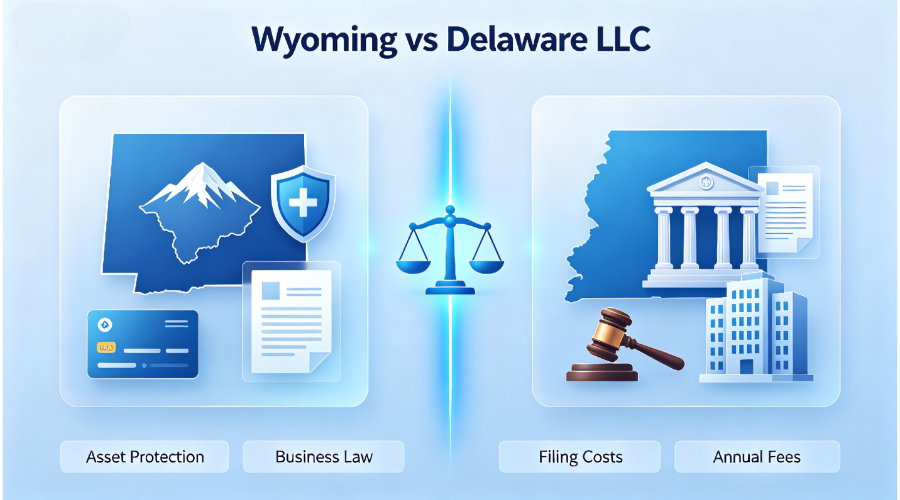
Some entrepreneurs consider Wyoming because of its relatively low fees and business-friendly environment. Delaware is widely known for its corporate law system and is often considered by companies planning to seek institutional investment. Meanwhile, entrepreneurs who actually operate in states such as New York or California may need to consider local registration requirements.
For international entrepreneurs, the best state for US Company Registration should not be chosen based on reputation alone. You should also consider annual compliance costs, taxes, banking needs, and whether your company will conduct business in a specific state.
If you are unsure which state fits your business, a professional service provider such as IngStart can help you compare different registration options. IngStart provides international entrepreneurs with online company registration, compliance management, tax-related services, and other business support across multiple jurisdictions.

Q8: How Does US Company Tax Filing Work?
After US Company Registration, tax compliance becomes an important ongoing responsibility.
US companies may need to meet both federal and state tax requirements. The specific tax treatment depends on factors such as:
- Company structure
- Ownership
- Business income
- State of operation
- Whether the company has employees
- The company's business activities
For example, an LLC and a C Corporation may have different federal tax filing requirements. In addition, some states charge franchise taxes or other annual fees even when a company has little or no income. International owners should also remember that a company may still have filing obligations even if it does not generate a profit. Therefore, you should understand your company's tax and reporting requirements before the relevant deadlines.
Q9: What Documents Will I Receive After US Company Registration?
After your US Company Registration is approved, the documents you receive may depend on the state and company type.
Common company documents may include:
- Certificate of Formation or Certificate of Incorporation
- Articles of Organization or Articles of Incorporation
- Company operating documents
- Initial resolutions or meeting records
- Ownership or membership records
- Other supporting company documents
Not every state provides the same document package. Some traditional company kits, such as physical seals or printed share certificates, may also depend on the company's structure and service provider. You should keep all official company records securely. These documents may be needed for banking, tax filings, contracts, compliance, or future business transactions.
Q10: Which Banks Are Suitable for a US Business Account?
The best bank depends on your company's needs, ownership structure, location, and business activities.
International entrepreneurs may consider traditional US banks, regional banks, or financial technology platforms. Common options include East West Bank, JPMorgan Chase, Bank of America, Wells Fargo, and Citibank. However, account opening requirements vary significantly. Some institutions may support remote applications, while others may require an in-person visit.
Before choosing a bank, compare:
- Remote account opening options
- Minimum balance requirements
- Monthly fees
- International transfer services
- Supported currencies
- Requirements for non-US owners
- Required identity and business documents
A company bank account is an important part of operating a US business, so it is best to prepare your company documents and understand the bank's requirements in advance.
Final Thoughts on US Company Registration
US Company Registration can be relatively straightforward for international entrepreneurs, but the process does not end after the company is formed. Choosing the right state, understanding your company type, obtaining the required tax information, opening a business bank account, and maintaining annual compliance are all important parts of running a US company.
Before you begin, make sure you understand the requirements that apply to your business and your personal situation. With proper planning, US Company Registration can provide a practical foundation for entering the US market and expanding internationally.
For entrepreneurs who prefer a more streamlined process, IngStart offers a one-stop online platform for global company registration and compliance. Its services can help businesses manage US company formation, registration progress, bank account support, annual compliance, tax-related services, and long-term company administration in one place.
Article Recommendations
- US Company Registration Guide: LLC vs LTD, State Selection & Foreign Profit Tax
- US Tax Forms Guide: Complete List of Common IRS Tax Forms
- US Bank Accounts 2026: Remote Personal & Business Banking Guide
If you still have questions, please contact our team on WhatsApp at +1 213 751 2111. We'll help you find the right solution for your business and keep your company compliant as it grows.