
Hong Kong Company Registration can help international entrepreneurs trade globally, expand into Asia, and manage overseas business activities. However, the rules depend partly on where the owner lives and where the investment funds come from.
For individuals in mainland China, one key question is whether they need Outbound Direct Investment (ODI) filing or foreign exchange registration before setting up a Hong Kong company. The answer depends on the investment structure, funding source, and purpose of the transaction. Registering a Hong Kong company does not automatically mean that an individual must complete ODI procedures.
However, company registration and transferring investment funds out of mainland China are separate matters. Individuals should understand the relevant rules before funding or operating an overseas company.
Hong Kong Company Registration and ODI Filing
ODI stands for outbound direct investment. In mainland China, the ODI framework generally covers qualifying overseas investments by domestic enterprises. Depending on the project, the process may involve commerce authorities, the National Development and Reform Commission (NDRC), and foreign exchange procedures through banks.
However, individuals and domestic enterprises follow different procedures. Someone who wants to register a Hong Kong company should not assume that the enterprise ODI process applies directly to them.
The key issue is how the owner plans to fund the company. The proposed transaction may also fall under specific cross-border investment or foreign exchange rules. Therefore, individuals should seek advice based on their circumstances rather than relying only on the company's registration location.

Does Hong Kong Company Registration Require ODI Filing for Individuals?
Registering a Hong Kong company in an individual's name does not, by itself, determine whether ODI filing or another approval applies. Hong Kong company law governs incorporation, while separate mainland Chinese rules govern the movement of funds from mainland China.
For example, an individual may establish a Hong Kong company for international trade. If they need to transfer capital from a mainland Chinese account, however, the transaction must follow the applicable foreign exchange and cross-border payment rules.
Likewise, using an overseas bank account does not automatically remove regulatory obligations. Before transferring money, individuals should confirm which funding routes the relevant rules permit.
Hong Kong Company Registration: Capital and Overseas Investment
Some entrepreneurs choose Hong Kong companies because local law generally does not require private companies to pay up all their registered share capital immediately upon incorporation. Nevertheless, the company's constitutional documents and share subscription arrangements still matter.
This flexibility does not mean that individuals can freely fund every overseas investment from mainland China. Company incorporation and cross-border fund transfers involve separate procedures.
Before funding a company, individuals should consider:
- Where the investment funds come from.
- Whether the funds are held in mainland China or overseas.
- Whether the transaction involves direct investment, a capital contribution, or another type of payment.
- Which foreign exchange rules or approvals may apply.
- Whether the relevant bank or authority requires supporting documents.
As a result, entrepreneurs should not assume that no filing is necessary simply because the Hong Kong company does not require immediate full payment of its registered capital.
ODI Filing for Overseas Investment by Mainland Chinese Enterprises
ODI filing generally concerns qualifying overseas investments by mainland Chinese enterprises. However, the exact requirements depend on the investor, project, industry, and transaction structure.
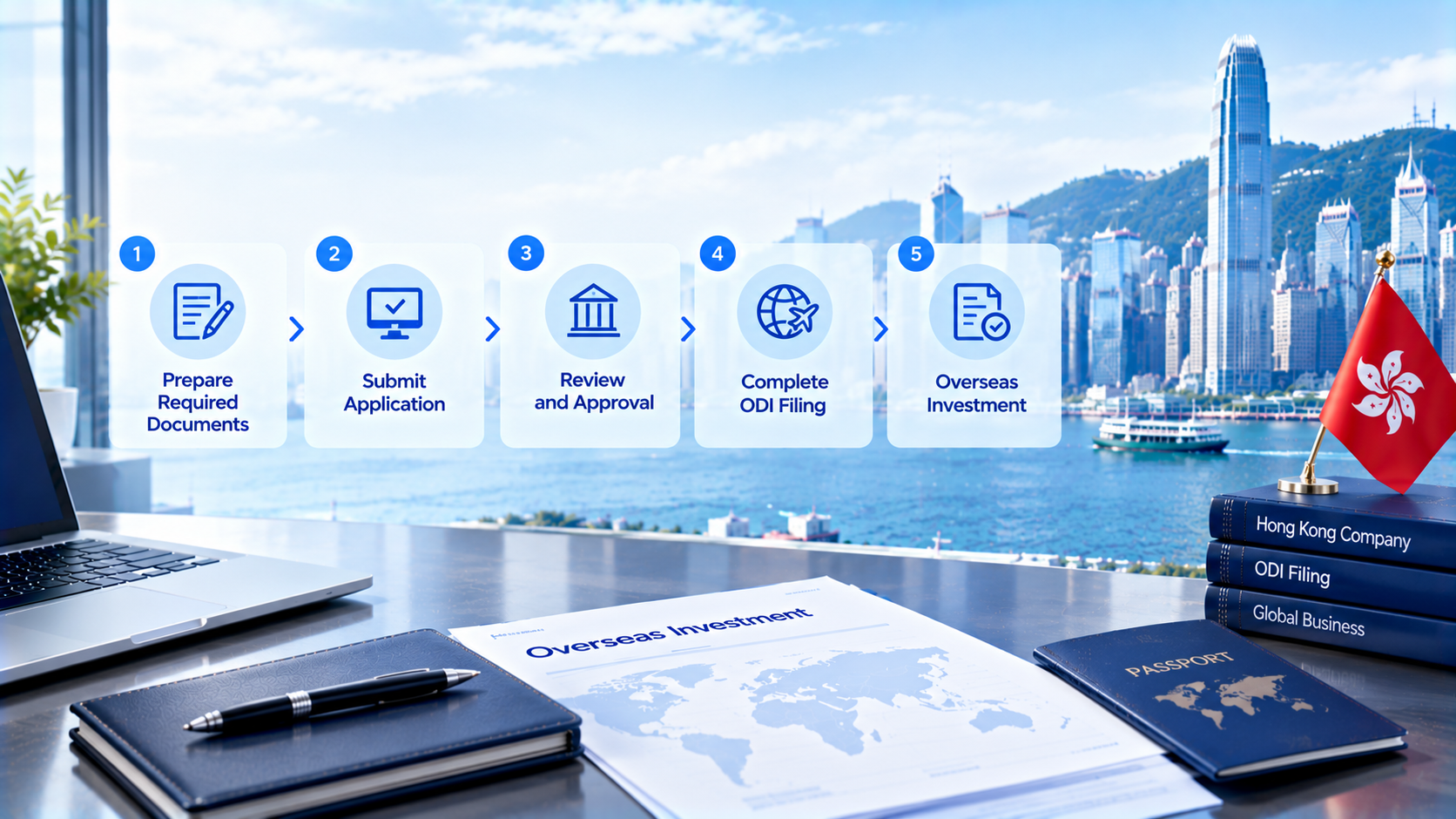
For applicable non-state-owned enterprises, the process may involve these stages:
- Prepare the investment plan. Define the overseas project, investment amount, ownership structure, and business purpose.
- Submit the required application or filing. Depending on the project, the enterprise may need to contact the relevant NDRC and commerce authorities.
- Complete foreign exchange procedures. Where required, work with a bank to complete the relevant registration and provide supporting documents.
- Arrange the cross-border payment. After completing the applicable procedures, the investor can transfer funds in line with the relevant approval or filing requirements.
- Keep supporting records. Retain filing documents, bank records, investment agreements, and other materials for future compliance checks.
Certain state-owned enterprises, restricted industries, and special transactions may require additional approvals. Therefore, businesses should confirm the latest requirements with the relevant authorities before proceeding.
Importantly, enterprises should not treat this ODI process as a universal checklist for individuals registering Hong Kong companies.
Hong Kong Company Registration: How International Entrepreneurs Can Prepare
International entrepreneurs should separate three questions: how to establish the company, how to fund it, and which compliance rules apply to the owner.
First, confirm the Hong Kong company structure and registration requirements. Next, identify the source of the investment funds and the planned transfer route. Finally, check whether the proposed funding arrangement triggers mainland Chinese foreign exchange or investment requirements.
IngStart provides Hong Kong company registration and ongoing business support for international entrepreneurs. Its services include corporate documentation and compliance assistance, which can help business owners organize their incorporation records and prepare for related administrative tasks. However, individuals should consult a qualified professional for specific cross-border investment and foreign exchange questions involving mainland Chinese rules.
Conclusion
Hong Kong Company Registration does not automatically require every individual to complete ODI filing. ODI procedures generally apply to qualifying overseas investments by mainland Chinese enterprises. Individuals may face different requirements depending on their funding arrangements and the nature of the transaction.
The key distinction is between incorporating a Hong Kong company and transferring investment funds from mainland China. Separate rules may govern these two activities.
Before registering or funding an overseas company, individuals should confirm the requirements that apply to their circumstances. By planning the company structure, funding route, and compliance steps in advance, entrepreneurs can reduce the risk of payment delays and regulatory problems.
Article Recommendations
- Hong Kong Company Audit: Annual Review vs Audit
- Hong Kong Business Registration Guide: How to Apply for a Business Registration Certificate
- Hong Kong Company Compliance: What Happens If You Do Not File or Deregister?
If you still have questions, please contact our team on WhatsApp at +1 213 751 2111. We'll help you find the right solution for your business and keep your company compliant as it grows.