
TikTok Europe VAT Compliance Is Mandatory in 2026
1. Basic Rules for TikTok Europe VAT Compliance
First, all TikTok Europe sellers must follow one simple rule. TikTok Europe VAT Compliance follows your real sales behavior, not platform reminders. In addition, TikTok connects directly with EU tax systems in 2026. Moreover, both the platform and tax office check store data. So, wrong tax actions will be punished right away.
1.1 Platform Checks for TikTok Europe VAT Compliance
To start with, TikTok checks every seller’s tax status every day. If you fail TikTok Europe VAT Compliance, your store will get order limits. Also, all store data sends to EU tax offices automatically. Thus, orders, shipping and tax data are fully checked. Most importantly, there is no loose tax period now. So, any mistake leads to quick punishment.
1.2 EU Tax Laws for TikTok Europe VAT Compliance
On the other hand, EU laws require tax for all online sales. In other words, no seller can skip tax duties. Besides, different sales ways have different TikTok Europe VAT Compliance needs. For example, direct shipping and warehouse sales follow different rules. Especially, the 2026 new system checks tax in real time. As a result, no wrong tax behavior can hide.
2. Seller Tax Solutions for TikTok Europe VAT Compliance
Overall, different sellers have different business modes. So, their TikTok Europe VAT Compliance plans are not the same. In this part, we list easy solutions for all common sellers. In turn, you can lower your store tax risks.
2.1 Compliance Tips for Direct Shipment Sellers
First, some sellers send goods straight from other countries. Most orders are small and under 150 EUR. In this case, you do not need many country tax accounts. Instead, simple IOSS declaration meets TikTok Europe VAT Compliance needs. So, this sales mode has low risk.
2.2 Compliance Tips for High-Order Sellers
Second, some sellers sell expensive goods over 150 EUR. Because of the high price, you need local EU tax registration. After that, you need to submit tax reports regularly. Accordingly, standard work keeps good TikTok Europe VAT Compliance. This mode has medium risk.
2.3 EU Warehouse Rules for TikTok Europe VAT Compliance
Third, some sellers store goods in EU local warehouses. Even with few sales, you must register local tax. Besides, warehouse info and tax files must match. Otherwise, you cannot keep stable TikTok Europe VAT Compliance. Thus, this business has medium risk.
2.4 Tax Rules for Multi-Warehouse Business
Furthermore, some sellers use many warehouses in different EU countries. For this reason, they need multiple tax accounts and unified declaration. In order to sell legally, strict tax work is necessary. So, this mode has high audit risk.
2.5 TikTok Europe VAT Compliance for Mixed Sales
Finally, some sellers use both direct shipping and warehouse sales. Since their business is complex, they need several tax tools at the same time. Moreover, different orders need different tax plans. Therefore, careful management is needed to avoid risks. This is the riskiest sales mode.
3. Simple 2026 Registration Guides for Sellers
In general, correct tax setup is the key to safe EU sales. For this purpose, we sort out clear registration rules for all sellers in 2026.
3.1 Registration Rules for Overseas Direct Sales
First, orders under 150 EUR only need easy IOSS declaration. Meanwhile, you do not need local tax registration. On the contrary, orders over 150 EUR need formal tax registration. In addition, splitting orders to avoid tax is illegal. Clearly, this behavior breaks official tax rules.
3.2 Registration Rules for Local Warehouse Sales
First of all, all warehouse users in the EU need local tax accounts. No matter how much you sell, you cannot skip this rule. Additionally, cross-country sales need extra unified declaration. If your warehouse and tax data do not match, your store will stop selling. That is why consistent files are very important.
3.3 Company Seller Rules for TikTok Europe VAT Compliance
For local EU company sellers, you need standard local tax registration. Also, you must upload valid tax papers to your TikTok backend. You can check your VAT number validity via the official EU tool VIES VAT checker. Besides, all bills and records must follow local tax rules. Only in this way can you pass official tax checks.

4. New vs Old: 2026 EU Tax Policy Changes
Currently, the 2026 tax update changes many old rules. Thus, online tax checks and punishments become much stricter.
First, old rules only send simple reminders. But new rules check tax status every second. If your store fails the check, sales will stop at once.
Second, old systems only check stores randomly. However, new systems connect store data and tax data fully. Therefore, wrong actions cause quick product removal and fund freeze.
Third, sellers used to write tax reports by hand. Yet, the new system uses automatic data updates. As a result, human mistakes drop a lot.
Fourth, old tax fines were low. In comparison, new fines are much higher. Serious mistakes will even get your store banned forever.
Finally, old tax audits only check 1–2 years of data. Now, officials can check 3–5 years of old records. For this reason, long-term tax records are required.
5. Punishments for Breaking EU Tax Rules
If sellers do not follow official tax rules, they will face big losses.
First, the platform will delete your products and stop your sales. Second, your store money will be frozen or delayed. Third, you need to pay high fines and accept old order checks. Fourth, you may be added to the EU tax blacklist. As a result, you cannot sell in Europe in the future. Fifth, your goods may be detained or sent back, which wastes your shipping cost.
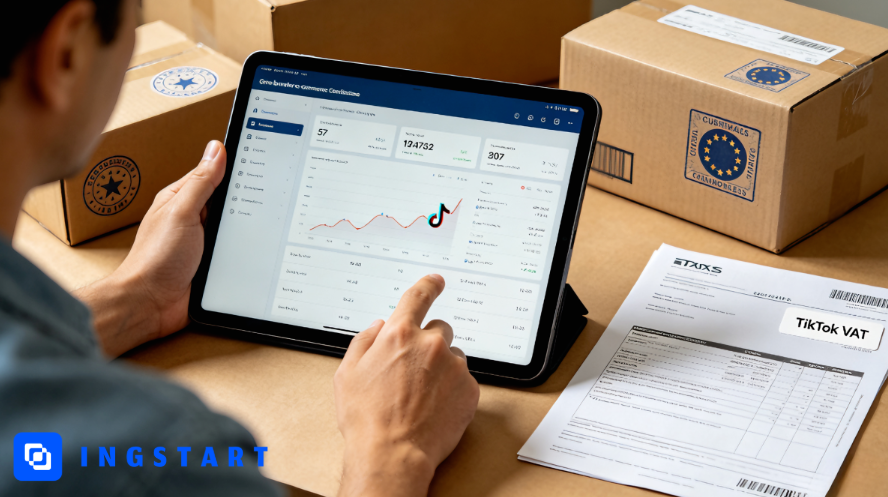
6. Easy 2026 Step-by-Step Tax Guide
Fortunately, sellers can follow simple steps to finish tax setup.
First, check your sales mode and shipping way. Second, apply for correct tax numbers for your business. After that, bind them to your TikTok store. Third, turn on automatic data update and tax declaration. Meanwhile, save all bills and shipping files. Fourth, check your tax status every few months. In addition, do a full tax check every year. In this way, your store can run stably in the EU market.
7. Common Seller Tax Misunderstandings
In fact, most tax risks come from wrong ideas. Thus, we fix four common mistakes for you.
7.1 Misunderstanding 1: Small parcels need no tax work
Many sellers think small cheap orders need no tax management. But in fact, low-value orders need simple declaration. Besides, high-value orders need formal tax registration. In short, no sales can skip official tax work.
7.2 Misunderstanding 2: TikTok will handle your tax problems
Although TikTok offers tax tools, it does not take tax responsibility. Instead, all tax work and fines belong to store owners. Obviously, you need to manage your own tax issues.
7.3 Misunderstanding 3: Fix tax problems after audits
Since the EU checks many years of old data, late fixes do not work. As a result, passive correction leads to high fines and bad store records. It hurts your long-term European business.
7.4 Misunderstanding 4: Share one tax number for many stores
In general, EU tax rules ban shared tax numbers. If you do this, all your stores will be punished. Finally, this mistake will destroy your whole EU business.
8. FAQ: 2026 EU Tax Questions for TikTok Sellers
Because of the new policy changes, many sellers have similar questions. Thus, we answer the most common ones below.
Q1: Do I need tax registration for direct shipping? A: It depends. Low-value orders only need simple declaration. However, high-value orders need full tax registration to meet official rules.
Q2: Can sellers without warehouses skip tax work? A: No. You can skip some registration steps, but basic tax declaration is still needed. In fact, zero-tax sales do not exist in the EU.
Q3: Will TikTok pay EU tax for me? A: Not fully. The platform helps with partial tax deduction. Even so, you need to finish registration and filing yourself. You take the final responsibility.
Q4: Can I use two tax tools at the same time? A: Yes. One tool works for small parcels. The other fits warehouse and expensive orders. Together, they cover all your sales scenarios.
9. Conclusion: Stable Sales With Good Tax Management
To sum up, standard tax work is the base of 2026 EU TikTok business. Unlike old loose rules, the new system carries out strict real-time checks. For this reason, you cannot take chances on tax work. If you ignore tax rules, you will face losses and store bans.
Therefore, all sellers must value daily tax management. With easy automatic tools and standard operation, you can avoid most tax risks. In turn, you can run stable EU stores and get long-term profits.