
2026 EU VAT Compliance: New Seller Rules
Introduction: Why 2026 EU VAT Compliance Matters for All Sellers
EU VAT Compliance is no longer an optional task for global cross-border sellers. Instead, it has become a strict mandatory rule for anyone selling on European e-commerce platforms such as Amazon and eBay.

1. Key 2026 Upgrades to EU VAT Compliance Supervision
1.1 New Mandatory Tax Rules for Cross-Border Sellers
1.2 Key Shift From Passive to Real-Time Supervision

2. 2026 Key Upgrades to EU VAT Compliance Supervision
2.1 Full EU RDR Coverage for Standard VAT Compliance
2.2 Stricter Platform Rules for EU VAT Compliance
2.3 Tighter IOSS/OSS Rules for EU VAT Compliance
2.4 Higher Penalties for Poor EU VAT Compliance
3. Old vs New Rules: 2026 EU VAT Compliance Changes
3.1 New Real-Time Data Rules for VAT Compliance
3.2 Three-Way Data Checks for Better VAT Compliance
3.3 Zero Tolerance for VAT Compliance Violations
3.4 Automatic Processes for Stable VAT Compliance
3.5 Extended Audits for Long-Term VAT Compliance
4. 2026 EU VAT Compliance Layout Steps for Sellers
4.1 Daily Operation Risks for EU Stores
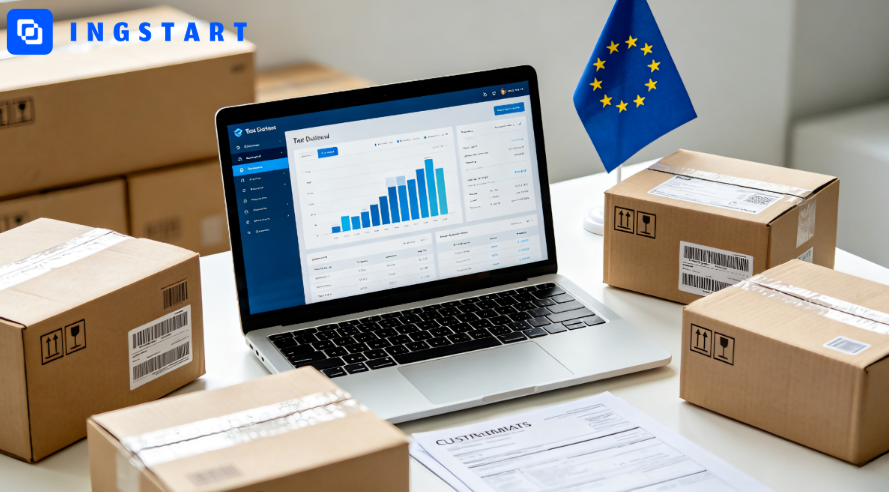
First of all, bad EU VAT Compliance will bring many risks to your EU stores. For this reason, every seller needs to know these common problems clearly.
To begin with, wrong tax work will make platforms remove your products or limit your orders. As a result, your store may stop selling suddenly.
In addition, poor EU VAT Compliance may lock your store account and delay your payment. Therefore, your store will face unstable cash flow.
4.2 Profit and Market Risks for Cross-Border Sellers
Secondly, mistakes in EU VAT Compliance will cause high fines from the EU government. Obviously, these fines will cut down your business income.
Moreover, serious EU VAT Compliance errors will put you on the EU blacklist. In other words, you can no longer sell products in the European market.
Finally, wrong tax records break EU VAT Compliance and cause customs holds. Besides that, you need to pay double shipping fees for returned goods.
5. Practical 2026 Operation Guide for EU Sellers
Overall, the 2026 EU tax rules become much stricter. For this reason, sellers need simple steps for good EU VAT Compliance. Below are easy guides for daily operation.
5.1 Basic Daily Inspection Checklist
First, list all EU countries where you sell goods. Next, check all your valid VAT, IOSS and OSS accounts. After that, look through all your old tax records. Then, find out missing or late tax reports. Furthermore, check your store for hidden tax risks. Lastly, fix all problems to keep stable EU VAT Compliance.
5.2 Standard Data Management Methods
To start with, connect your store system and payment tools. In addition, turn on automatic tax calculation. Also, use real-time invoice and data upload functions.
As a result, all your business data stays the same. In turn, you avoid data mistakes and protect your EU VAT Compliance.
5.3 Correct Usage of IOSS and OSS Tools
On one hand, follow IOSS rules for small parcels under 150 EUR. This way, you avoid basic tax mistakes.
On the other hand, use OSS declaration for goods stored in the EU. Therefore, you save extra registration costs.
In addition, stop using unqualified tax accounts. Ultimately, your EU VAT Compliance stays legal and safe.
5.4 Long-Term Store Operation Maintenance
First and foremost, save all invoices and shipping files every month. Meanwhile, check your store status regularly. This action avoids sudden tax risks.
Last but not least, use automatic tools for daily tax work. Thus, you reduce human mistakes and keep long-term EU VAT Compliance.
6. Practical Tax Tips for Different Seller Types
It is well known that, different sellers face different tax problems. Accordingly, you need different skills for stable EU VAT Compliance. For this reason, we list simple tips for common sellers.
6.1 Operation Tips for Direct Mail Sellers
First of all, most direct mail sellers make mistakes in IOSS declaration. In general, wrong parcel value data affects their EU VAT Compliance.
To solve this issue, follow standard daily declaration steps. At the same time, update data in real time. As a result, your EU VAT Compliance stays stable.
6.2 Management Tips for Multi-Warehouse Sellers
Secondly, multi-warehouse sellers often have OSS errors. In addition, missing local tax records will hurt their EU VAT Compliance.
For this reason, check all data carefully every month. Furthermore, use smart declaration tools. In turn, you keep accurate EU VAT Compliance every day.
6.3 Selling Tips for Single-Country EU Stores
Thirdly, single-country sellers often hand in tax reports late. Commonly, missing files will damage their EU VAT Compliance.
So, finish all tax reports on time. Besides that, save all business files well. Ultimately, you maintain steady EU VAT Compliance.
6.4 Data Rules for Multi-Platform Sellers
Finally, multi-platform sellers often have messy store data. In most cases, unmatched data leads to bad EU VAT Compliance.
For this reason, unify your data rules on all platforms. As a result, your brand keeps good EU VAT Compliance in Europe.
7. Common Tax Misconceptions for EU Cross-Border Business
In general, most tax fines come from wrong ideas about EU VAT Compliance. As a result, many sellers lose money for no reason. To fix this, we correct four common mistakes.
7.1 Views on Small Data Mistakes
Currently, the EU uses real-time data checks. Even if you make tiny mistakes, the system will find them. Therefore, small errors will hurt your EU VAT Compliance in 2026.
7.2 misunderstandings of Platform Protection
It is true that, platforms check tax status every year. However, platforms will not take responsibility for your tax mistakes. In other words, you bear all risks for poor EU VAT Compliance.
7.3 Wrong Attitudes Toward Tax Problems
As we know, the EU can check your old data for up to 5 years. Thus, past errors will destroy your current EU VAT Compliance.
7.4 Manual Operation Misjudgment
On the surface, manual work looks simple. In reality, manual tax work has many errors. More importantly, fines cost much more than automatic tools.
8. FAQ: Common Questions About 2026 EU Tax Rules
In view of the 2026 policy update, many sellers have questions about EU VAT Compliance. For this reason, we answer the most common questions below.
8.1 Seller Qualification for EU VAT Compliance
First of all, many new sellers worry about their selling rights. Hence, we explain basic rules here.
Q1: Can individual sellers run EU stores in 2026?
A: Yes. Nevertheless, personal sellers need to follow the same EU VAT Compliance rules as company sellers.
8.2 Changes of Official Tax Tools
Apart from basic rules, sellers care about IOSS and OSS changes. For this reason, we clarify these key tools for EU VAT Compliance.
Q2: Will IOSS and OSS be cancelled?
A: No. On the contrary, these tools still support daily EU VAT Compliance with stricter checks.
8.3 Daily Reporting Work Guidance
In addition, many sellers feel confused about daily reporting. Thus, we simplify daily work for EU VAT Compliance.
Q3: Do I need manual work for real-time reporting?
A: No. Generally speaking, automatic systems finish all data work.
8.4 Old Data Risks for EU VAT Compliance
Besides daily work, sellers worry about old tax records. To solve this doubt, we explain audit risks for it.
Q4: Will old tax mistakes be checked in 2026?
A: Yes. Since the EU checks 3–5 years of history, old errors will affect your current EU VAT Compliance.
8.5 RDR Rules for EU VAT Compliance
Finally, RDR is the biggest 2026 change. Therefore, we share easy ways to adapt and keep good EU tax standard.
Q5: How to adapt to new RDR rules?
A: First, connect your store to official EU tax systems. This method auto-uploads data. Eventually, you meet all EU VAT Compliance standards.
9. Conclusion: Grow Business With Good EU VAT Compliance
9.1 How 2026 Policy Reform Affects Sellers
Overall, the 2026 reform makes it much stricter. Nowadays, casual tax work is no longer allowed. However, standard operation can keep your business safe.
9.2 Core Tips for Long-Term EU VAT Compliance
Therefore, all sellers must pay attention to it. With simple automatic tools, you avoid most tax risks. In this way, you can run stable and profitable EU stores.